The Deal and the Reactors
A nuclear energy startup just locked down nearly half a billion dollars, and its first customer is the U.S. military.
This brings Antares' total funding to $604 million, according to a TechCrunch analysis of PitchBook data. To put that in perspective, the startup raised a $96 million Series B round in December.
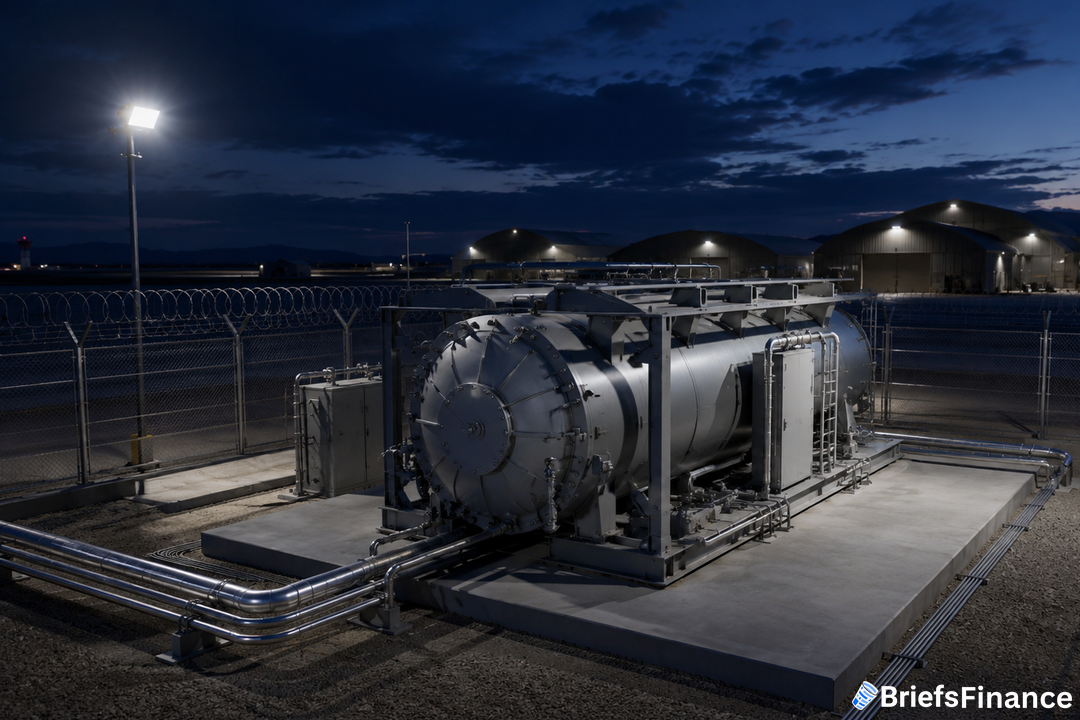
What are investors actually betting on? Small nuclear reactors. Antares builds what the industry calls small modular reactors (SMRs).
These are compact nuclear power plants designed to be built in factories and shipped to where they are needed.
The Mark-0 test unit first achieved a self-sustaining nuclear chain reaction at the Idaho National Laboratory, with the milestone occurring on June 4. The company already proved the concept works.
Get the market news that matters in a five-minute read with Market Briefs, our free daily newsletter
Why the Military and Why Now
The Pentagon is running a program called Advanced Nuclear Power for Installations, and Antares is one of the three finalists. The Defense Department plans to trial these small reactors at two Air Force installations located in Colorado and Montana. That gives Antares a customer known for being price-insensitive, as the source notes the U.S. military is "a famously price-insensitive customer."
The bigger reason investors are piling into nuclear is simple: Electricity demand is skyrocketing due to the proliferation of data centers and widespread economic electrification. Nuclear offers a steady, carbon-free source of electricity.
Antares is not the only startup chasing this opportunity. Rival firm X-energy went public in April 2026, raising $1 billion via its initial public offering. Competitors like Last Energy, Radiant Energy, and Standard Nuclear have each raised nine-figure funding rounds since December.
The Catch
Of course, there is a reason nuclear power has not already taken over. SMRs face serious hurdles.
The U.S. supply chain for this kind of advanced nuclear equipment is immature. Scaling production from one reactor to many is hard. According to the source, achieving advantages from large-scale production usually requires roughly ten years, and no young company has achieved that milestone so far.
The projected cost is steep. Lazard, an energy cost analysis firm, predicts that new SMRs will have a levelized cost of approximately $214 per megawatt-hour. At that rate, these reactors would be pricier than any gas turbine except the most costly ones. Antares hasn't disclosed its pricing.
Why does it matter? For investors, this round signals that big money sees nuclear as a real solution to the electricity crunch. If Antares and its competitors succeed, they could become important suppliers to both the military and eventually the civilian grid. However, the source points out that the earliest SMRs, slated to become operational around the early 2030s, probably won't match the costs of most modern power stations.
The demand for always-on, clean power is not going away. Companies that can deliver that reliably will have a long runway ahead.
Join Market Briefs, our free daily newsletter, for a quick daily rundown of the markets