Free NewsletterPro Login
S&P 500 6,287 +0.42%
DOW 44,521 -0.18%
NASDAQ 21,103 +0.71%
S&P 500 +12.4%
Briefs Finance Fund +24.8%
JOIN THE FUND →

U.S. Refiners Hit Record Profits as Fuel Supply Tightens

Published Jul 16, 2026
[tts_player]
Share:
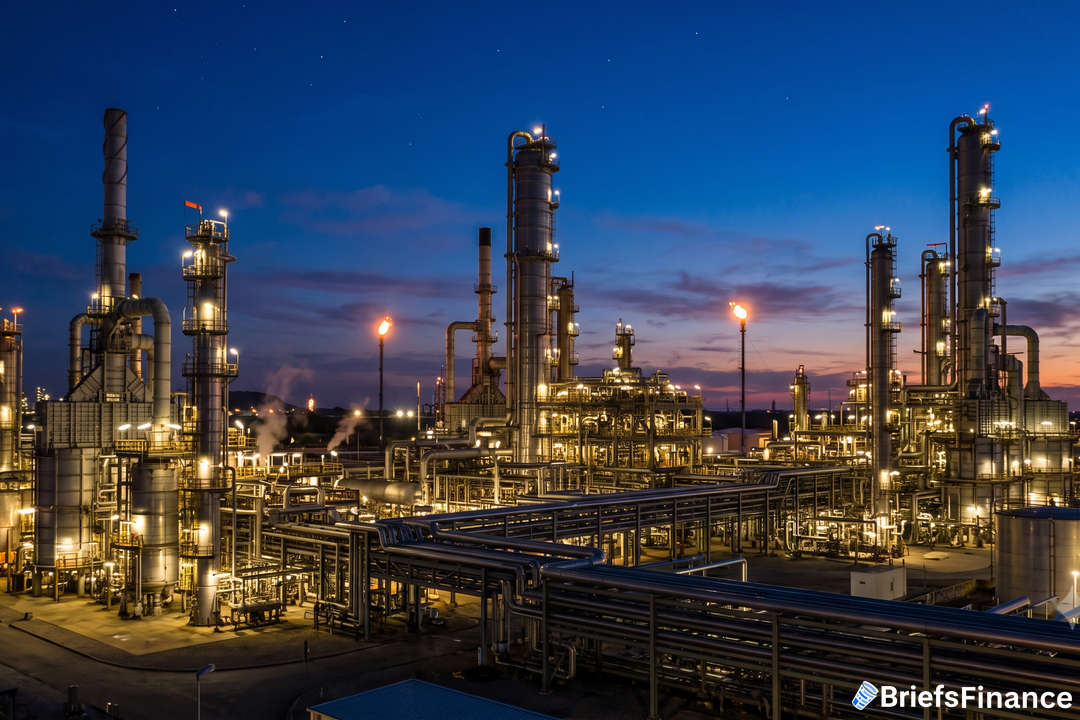
Oil refinery complex illuminated at dusk
Summary:
  • U.S. refiners earned a record profit margin of $70 per barrel turning crude into gasoline and diesel on a Thursday in mid-July 2026.
  • Diesel hit a retail price exceeding $5 per gallon on Wednesday, with regular gasoline at about $3.94 a gallon, per the American Automobile Association.
  • War-related supply disruptions - including Russian export bans, Strait of Hormuz tensions, and Chinese limits on fuel exports - are behind the squeeze.

Refiners Are Raking It In

If you have filled up a car or a truck lately, you already know the pain at the pump. But the companies doing the refining are seeing something close to a bonanza.

That number is the highest ever recorded for a typical setup where three crude barrels are processed into two gasoline barrels and one diesel barrel. Gasoline margins remain close to the record peaks from June 2022, a time when U.S. pump prices reached historic highs.

So what is driving this? It is not just expensive crude - it is that the finished fuel itself is getting harder to find.

A Supply Chain Under Pressure

The problem is on the fuel side, not just the oil side. JPMorgan Chase & Co.'s head of commodities research, Natasha Kaneva, put it this way: "Distillate cracks in both the US and Europe have surged toward record highs - an indication that the shock is increasingly becoming a refining story rather than simply a crude supply story."

Get the market news that matters in a five-minute read with Market Briefs, our free daily newsletter

Translation: the pain is coming from not being able to get enough gasoline and diesel, not from the price of the raw oil itself.

A few things are all hitting at once. Following sustained Ukrainian drone strikes on its refineries over several months, Russia imposed a ban on most diesel exports. That squeezed global supply.

On top of that, fresh tensions in the Strait of Hormuz region are compounding the supply constraints. China also restricted its refiners from exporting gasoline, diesel, and jet fuel for months, which reduced how much fuel is available on global markets.

Meanwhile, persistent demand and unusually low stockpiles in the U.S. for this time of year make the market jumpy. Any surprise refinery outage could send prices higher fast.

What Comes Next

Refiners are already running their plants at their "practical operating ceiling" and deferring maintenance, according to Rapidan Energy. That makes the risk of unplanned outages higher, potentially boosting volatility. When they happen, there is very little spare supply to fall back on.

Should China re-enter the market vigorously, it might ease some of the strain stemming from Russia's reduced exports. But there is a catch - doing that would likely drive crude oil prices higher, because China would need to buy more of it. TD Securities' senior commodity strategist, Ryan McKay, put it bluntly: "It seems like a hard issue to fix without re-tightening the crude market."

The bottom line: Low fuel inventories and high geopolitical uncertainty mean the situation is fragile.

Join Market Briefs, our free daily newsletter, for a quick daily rundown of the markets
Disclosure

Recent News

1 2 3 37

Get Market Briefs delivered to your inbox every morning for free!

No fluff. No noise. No politics. Just finance news you can read in 5 minutes.

Blogs

June 29, 2026
Portfolio Diversification: Why Putting All Your Eggs in One Basket Destroys Wealth
  • Real diversification means spreading investments across all 11 economic sectors plus bonds, alternatives, and cash so no single bet can sink the portfolio.
  • Different sectors perform at different times, so a diversified portfolio captures upswings while smoothing the brutal drawdowns that wipe out concentrated bets.
  • Total market index funds offer the simplest path to diversification, and annual rebalancing is what keeps the structure working over time.
Read More
June 29, 2026
Non Taxable Income: What It Is and Why It Matters
  • Non taxable income is money you receive that you don't owe income tax on.
  • The tax code treats workers, investors, and business owners very differently, and investors often come out ahead.
  • Learning how income is taxed is a quiet superpower for keeping more of what you earn.
Read More
June 29, 2026
Semiconductor Stocks: A Simple Guide for Investors
  • Semiconductor stocks are companies that design and make computer chips, the brains inside nearly every modern device.
  • The AI boom has turned chips into one of the market's most important and most watched groups.
  • They offer big growth potential, but come with high valuations and a notoriously cyclical history.
Read More
June 25, 2026
How Stocks Work: A Simple Guide for Beginners
  • A stock is a slice of ownership in a company - buy one, and you own a piece of the business.
  • You make money two ways: the share price rising over time, and dividends paid to shareholders.
  • The simplest path for most beginners is buying into the whole market through a low-cost index fund.
Read More
June 25, 2026
Stop Loss vs Stop Limit: What's the Difference?
  • A stop loss order sells your stock once it hits a trigger price, prioritizing getting you out.
  • A stop limit order only sells within a price range you set, prioritizing price over a guaranteed exit.
  • The trade-off: a stop loss almost always executes; a stop limit might not if the price moves too fast.
Read More
June 25, 2026
Energy Stocks: A Simple Guide for Investors
  • Energy stocks are companies that produce and supply the power the world runs on, from oil and gas to newer sources.
  • They make up one of the 11 sectors of the market and tend to move with energy prices and big-picture shifts.
  • Like any sector, the key is diversification and understanding the forces driving demand.
Read More
June 18, 2026
What Is a Stop Loss Order? A Simple Guide
  • A stop loss order automatically sells a stock once it falls to a price you set.
  • It's a tool to cap losses or lock in gains without watching the market all day.
  • It works best for active strategies, and can backfire if used carelessly on long-term holdings.
Read More
June 18, 2026
Best S&P 500 Index Fund: How to Choose One
  • The best S&P 500 index fund for most investors is simply the cheapest, most established one that tracks the index well.
  • Funds like VOO, IVV, and SPY all hold the same 500 companies, so the biggest difference is the fee.
  • Pick one, automate your buys, and let time do the heavy lifting.
Read More
June 17, 2026
What Are Penny Stocks? Risks and Rewards Explained
  • Penny stocks are very low-priced shares of very small companies, often trading for just a few dollars or less.
  • They promise huge gains but carry huge risks: low liquidity, high failure rates, and wild price swings.
  • Most investors are better served by quality companies and funds than by chasing cheap shares.
Read More
June 17, 2026
Best Stocks for Beginners With Little Money
  • The best stocks for beginners with little money usually aren't individual stocks at all - they're low-cost index funds.
  • You can start with $100 or less and use small, regular investments to build wealth over time.
  • Focus on diversification and consistency, not on picking the next big winner.
Read More
1 2 3 24
Share via
Copy link











