Free NewsletterPro Login

Perplexity Sets 2028 IPO As Anthropic And OpenAI File First

Published Jun 10, 2026
Share:
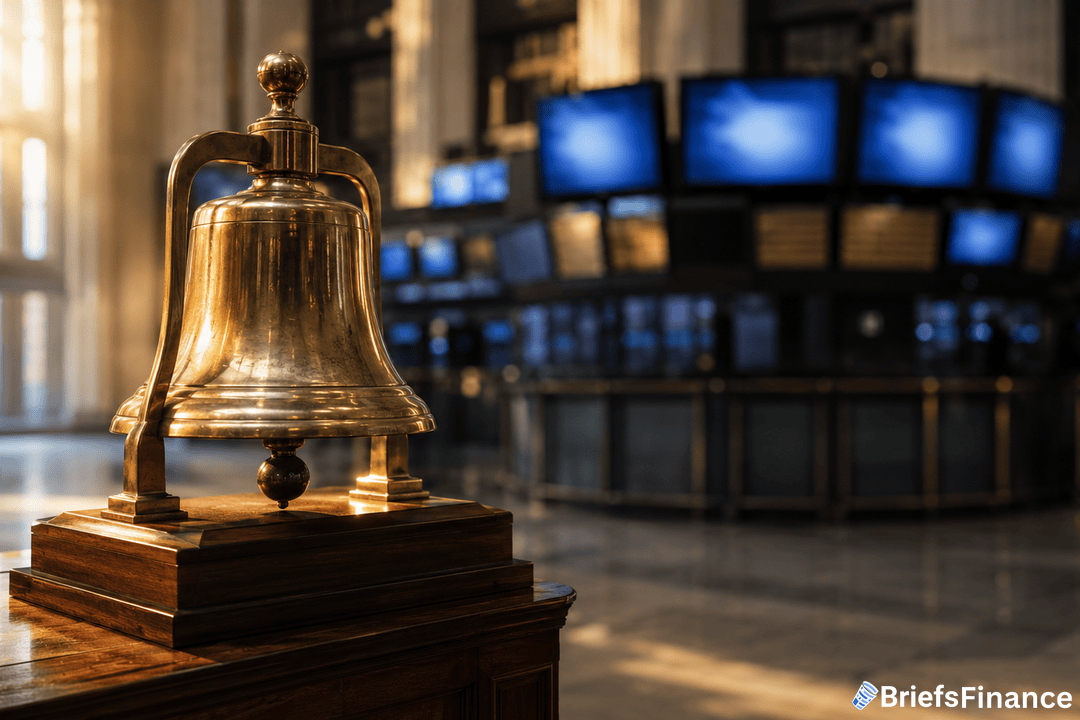
A large brass bell on a wooden stand is displayed in the foreground of a stock exchange trading floor, with multiple blurry monitors and columns in the background. The BriefsFinance logo is in the bottom right corner.
Summary:
  • Perplexity CEO Aravind Srinivas told CNBC the company still plans to go public in 2028.
  • Anthropic and OpenAI both confidentially filed for IPOs within the past week.
  • SpaceX is set to go public this week in one of the largest listings ever.

The AI rush is finally reaching Wall Street. Anthropic filed for an IPO last week, OpenAI followed on Monday, and SpaceX goes public this week.

So why is Perplexity in no rush to join them? Its CEO says the wait is on purpose.

Why Perplexity Is Waiting

Aravind Srinivas runs Perplexity, a fast-growing AI search startup. He told CNBC the firm still plans to go public in 2028.

That was the plan before his rivals filed. He says it hasn't changed.

His rivals are the two biggest names in AI. Anthropic makes the Claude chatbot, and OpenAI makes ChatGPT.

The wait is on purpose. He wants to see how these giant AI listings land first.

We track which of these AI listings actually matter for your portfolio in Market Briefs - five minutes each morning, plus a free investing masterclass when you join.

SpaceX Is The First Real Test

Three of the biggest names in tech are about to test how much demand is left for AI. Anthropic was last worth near $1 trillion, and OpenAI filed on Monday.

SpaceX could price one of the largest IPOs ever this week. Srinivas is watching it closely.

He says the SpaceX deal will be an early read on how the others do. A weak debut, he warns, could ripple across the whole group.

Still, he thinks they will be fine. As he put it, they should "go well, because they're doing well."

Why The High Prices Could Wobble

There's a catch for the top AI labs, the firms building the best models. Srinivas says they earn their high prices only by staying ahead.

Go six months with no big leap, he warns, and the price starts to look shaky. He sees no sign of that yet.

But he thinks the days of endless AI spending are ending. That shift could change how the whole field is valued.

The Spending Question

Big firms are now fighting over how much they spend on AI. OpenAI's Sam Altman called those costs a "huge issue" on a recent stream.

One odd trend even has a name: tokenmaxxing. That's when workers run up their AI use just to look busy.

Srinivas isn't sold on it. He says people want the model that works best, not the one that burns the most.

His own firm often picks a cheaper open-source model when it does the job. That choice can cost far less than a top model.

What's At Stake

These could be among the biggest IPOs in history. That makes them a real test of demand for huge AI deals.

Srinivas says it matters for the whole field that they go well. A flop could cool the AI trade for everyone.

A hot debut would do the opposite. It could push more AI firms to rush out and list too.

What To Watch

SpaceX prices first, and that sets the tone. If buyers pile in, Anthropic and OpenAI get a green light.

If they hold back, the 2028 crowd may be glad it waited.

Want this kind of read every morning? Join the investors who read Market Briefs and get a 45-minute investing masterclass thrown in.

Disclosure

Get Market Briefs delivered to your inbox every morning for free!

No fluff. No noise. No politics. Just finance news you can read in 5 minutes.

Blogs

May 30, 2026
Financial Literacy Books That Actually Build Wealth
  • The best financial literacy books don't just teach budgeting, they shift how you think about money.
  • Two classics stand out: The Intelligent Investor for valuing investments, and Rich Dad Poor Dad for the owner's mindset.
  • Reading is only step one. The real wealth comes from acting on what you learn.
Read More
May 30, 2026
What Is a Roth Conversion? A Simple Guide
  • A Roth conversion moves money from a traditional retirement account into a Roth account.
  • You pay taxes on the money now, in exchange for tax-free growth and withdrawals later.
  • It can pay off if you expect higher taxes or more income in the future, but the timing and tax hit matter a lot.
Read More
May 30, 2026
Trailing Stop Loss: How to Protect Your Gains
  • A trailing stop loss is an order that automatically sells a stock if it falls a set percentage from its recent high.
  • As the stock rises, the sell point rises with it, locking in gains while capping losses.
  • It's most useful for active strategies like momentum investing, not for long-term buy-and-hold.
Read More
May 30, 2026
5 Types of Wealth: Why Money Is Only One of Them
  • Real wealth is more than a bank balance. It spans your finances, health, mind, purpose, and freedom.
  • Money is powerful, but it amplifies the life you already have rather than fixing a broken one.
  • True financial wealth means your cash flow covers your expenses, so your money works while you live.
Read More
May 30, 2026
How to Invest in Private Equity: A Beginner's Guide
  • Private equity means investing in companies that aren't listed on the stock market.
  • Traditional private equity is built for experienced, high-net-worth investors with large amounts to invest.
  • New rules have opened more accessible paths, like startup crowdfunding and real estate deals, often starting around $100.
Read More
May 30, 2026
What Is a Call Option? A Simple Guide With Examples
  • A call option gives you the right to buy a stock at a set price by a set date.
  • Investors buy calls when they expect a stock to rise, using less money than buying the shares outright.
  • The most you can lose buying a call is the premium, but time works against you, so it's an advanced tool.
Read More
May 30, 2026
EBITDA Formula: How to Calculate It Step by Step
  • EBITDA stands for Earnings Before Interest, Taxes, Depreciation, and Amortization, a measure of a company's core profit.
  • The formula adds those four items back to net income to show what the underlying business earns.
  • Investors use EBITDA to compare companies and to judge how many times earnings a stock is selling for.
Read More
May 30, 2026
What Is a Stock Option? A Plain-English Guide
  • A stock option is a contract giving you the right, but not the obligation, to buy or sell a stock at a set price by a set date.
  • There are two types: calls (the right to buy) and puts (the right to sell).
  • Options are powerful but risky, so they suit investors who already have the basics down.
Read More
May 30, 2026
Put Option: What It Is and How It Works
  • A put option gives you the right to sell a stock at a set price by a set date.
  • Investors use puts to bet a stock will fall, or as insurance to protect shares they own.
  • The most you can lose buying a put is the premium you paid, which makes it a defined-risk tool.
Read More
May 30, 2026
Operating Margin: What It Is and How to Calculate It
  • Operating margin shows how much profit a company keeps from its core business after paying its running costs.
  • The formula is operating income divided by revenue, shown as a percent.
  • A strong, steady operating margin signals a well-run business that controls its costs.
Read More
1 2 3 22
Share via
Copy link










