Free NewsletterPro Login
S&P 500 6,287 +0.42%
DOW 44,521 -0.18%
NASDAQ 21,103 +0.71%
S&P 500 +12.4%
Briefs Finance Fund +24.8%
JOIN THE FUND →

Global Favorability Shifts: China Now More Popular Than US, Pew Report Finds

Published Jul 15, 2026
[tts_player]
Share:
Summary:
  • A Pew survey finds China is now viewed more favorably than the U.S.
  • It marks the first such shift in at least three years.
  • The poll covered about 42,000 people across 36 countries.

The Numbers Tell a Clear Story

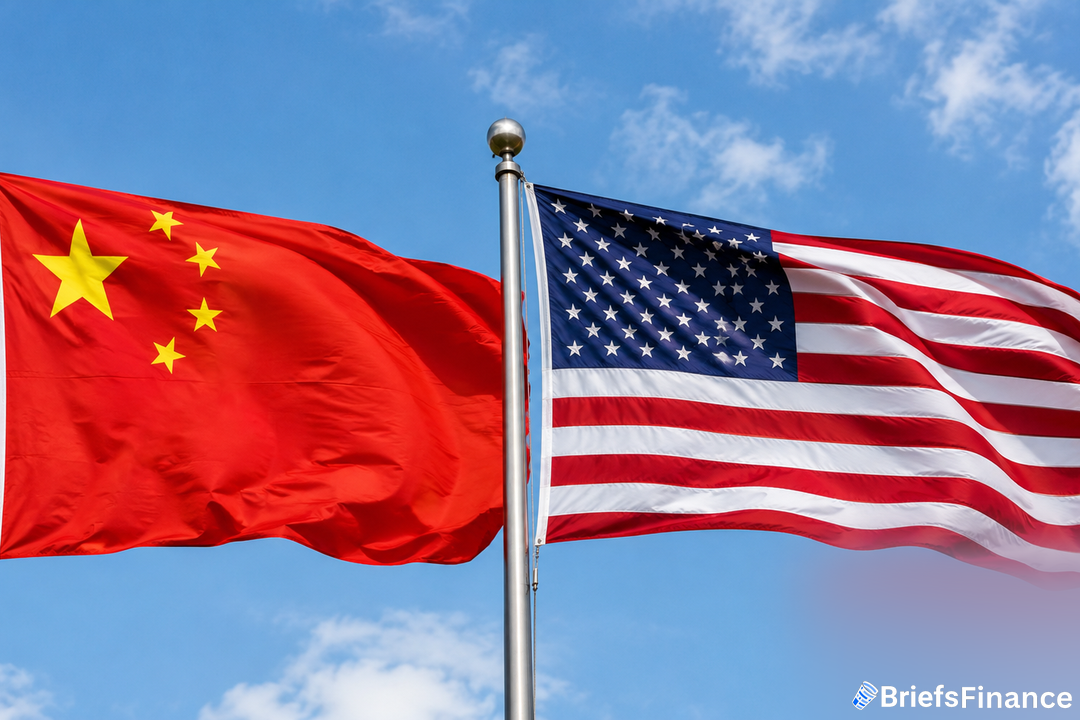
For the first time in at least three years, more people around the world like China than like the United States.

Pew Research Center surveyed roughly 42,000 people in 36 countries between February and May of this year. Among the 20 nations that have been tracked since 2023, nearly half of those surveyed now hold a positive opinion of China. That is a jump from 32% in 2023.

The United States went the other direction. Favorability for the US fell from 58% in 2023 to just 36% this year among those same countries.

The numbers are especially striking among US allies. In Canada, Australia, France, and Germany, China's favorability now tops America's. The US still leads in favorability in just six nations: Poland, Israel, South Korea, the Philippines, Japan, and India.

In a separate finding, 17 middle-income nations said they have more concerns about the United States than about China. That is a big group of countries that are watching carefully.

Why US Standing Dropped and China's Rose

The survey period overlapped with the early stages of the US-led war in Iran. But the decline in US favorability started before that.

Get the market news that matters in a five-minute read with Market Briefs, our free daily newsletter

Confidence in American leadership had already slipped during Joe Biden's term. Then came Donald Trump's second term. His tariff policies, threats to annex allied territories, and a transactional approach to diplomacy all took a toll. Countries that once counted on the US as a reliable partner started seeing a less predictable superpower.

At the same time, China worked the other side of the street. President Xi Jinping's government portrayed itself as a stabilizing force during the Iran conflict. Xi promoted China as a global leader, and the messaging landed. In multiple nations, particularly in Europe, China's approval numbers have reached levels close to or surpassing previous peaks.

Pew summed it up directly: "Global views of the United States worsened last year as President Donald Trump's second term began, though most people still had a more positive opinion of the US than China. This year, that is no longer the case."

Even personal favorability of the two leaders flipped. Xi Jinping's global leadership ratings have overtaken Trump's, though both remain broadly negative.

What This Means for Your Portfolio

Shifts in global favorability are not just about popularity contests. They shape the environment your investments live in.

When allies lose trust in the United States, trade deals get harder to make. Companies that rely on stable international relationships face more uncertainty. Tariffs and diplomatic friction can disrupt supply chains, raise costs, and change which stocks perform well.

China's rising favorability does not mean it is suddenly a safe bet either. The gap between the US and China on perceptions of personal freedom is narrowing, but it is still there. And plenty of middle-income nations are watching both powers warily.

The bottom line: The competition for global influence between these two giants is not going away. For investors, that means paying attention to which countries are leaning which way. A shift in sentiment can affect everything from trade policy to currency moves to the sectors that benefit or get squeezed.

The next few years will likely keep delivering surprises. The US still has deep reserves of credibility and economic power. But this survey is a clear signal that the world is rethinking its loyalties. Your portfolio may need to do the same.

Join Market Briefs, our free daily newsletter, for a quick daily rundown of the markets
Disclosure

Recent News

1 2 3 36

Get Market Briefs delivered to your inbox every morning for free!

No fluff. No noise. No politics. Just finance news you can read in 5 minutes.

Blogs

June 29, 2026
Portfolio Diversification: Why Putting All Your Eggs in One Basket Destroys Wealth
  • Real diversification means spreading investments across all 11 economic sectors plus bonds, alternatives, and cash so no single bet can sink the portfolio.
  • Different sectors perform at different times, so a diversified portfolio captures upswings while smoothing the brutal drawdowns that wipe out concentrated bets.
  • Total market index funds offer the simplest path to diversification, and annual rebalancing is what keeps the structure working over time.
Read More
June 29, 2026
Non Taxable Income: What It Is and Why It Matters
  • Non taxable income is money you receive that you don't owe income tax on.
  • The tax code treats workers, investors, and business owners very differently, and investors often come out ahead.
  • Learning how income is taxed is a quiet superpower for keeping more of what you earn.
Read More
June 29, 2026
Semiconductor Stocks: A Simple Guide for Investors
  • Semiconductor stocks are companies that design and make computer chips, the brains inside nearly every modern device.
  • The AI boom has turned chips into one of the market's most important and most watched groups.
  • They offer big growth potential, but come with high valuations and a notoriously cyclical history.
Read More
June 25, 2026
How Stocks Work: A Simple Guide for Beginners
  • A stock is a slice of ownership in a company - buy one, and you own a piece of the business.
  • You make money two ways: the share price rising over time, and dividends paid to shareholders.
  • The simplest path for most beginners is buying into the whole market through a low-cost index fund.
Read More
June 25, 2026
Stop Loss vs Stop Limit: What's the Difference?
  • A stop loss order sells your stock once it hits a trigger price, prioritizing getting you out.
  • A stop limit order only sells within a price range you set, prioritizing price over a guaranteed exit.
  • The trade-off: a stop loss almost always executes; a stop limit might not if the price moves too fast.
Read More
June 25, 2026
Energy Stocks: A Simple Guide for Investors
  • Energy stocks are companies that produce and supply the power the world runs on, from oil and gas to newer sources.
  • They make up one of the 11 sectors of the market and tend to move with energy prices and big-picture shifts.
  • Like any sector, the key is diversification and understanding the forces driving demand.
Read More
June 18, 2026
What Is a Stop Loss Order? A Simple Guide
  • A stop loss order automatically sells a stock once it falls to a price you set.
  • It's a tool to cap losses or lock in gains without watching the market all day.
  • It works best for active strategies, and can backfire if used carelessly on long-term holdings.
Read More
June 18, 2026
Best S&P 500 Index Fund: How to Choose One
  • The best S&P 500 index fund for most investors is simply the cheapest, most established one that tracks the index well.
  • Funds like VOO, IVV, and SPY all hold the same 500 companies, so the biggest difference is the fee.
  • Pick one, automate your buys, and let time do the heavy lifting.
Read More
June 17, 2026
What Are Penny Stocks? Risks and Rewards Explained
  • Penny stocks are very low-priced shares of very small companies, often trading for just a few dollars or less.
  • They promise huge gains but carry huge risks: low liquidity, high failure rates, and wild price swings.
  • Most investors are better served by quality companies and funds than by chasing cheap shares.
Read More
June 17, 2026
Best Stocks for Beginners With Little Money
  • The best stocks for beginners with little money usually aren't individual stocks at all - they're low-cost index funds.
  • You can start with $100 or less and use small, regular investments to build wealth over time.
  • Focus on diversification and consistency, not on picking the next big winner.
Read More
1 2 3 24
Share via
Copy link











