Free NewsletterPro Login

FDA Flags Novo Nordisk's Wegovy Ad for Misleading Claims

A stylized illustration of a cylindrical cup with blue arrows and lines indicating a swirling or rotational motion inside the cup.
Published Feb 9, 2026
Share:
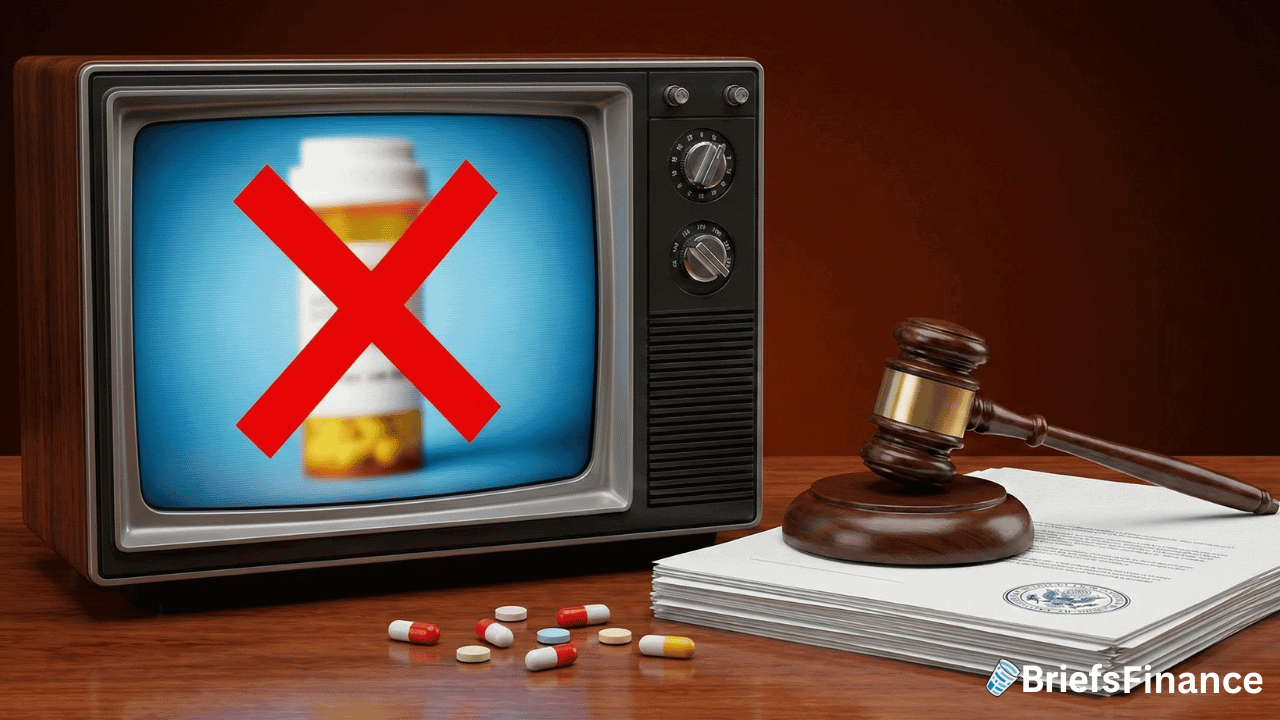
A TV displays a pill bottle with a red "X" over it. Next to the TV are a gavel, documents, and scattered pills, hinting at a legal issue involving Wegovy and its FDA approval by Novo Nordisk.
Summary:

  • The FDA issued a letter to Novo Nordisk on February 5, 2026, about misleading claims in its Wegovy ad.
  • The ad misbrands the Wegovy pill, violating federal law, and the FDA requested immediate action from Novo.
  • More than 170,000 patients are currently using the Wegovy pill, which launched in January 2026.

FDA Takes Action Against Novo Nordisk

On February 5, 2026, the Food and Drug Administration (FDA) sent a letter to Novo Nordisk regarding its television advertisement for the Wegovy obesity pill.

The FDA stated that the ad includes "false or misleading" claims about the drug's benefits and abilities. This misbranding makes the distribution of the ad a violation of federal law, as indicated by the FDA in their communication.

Novo Nordisk's Response

Novo Nordisk has confirmed it received the FDA's letter and mentioned that the advertisement has been running since the pill's launch in January 2026. However, the company clarified that this ad is not associated with its Super Bowl advertisement.

Liz Skrbkova, Novo's head of U.S. media and stakeholder relations, stated, "We take all regulatory feedback seriously and are in the process of responding to the FDA to address their concerns regarding the advertisement's presentation." This shows the company's commitment to addressing the regulatory feedback promptly.

Market Position and Challenges

The Wegovy pill, which is the first GLP-1 pill for obesity to enter the market, has been taken by over 170,000 American patients.

Novo Nordisk is facing challenges as it attempts to reclaim market share from its main competitor, Eli Lilly, and from cheaper compounded versions of the drug. The company views the Wegovy pill as crucial for its success in the growing GLP-1 market.

FDA's Criticism of the Advertisement

The FDA's letter criticized the advertisement for suggesting that Wegovy provides superior benefits compared to other approved GLP-1 weight loss drugs.

The FDA pointed out that phrases used in the ad, such as "live lighter" and "a way forward," imply greater weight loss and additional benefits that are not supported by evidence. The FDA also noted that the ad misleadingly suggests emotional relief and other life improvements, which have not been demonstrated.

Novo Nordisk's Legal Actions

On the same day the FDA issued its letter, Novo Nordisk launched a lawsuit against the telehealth company Hims & Hers.

The lawsuit seeks to prevent Hims & Hers from mass marketing compounded versions of the Wegovy pill and injections. This legal action indicates the company's efforts to protect its market position and intellectual property in the rapidly evolving weight loss drug sector.

What This Means for Novo Nordisk

With the FDA's scrutiny and legal challenges, Novo Nordisk faces a critical moment in its efforts to secure its place in the obesity treatment market.

The Wegovy pill represents a significant advancement in weight loss medication, but the company must navigate regulatory concerns and competition effectively. As they respond to the FDA and pursue legal action against competitors, the outcome will be crucial for their future in the industry.

Disclosure

Get Market Briefs delivered to your inbox every morning for free!

No fluff. No noise. No politics. Just finance news you can read in 5 minutes.

Blogs

May 30, 2026
Financial Literacy Books That Actually Build Wealth
  • The best financial literacy books don't just teach budgeting, they shift how you think about money.
  • Two classics stand out: The Intelligent Investor for valuing investments, and Rich Dad Poor Dad for the owner's mindset.
  • Reading is only step one. The real wealth comes from acting on what you learn.
Read More
May 30, 2026
What Is a Roth Conversion? A Simple Guide
  • A Roth conversion moves money from a traditional retirement account into a Roth account.
  • You pay taxes on the money now, in exchange for tax-free growth and withdrawals later.
  • It can pay off if you expect higher taxes or more income in the future, but the timing and tax hit matter a lot.
Read More
May 30, 2026
Trailing Stop Loss: How to Protect Your Gains
  • A trailing stop loss is an order that automatically sells a stock if it falls a set percentage from its recent high.
  • As the stock rises, the sell point rises with it, locking in gains while capping losses.
  • It's most useful for active strategies like momentum investing, not for long-term buy-and-hold.
Read More
May 30, 2026
5 Types of Wealth: Why Money Is Only One of Them
  • Real wealth is more than a bank balance. It spans your finances, health, mind, purpose, and freedom.
  • Money is powerful, but it amplifies the life you already have rather than fixing a broken one.
  • True financial wealth means your cash flow covers your expenses, so your money works while you live.
Read More
May 30, 2026
How to Invest in Private Equity: A Beginner's Guide
  • Private equity means investing in companies that aren't listed on the stock market.
  • Traditional private equity is built for experienced, high-net-worth investors with large amounts to invest.
  • New rules have opened more accessible paths, like startup crowdfunding and real estate deals, often starting around $100.
Read More
May 30, 2026
What Is a Call Option? A Simple Guide With Examples
  • A call option gives you the right to buy a stock at a set price by a set date.
  • Investors buy calls when they expect a stock to rise, using less money than buying the shares outright.
  • The most you can lose buying a call is the premium, but time works against you, so it's an advanced tool.
Read More
May 30, 2026
EBITDA Formula: How to Calculate It Step by Step
  • EBITDA stands for Earnings Before Interest, Taxes, Depreciation, and Amortization, a measure of a company's core profit.
  • The formula adds those four items back to net income to show what the underlying business earns.
  • Investors use EBITDA to compare companies and to judge how many times earnings a stock is selling for.
Read More
May 30, 2026
What Is a Stock Option? A Plain-English Guide
  • A stock option is a contract giving you the right, but not the obligation, to buy or sell a stock at a set price by a set date.
  • There are two types: calls (the right to buy) and puts (the right to sell).
  • Options are powerful but risky, so they suit investors who already have the basics down.
Read More
May 30, 2026
Put Option: What It Is and How It Works
  • A put option gives you the right to sell a stock at a set price by a set date.
  • Investors use puts to bet a stock will fall, or as insurance to protect shares they own.
  • The most you can lose buying a put is the premium you paid, which makes it a defined-risk tool.
Read More
May 30, 2026
Operating Margin: What It Is and How to Calculate It
  • Operating margin shows how much profit a company keeps from its core business after paying its running costs.
  • The formula is operating income divided by revenue, shown as a percent.
  • A strong, steady operating margin signals a well-run business that controls its costs.
Read More
1 2 3 22
Share via
Copy link









