Free NewsletterPro Login

Ethereum's Warning Sign: History Says More Pain Could Be Coming

A stylized illustration of a cylindrical cup with blue arrows and lines indicating a swirling or rotational motion inside the cup.
Published Oct 21, 2025
Share:
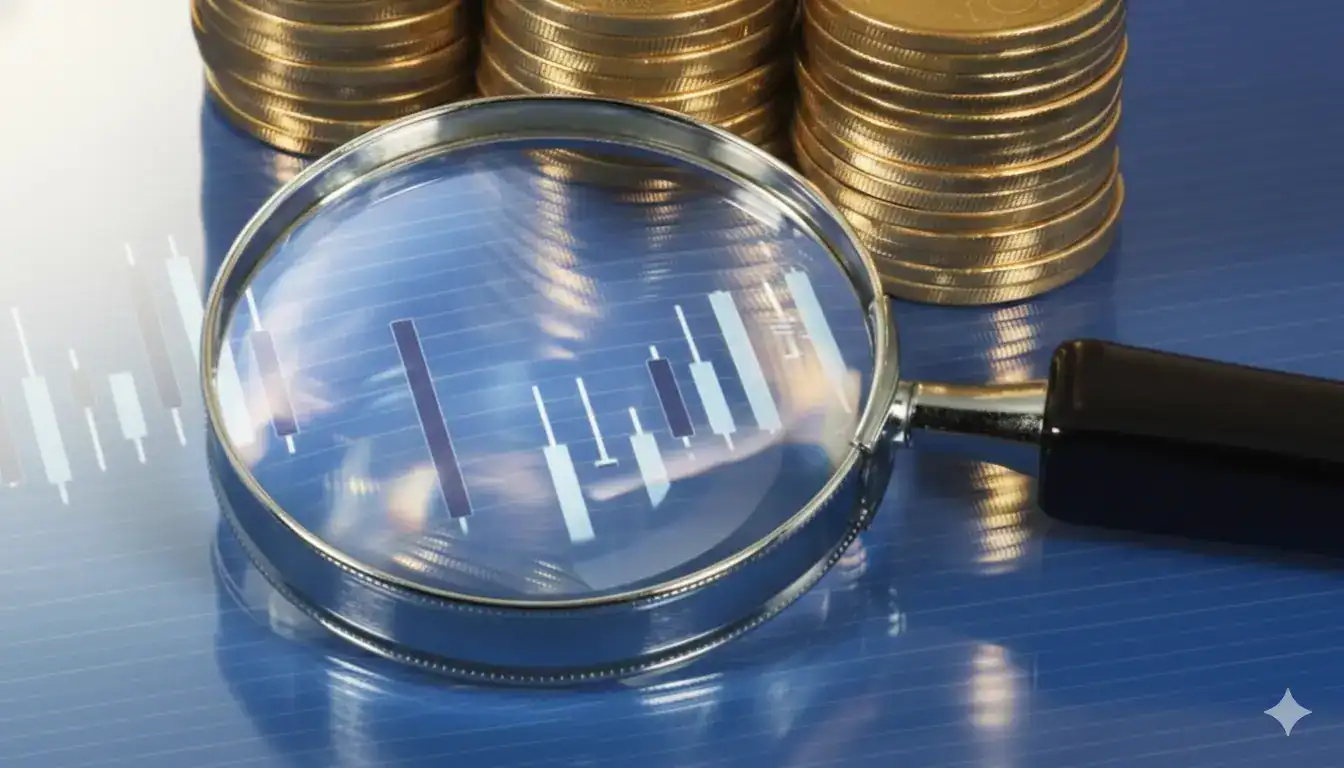
A magnifying glass focuses on a financial candlestick chart with a warning sign, hinting at price prediction uncertainty, while Ethereum coins and stacked gold coins appear in the background.
Summary:
  • Ethereum's MACD indicator just flashed a bearish "sell" signal on the weekly chart - the same pattern that preceded two previous major crashes
  • The last two times this signal appeared, ETH dropped 46% and 60% within weeks - and it's happening again in October 2025
  • Analysts say Ethereum needs to hold above $4,000 to avoid following the same pattern, but the technical setup looks worrying

What Happened?

A key technical indicator just flipped negative for Ethereum, and crypto traders are nervous because this same signal has predicted major crashes before.

The indicator is called MACD (Moving Average Convergence Divergence) - essentially a tool that tracks whether momentum is building or fading for an asset. On Ethereum's weekly chart, the MACD line just crossed below the signal line, which traders interpret as a "sell" signal.

Why does this matter? Because the last two times this exact pattern appeared, Ethereum got hammered. In mid-2024, ETH dropped 46% after the signal. More recently in early 2025, the same signal preceded a brutal 60% crash within just a few weeks.

Now it's happening again in October 2025, with Ethereum currently trading around $3,874 - already down about 20% from recent peaks.

Why This Matters

Technical analysis isn't magic, but patterns do repeat in markets because human psychology and trading behavior tend to follow similar cycles. The MACD indicator specifically tracks momentum - whether buying pressure is increasing or decreasing.

When the MACD line crosses below the signal line, it suggests momentum is shifting from buyers to sellers. Think of it like a car that was accelerating but is now slowing down - the trend is changing direction.

For Ethereum, this signal has been remarkably accurate at predicting major downturns. Twice in the past 18 months, it flashed right before steep selloffs. That's why traders are paying attention now.

The key level to watch is $4,000. Technical analysts say if Ethereum can hold above that price, it might avoid repeating the pattern. But if it breaks below $4,000, history suggests we could see another significant drop - potentially in the 40-60% range if the pattern holds.

What makes this particularly concerning is the timing. Ethereum is already showing weakness, and this bearish signal is appearing just as broader crypto markets face liquidity issues and risk-off sentiment. Multiple negative factors stacking up rarely ends well for prices.

The Bottom Line

Technical indicators aren't guarantees - markets can always behave differently than they did in the past. But when a signal has correctly predicted two major crashes in the past 18 months, it's worth paying attention.

For Ethereum holders, this is a warning shot. The pattern suggests more downside could be coming, especially if ETH breaks below $4,000. That doesn't mean you should panic sell, but it does mean being aware of the risk.

Some context: Ethereum has additional challenges beyond just technical signals. The crypto market is facing tightening liquidity, Bitcoin is struggling, and investor appetite for risk assets is weak right now. Technical signals tend to work better when they align with fundamental conditions - and right now, the fundamentals aren't great either.

What should everyday investors do? If you own Ethereum, watch that $4,000 level closely. A clean break below it could trigger more selling as traders who follow technical patterns start dumping.

Conversely, if ETH can hold above $4,000 and then rally, it might invalidate the bearish signal.
The uncomfortable truth is that catching falling knives is dangerous.

If this pattern plays out like the last two times, Ethereum could have significantly more downside ahead. That might create a buying opportunity eventually, but trying to time the bottom is risky.

For now, the technical setup looks bearish, the historical precedent is concerning, and the broader market conditions aren't helping. Caution seems warranted until Ethereum can prove it won't follow the same script as 2024 and early 2025.

Disclosure

Get Market Briefs delivered to your inbox every morning for free!

No fluff. No noise. No politics. Just finance news you can read in 5 minutes.

Blogs

May 30, 2026
Financial Literacy Books That Actually Build Wealth
  • The best financial literacy books don't just teach budgeting, they shift how you think about money.
  • Two classics stand out: The Intelligent Investor for valuing investments, and Rich Dad Poor Dad for the owner's mindset.
  • Reading is only step one. The real wealth comes from acting on what you learn.
Read More
May 30, 2026
What Is a Roth Conversion? A Simple Guide
  • A Roth conversion moves money from a traditional retirement account into a Roth account.
  • You pay taxes on the money now, in exchange for tax-free growth and withdrawals later.
  • It can pay off if you expect higher taxes or more income in the future, but the timing and tax hit matter a lot.
Read More
May 30, 2026
Trailing Stop Loss: How to Protect Your Gains
  • A trailing stop loss is an order that automatically sells a stock if it falls a set percentage from its recent high.
  • As the stock rises, the sell point rises with it, locking in gains while capping losses.
  • It's most useful for active strategies like momentum investing, not for long-term buy-and-hold.
Read More
May 30, 2026
5 Types of Wealth: Why Money Is Only One of Them
  • Real wealth is more than a bank balance. It spans your finances, health, mind, purpose, and freedom.
  • Money is powerful, but it amplifies the life you already have rather than fixing a broken one.
  • True financial wealth means your cash flow covers your expenses, so your money works while you live.
Read More
May 30, 2026
How to Invest in Private Equity: A Beginner's Guide
  • Private equity means investing in companies that aren't listed on the stock market.
  • Traditional private equity is built for experienced, high-net-worth investors with large amounts to invest.
  • New rules have opened more accessible paths, like startup crowdfunding and real estate deals, often starting around $100.
Read More
May 30, 2026
What Is a Call Option? A Simple Guide With Examples
  • A call option gives you the right to buy a stock at a set price by a set date.
  • Investors buy calls when they expect a stock to rise, using less money than buying the shares outright.
  • The most you can lose buying a call is the premium, but time works against you, so it's an advanced tool.
Read More
May 30, 2026
EBITDA Formula: How to Calculate It Step by Step
  • EBITDA stands for Earnings Before Interest, Taxes, Depreciation, and Amortization, a measure of a company's core profit.
  • The formula adds those four items back to net income to show what the underlying business earns.
  • Investors use EBITDA to compare companies and to judge how many times earnings a stock is selling for.
Read More
May 30, 2026
What Is a Stock Option? A Plain-English Guide
  • A stock option is a contract giving you the right, but not the obligation, to buy or sell a stock at a set price by a set date.
  • There are two types: calls (the right to buy) and puts (the right to sell).
  • Options are powerful but risky, so they suit investors who already have the basics down.
Read More
May 30, 2026
Put Option: What It Is and How It Works
  • A put option gives you the right to sell a stock at a set price by a set date.
  • Investors use puts to bet a stock will fall, or as insurance to protect shares they own.
  • The most you can lose buying a put is the premium you paid, which makes it a defined-risk tool.
Read More
May 30, 2026
Operating Margin: What It Is and How to Calculate It
  • Operating margin shows how much profit a company keeps from its core business after paying its running costs.
  • The formula is operating income divided by revenue, shown as a percent.
  • A strong, steady operating margin signals a well-run business that controls its costs.
Read More
1 2 3 22
Share via
Copy link









