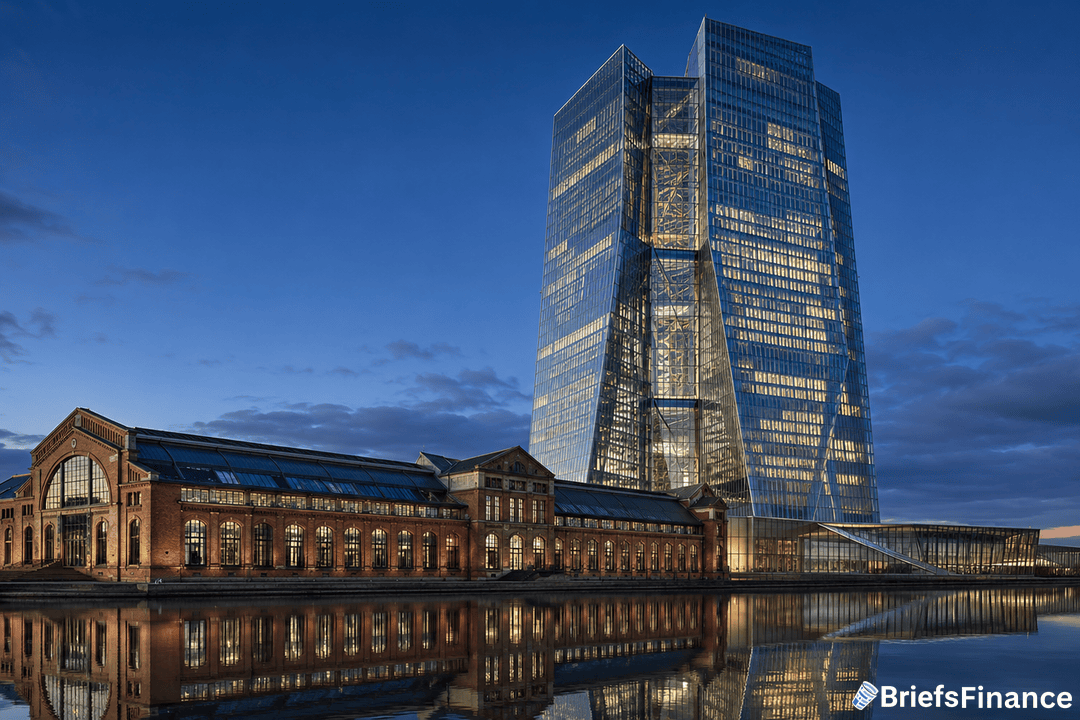
On Thursday, the ECB raised rates for the first time in nearly three years. Less than a day later, one of its own officials said that wasn't enough. His worry isn't oil. It's that high prices have already spread everywhere else.
The Warning
Peter Kazimir sits on the ECB's rate-setting board and runs Slovakia's central bank. His message was blunt: prices won't cool on their own, so rates must keep rising.
He even pushed back on the hope that a US-Iran peace deal would fix things. Cheaper oil would help, he said. But it won't drag inflation back to the 2% goal overnight.
Inflation started at the gas pump. Kazimir warns it has seeped into everything else - the way a spill spreads past where it first landed.
Even the ECB's top economist sounds worried. Philip Lane, often seen as a dove, says this shock may be wider than the Ukraine crisis.
We make sense of central bank moves like this every morning in Market Briefs - about five minutes a day, plus a free investing masterclass when you sign up.
Why It Matters
The ECB raised its key rate to 2.25% on Thursday, up from 2%. That rate steers loan costs for homes and firms across Europe.
The euro zone covers 21 countries, so a single rate move hits them all. The vote this time was united, and markets had fully priced in the hike.
It was the bank's first hike since September 2023. It was also the first by a major central bank to fight the oil shock from the war.
The war has now passed 100 days. The closed strait and damaged oil sites lit the price shock.
The hike landed a week before the Fed and other big banks decide. The ECB moved first on the shock.
Euro-zone inflation hit 3.2% in May, well above the 2% goal. The core rate, which strips out food and gas, sat at 2.5%.
The ECB now expects inflation to average 3% this year. It sees 2.3% next year, then 2% in 2028.
The bank also cut its growth outlook to just 0.8% for the year, and to about 1.2% next year. Not everyone backs the hike.
Experts at UBS and Berenberg called it a mistake. They say the ECB is raising rates into an economy that's already weak, with growth at just 0.1% early this year.
What To Watch
Markets expect maybe two more hikes over the next year. The next could come as soon as September.
One bank put it plainly. Deutsche Bank's Mark Wall sees "one more hike in September and that's it."
ECB chief Lagarde says the bank isn't locked into any path. She also rejected the idea that this was a one-off "insurance" hike. Kazimir, for his part, wants to stay aggressive.
The deciding factor is whether high energy costs keep leaking into the price of everything else.
Join Market Briefs for the daily download on markets, and we'll throw in a 45-minute investing course for new readers.