Why Apple is doing this now
Around 2020, Tim Cook came back from China and other parts of Asia fired up by something he saw everywhere: people actually using foldable phones from Samsung, Huawei and others. He told his teams Apple needed to be in the mix and urged them to pick up the pace. That hands-on push stood out for a CEO known more for supply chains and spreadsheets than seeding brand-new product ideas.
Apple's hardware engineering groups had already been tinkering with foldable phones, displays and components for years, even before Samsung's first Galaxy Fold arrived in 2019. Cook's enthusiasm helped shift the internal debate away from a foldable iPad concept toward a foldable iPhone that could reach more buyers.
The niche is still tiny next to the broader phone market, but it is the part that is growing. IDC projects foldable shipments climbing 13% this year, reaching 22.9 million units, compared with more than 1 billion total smartphone shipments. And for Apple, the stakes are big: the iPhone makes up roughly half of the company's sales.
What is coming on Wednesday
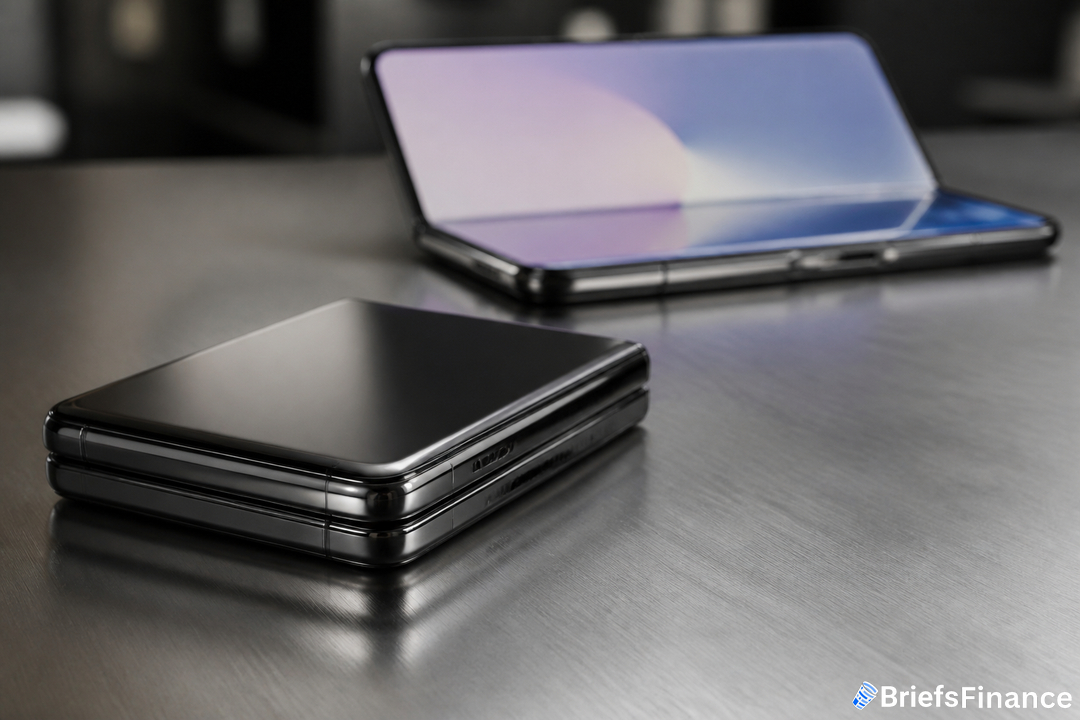
Apple plans to introduce its first foldable iPhone, marking the most dramatic redesign since the iPhone debuted almost twenty years ago. Internally, the project has gone by V68, and some on the team called it iPhone Ultra during development to signal that it sits above the rest of the lineup.
The event also doubles as a coming-out moment for John Ternus, who became CEO on Sept. 1. The handoff was timed so he could introduce the foldable. Tim Cook, now executive chairman, will be in the audience. The effort dates back to Dan Riccio's tenure running hardware engineering, during which he spearheaded initial technology development in partnership with Apple's industrial design team. In later stages, Cook and Ternus became the most vocal advocates, with one person saying Ternus was "using his power to push it over the finish line."
Price has been a running debate. Early on, Apple targeted $1,999 to sit just below the $2,000 psychological line, similar to how the iPhone X debuted at $999. More recently, options as high as $2,199 have been discussed as a memory shortage pushed costs beyond targets, and some higher-storage versions could approach $3,000. For context, the standard iPhone starts at $799 and the iPhone 17 Pro begins at $1,099, while recent Pro models can near $2,000 with maxed-out storage.
Apple expects its Upgrade subscription, trade-in offers and carrier installment plans to soften the sticker shock. Rival foldables from Samsung and Google start around $1,899. Even with the price, employees expect Apple to sell every unit it can make, and Wall Street estimates suggest sales of 7 million to 10 million this year.
In times of product change, steady financial habits help protect what you built. Join Briefs Finance CEO Jaspreet Singh on September 29th for a FREE live investor workshop, How to Profit From A Dollar That's Losing its Value, where he shows how we're spotting investment opportunities as the dollar falls. Save your spot.
The hardware and software choices
Apple explored different shapes early on, including an iPad mini-like device that unfolded into a larger tablet, before settling on a phone-first design. Closed, the device uses a relatively short 5.5 inch outer screen so it feels pocketable. Open it up and you get a roughly 7.8 inch inner display that is wider than many Android foldables.
Google tried a similar layout with the original Pixel Fold in 2023 before moving away from it. Samsung has recently leaned into this form with the Galaxy Z Fold8, and after years of preferring a more square inner panel, it is now posting strong sales. Designers pictured the folded phone as passport-sized, with unfolded proportions akin to a Magic Trackpad.
The engineering roadmap focused on four tough problems: making the crease far less noticeable, building a more reliable hinge, crafting a new flexible cover glass, and pushing camera components behind the display to maximize usable screen area. Apple settled on a titanium and aluminum hinge paired with custom cover glass developed with Corning. The outcome is a crease that appears much less noticeable than on today's other foldables, something Apple plans to emphasize. Apple acknowledges durability may trail the iPhone 18 Pro line and some other recent models, yet it argues the foldable still leads its category on build quality.
There are trade-offs. You need to open the phone to unlock its full value, and Apple anticipates the camera system will be weaker and the battery life shorter than on a standard iPhone. Apple is leaning on software to make the new display shine, updating many of its apps for the wider screen and tuning iOS so apps behave better on it.
What to watch next for your money
Apple sees this device kicking off a multiyear wave of ambitious hardware: a touch-screen MacBook, plans for a robot that sits on a table, smart glasses, and AirPods that incorporate cameras, plus a fresh take on home security that skips video recording. And the market-watchers are already talking. "Trust me, despite the high price, the foldable iPhone will be wildly successful," said IDC's Nabila Popal, who added it could become the "Birkin" of smartphones in China.
If Apple really does sell every foldable it can build at premium prices, that is a strong signal about consumer appetite for high-end tech even in a niche category. For your wallet, it is a reminder that people will pay up when a device changes what it can do in your hand - and companies notice.
New consumer trends remind investors to focus on long term goals and discipline. Our CEO Jaspreet Singh is hosting a FREE live investor workshop, How to Profit From A Dollar That's Losing its Value, on September 29th. Sign up free to join him live.