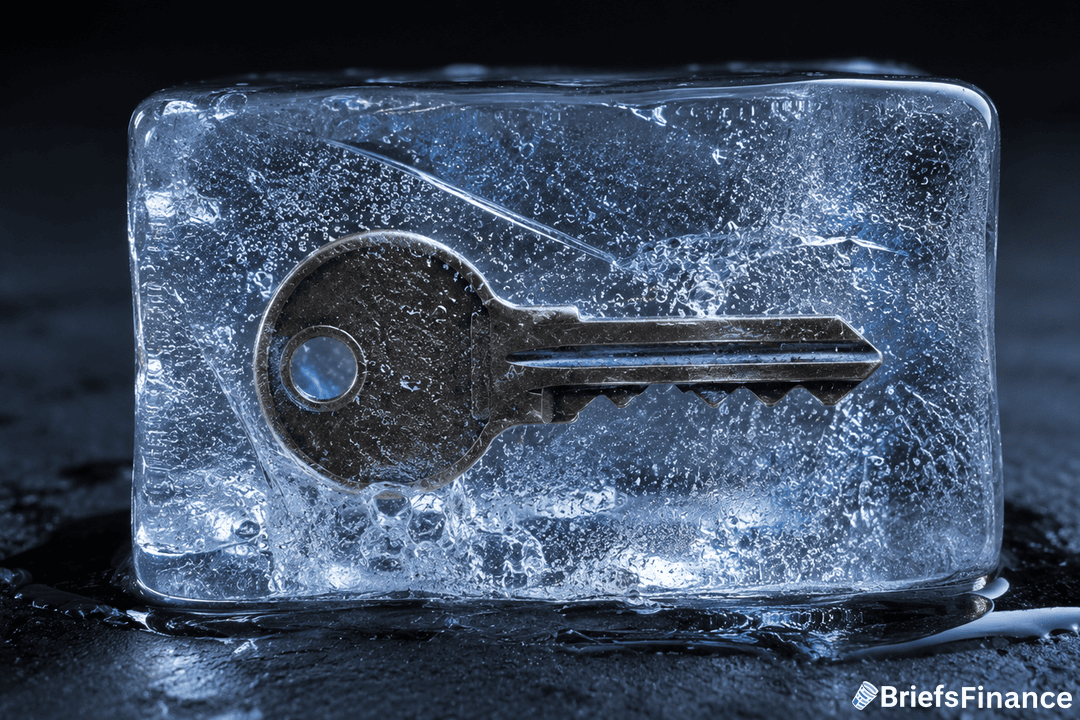
Here is the part nobody explains.
The housing market is not frozen because demand dried up. It is frozen because sellers can't afford to move.
That is the lock-in effect. And a government study put hard numbers on how strong it is.
The Trap, In One Number
Picture a homeowner with a 3% loan. To buy the next house, they would have to take on a new loan near 6.5%.
That doubles the interest on a bigger balance. So they stay put.
The FHFA found the size of the pull. For each point the market rate sits above a homeowner's old rate, the chance of selling drops 18.1%.
That is not a small nudge. It is a powerful reason to stay exactly where you are.
Multiply that across millions of owners. The result is a market with very little for sale.
Market Briefs turns research like this into a five-minute morning read, and joining comes with a free investing masterclass.
No Sellers, No Sales
When people don't list, the homes for sale just vanish. The study found this cut home sales with fixed-rate loans by 57% in late 2023.
Add it up over time. The freeze blocked about 1.33 million sales between 2022 and the end of 2023.
Those are moves that should have happened. They didn't.
People stayed in homes that no longer fit. Some skipped a new job or a bigger place to keep the cheap loan.
The study came out in 2024 from researchers at the FHFA. It looked at the stretch from mid-2022 through late 2023.
The Cruel Twist
You would think fewer buyers would cool prices. The opposite happened.
The lock-in pulled so many homes off the market that prices rose 5.7%. Thin supply beat weak demand.
Higher rates on their own should have cut prices about 3.3%. But the supply squeeze was the bigger force, so prices still climbed.
Think of supply as the bigger lever here. It pushed prices up even as demand cooled.
So buyers got hit twice. They paid more on the rate and more on the price.
It is a strange result. More expensive money usually cools a market, but here it did the opposite.
What To Watch
Nearly all of the country's 50 million home loans carry fixed rates. Most of them sit well below today's rate.
Until market rates fall closer to those old ones, the freeze has every reason to last. Lower-wealth owners feel it most, since they can't time a sale as easily.
So the freeze does not hit everyone the same way. It quietly widens the gap between richer and poorer owners.
There is no quick switch to flip here. The freeze thaws only when new loans stop looking so much worse than old ones.
So the cure is easy to name and hard to deliver. Rates simply have to come down.
For more reads that make the data make sense, sign up for Market Briefs and grab the free 45-minute investing course that comes with it.