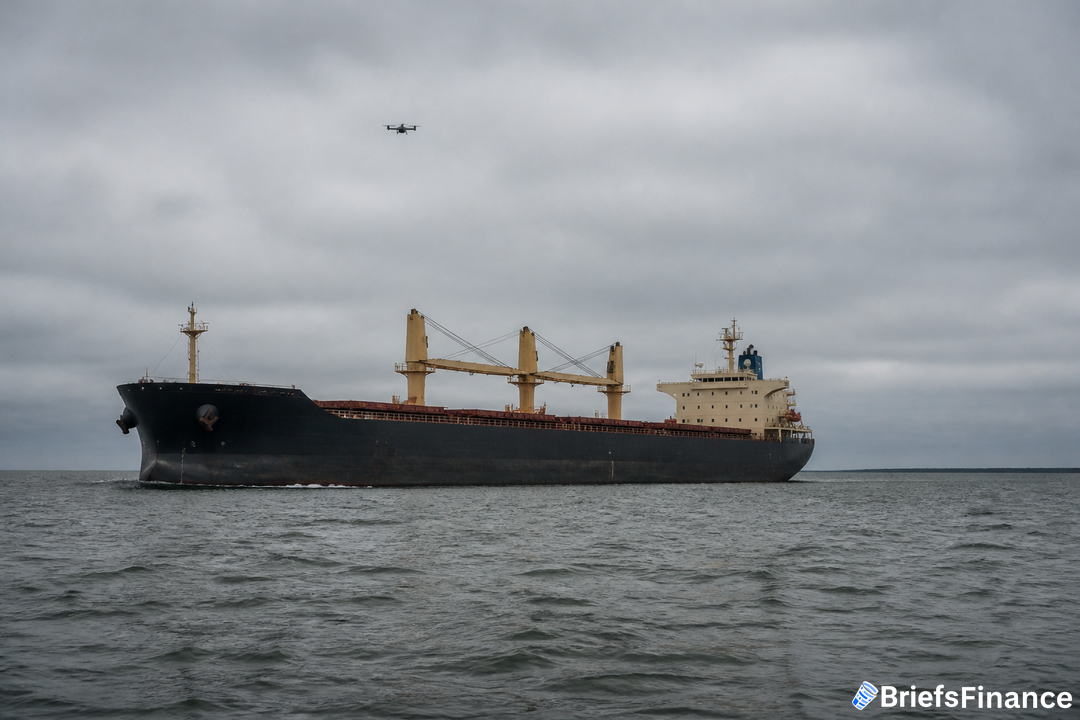
What happened at sea
Russia said a merchant vessel bound for Kaliningrad was attacked in the international section of the Gulf of Finland. Officials reported two drones hit the ship roughly three nautical miles from Russia's maritime boundary, setting it on fire before it drifted into Finnish territorial waters.
Finland's defense ministry said it sent Border Guard units to waters to the west of Suursaari - called Gogland in Russia - and imposed temporary flight and navigation limits as a safety measure. Russia offered no further details, and Ukraine has not commented.
What may have been on board and the nearby strikes
Helsingin Sanomat, citing the Finnish border guard, reported the ship was linked to Russia's military and may have been transporting military materiel, while noting the cargo had not been verified.
This is the second vessel hit by a drone in November in the Gulf of Finland. On Nov. 11, Russia's Buyan-M class corvette Naro-Fominsk was hit during a wider assault on Ust-Luga, a key Baltic export hub. The region also faced a mass drone attack; the governor said air defenses downed 80 Ukrainian drones.
Ukraine's Security Service said the Nov. 11 attacks inflicted damage on Novatek PJSC's oil-product terminal - tanks included - and on petroleum infrastructure at Ust-Luga. Ust-Luga is more than 1,000 km north of Kyiv.
When global events touch trade and finance, stay grounded with our free Market Briefs newsletter for concise daily market context
Why the Gulf and Baltic routes matter
The Baltic Sea carries about 15% of global freight annually, even though it is shallow and rocky. More than 3 million passengers cross the Gulf of Finland on ferries each year, alongside heavy traffic from cargo ships and oil tankers, including a shadow fleet moving sanctioned Russian oil.
Baltic ports are critical for Russia's crude and petroleum-product exports. Their role increased after an October deal between Russian President Vladimir Putin and US President Donald Trump, which enabled Russia to restart some diesel exports. Later that month, the first diesel tanker sailed from the Baltic port of Primorsk once Moscow loosened its export ban.
Grain flows have also shifted north. Attacks have disrupted shipping from southern Russia and Ukraine, and the Russian Grain Union said 65.3% of Russia's seaborne grain exports moved through Baltic ports in October, with volumes up 8.7 times year over year as Azov-Black Sea shipments collapsed. Ust-Luga was the top grain export port for the month at 684,000 tons.
Security spillovers and the investor angle
According to Finland, its authorities believe a Russian helicopter may have breached Finnish airspace near Loviisa on the Gulf of Finland on Saturday afternoon. On X, President Volodymyr Zelenskyy said work was ongoing after a late Friday Russian strike on his hometown, Kyrvyi Rih, which killed two people, including a young boy, and injured at least 60 others.
The bottom line: repeated strikes on ships and ports raise operational risk premiums and can reroute cargoes from fuels to grain through the Baltic. If your portfolio touches energy traders, shipping, insurers, or Baltic-exposed infrastructure, watch for delays, higher freight and cover costs, and shifting export volumes across these lanes.
In uncertain times, get a quick daily read on the economy and markets by signing up for the free Market Briefs