What happened this week
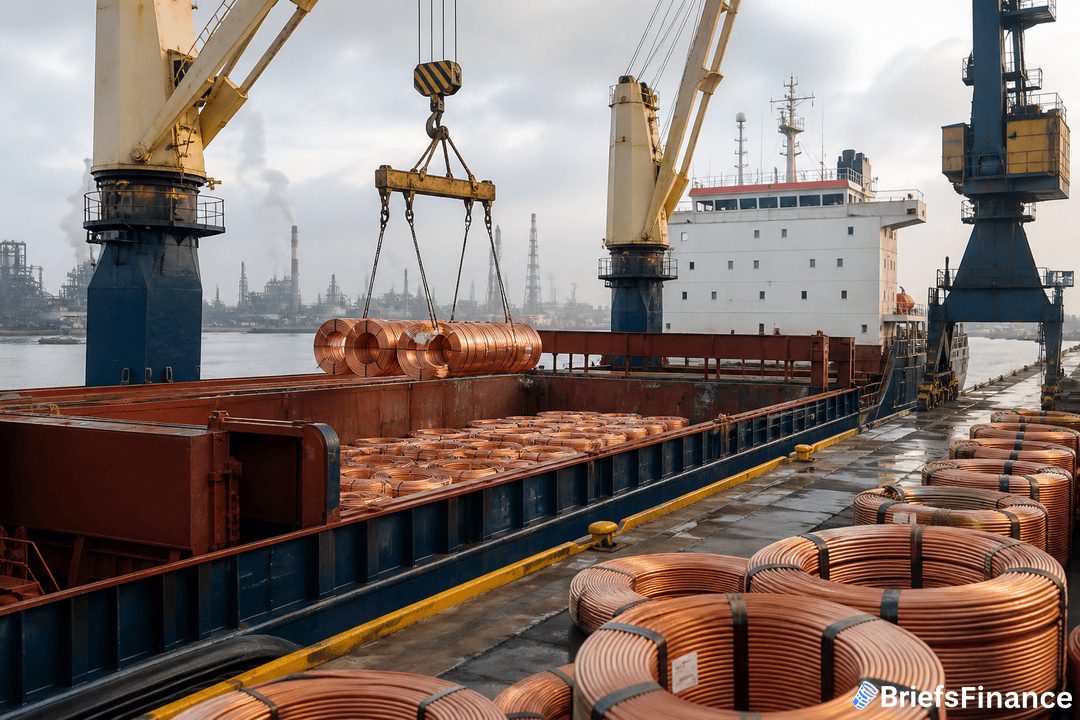
Logistics providers say they have fielded a rush of requests to ship copper from the U.S. to China, and people familiar with the activity say several bookings are already confirmed.
To capture richer Chinese premiums, traders started reserving space to send metal across the Pacific. According to the people, a portion of the metal will ride the CMA CGM Cassiopeia, slated to leave a Los Angeles-area port this week.
Several traders estimate the amounts are modest so far, totaling just tens of thousands of tons. Sailing from the U.S. West Coast to China takes around two weeks, but moving material from New Orleans - the primary hub of the large U.S. stockpile - is longer. Including the time to release metal from warehouses, traders said getting copper to China could take roughly six weeks to two months.
Why prices and flows flipped
During the past two years, traders funneled large volumes into the U.S. on expectations that President Donald Trump could levy import tariffs, boosting domestic holdings to roughly 2 million tons while drawing down Chinese inventories.
In the past week, the Yangshan premium on imported copper surged to a record 500 dollars a ton, and at the start of the week the Shanghai Futures Exchange intervened, pressuring both longs and shorts to settle financially because the backwardation on contracts nearing expiry had hit an unprecedented level.
The squeeze arrived during a week of extreme metals volatility, with copper futures plunging across global exchanges as bullish AI-linked bets were unwound and some investors turned bearish on the outlook. Large scale outflows from the U.S. could dent sentiment further.
Jiang Hang, a trader at China-Base Ningbo Group Co., said, "The spot premium may rise further, and the spot market may become even tighter," as lower prices spur renewed buying.
When global flows and supply chains matter to your investing, sign up for the free Market Briefs newsletter and stay informed.
Logistics, timing, and the political angle
The outbound bookings mark a turn from the prior two years of inflows to the U.S., but the quantities now are modest. If China's tightness persists and premiums stay elevated, traders said exports from the U.S. - especially from outside the West Coast - could rise significantly.
Those timeframes cut both ways. China's market could stay tight while cargoes are arranged and shipped, but traders also risk that the squeeze ends before their metal arrives.
Washington has said nothing about possible refined-copper tariffs since mid year, a point at which the Commerce Department was scheduled to present a report on the issue to President Donald Trump. Most traders have stopped betting on Trump imposing tariffs on refined copper, yet several said that preparations to send cathode from the U.S. to China could push the issue back into the political spotlight. According to BMO Capital Markets Ltd. commodities analyst Helen Amos, "Now that we're starting to see action being taken by some traders to maybe prepare to ship cathode out of the US to China, I'd be surprised if that doesn't provoke some sort of comment or action seen from the administration."
What this could mean for your portfolio
Chinese premiums spiked, traders reacted, and the initial volumes involved are small versus the roughly 2 million tons sitting in the U.S. The timeline matters: about two weeks from the West Coast, but six weeks to two months when pulling metal from the Gulf and through warehouses.
If the Yangshan premium stays lofty, more U.S. copper likely gets booked, keeping China tight and potentially weighing on sentiment in futures as inventories start to move. If the squeeze fades, the arbitrage closes and momentum stalls.
Watch Yangshan premiums and fixture reports out of U.S. ports. They are the real time gauges for near term copper availability and price pressure on both sides of the Pacific.
If you want clear daily context on markets and commodities, get Market Briefs for free and read it in five minutes.