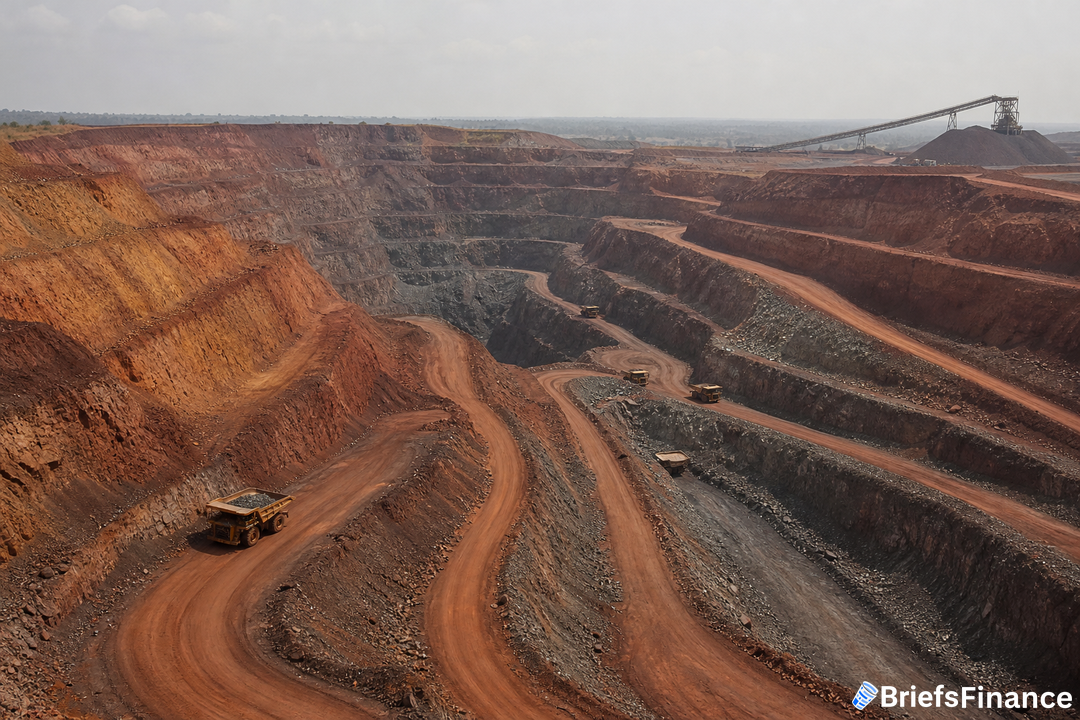
Who is in the deal and what it targets
Orion CMC was created to help the US and partners secure minerals supply worldwide, with an eye toward a $5 billion fund. Its founders are Orion Resource Partners, the US International Development Finance Corp., and Abu Dhabi's L'imad Holding. Saudi Arabia is also involved, and Lewnowski said he is speaking with "Asian allies" about joining.
Lewnowski, CEO of Orion Resource Partners, told Bloomberg Television's Francine Lacqua that Orion CMC's transaction to buy into Glencore's Congo operations is in its "final phases." In February, the venture unveiled a preliminary agreement to acquire 40% of Glencore's majority stakes in two large operations in the country.
The strategy and the China question
Congo is the world's No. 2 copper producer and the top source of cobalt, a key battery ingredient. Chinese companies dominate output of both metals there. The venture's goal is to curb dependence on China across a range of mineral products. As Lewnowski put it, "We're not looking to compete with China," but to build "a supply chain that doesn't allow for monopolistic behavior by any one country."
Copper traders are watching whether President Donald Trump will move ahead with proposals to impose import tariffs. The administration is "fairly divided," Lewnowski said. If tariffs do not happen, "I think the US government probably takes a hard look at buying significant amount of tonnage that's already in the United States and storing it."
When global deals and resource markets affect many decisions, sign up for the free Market Briefs for quick daily context.
What else is on Orion CMC's shopping list
He also noted that the consortium is chasing additional mining transactions in Canada, Indonesia, and Vietnam.
Supporting Chemaf SA - a copper and cobalt producer in Congo that was acquired by the US's Virtus Minerals Inc. - via a deal "is still possible," but Orion CMC's present priority is wrapping up the Glencore transaction.
Why this matters for your portfolio
A Glencore closing would add a major copper and cobalt stream to supply routes not controlled by China, aligning with efforts by the US and allies to diversify. Parallel moves into nickel via Kabanga, plus potential deals in Canada, Indonesia, and Vietnam, round out a broader battery metals footprint.
The bottom line: whether through tariffs or government stockpiling, policy signals point to tighter links between geopolitics and metals prices. That is the backdrop for copper, cobalt, and nickel exposures across your portfolio.
To make sense of shifting supply chains and finance headlines, subscribe to the free Market Briefs newsletter for five minute clarity.