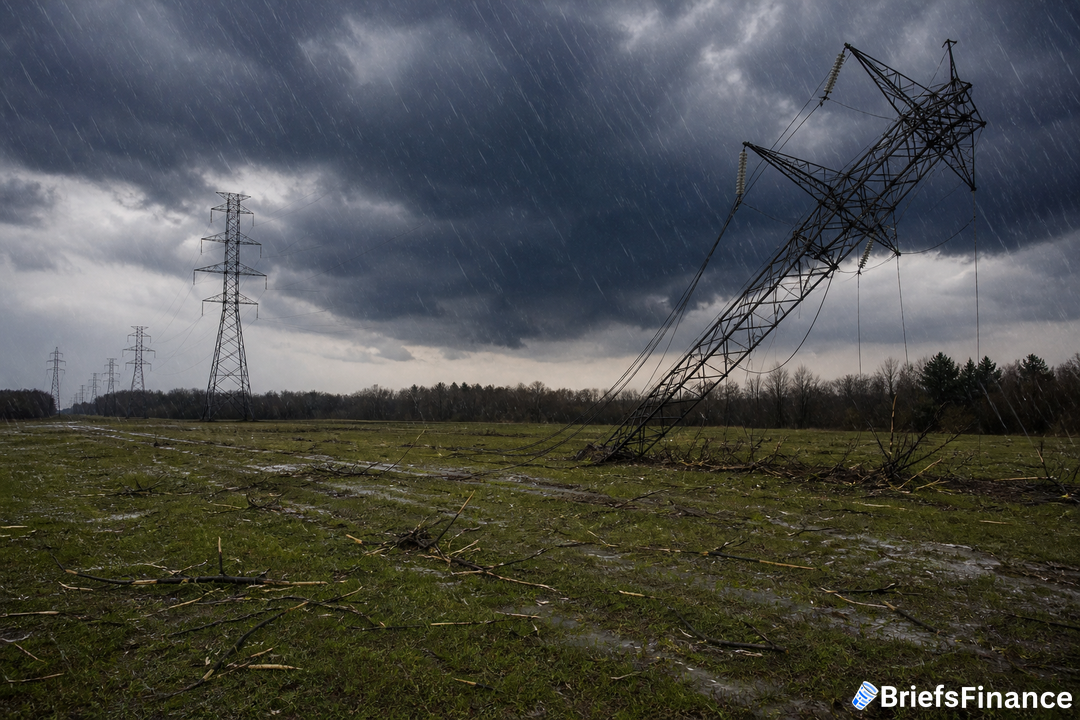
The storm and the outages
On Friday, Storm Austen hugged the English Channel, soaking coastlines on both sides, and Météo-France reported gusts up to 140 kilometers per hour along parts of France's shore - winds comparable to Category 1 strength on the Saffir-Simpson hurricane scale.
In western France, the storm cut electricity to almost 300,000 customers. According to Enedis, nearly 150,000 of those were in Brittany - the worst affected area - while Normandy saw 88,800 cut off, Pays de la Loire 49,600, and Hauts-de-France nearly 8,000. The grid operator said more than 2,000 employees have been deployed since Wednesday, with several hundred extra technicians sent to the worst affected zones as part of a rapid response effort.
Planes, trains and a lot of delays
France's transport network took a hit. Transport Minister Philippe Tabarot said on X that several roads and rail links were interrupted around Paris and in Normandy, Brittany and Hauts-de-France. Airports on Jersey and Guernsey were closed, and in the UK the airports on Jersey, Guernsey and Alderney were shut until Friday afternoon. Flight cancellations and delays at Paris airports are climbing, according to Flightradar24.
Amber weather alerts are active across northwest Spain and France and over the western half of Germany, with a red warning for high winds in a region of northern Germany near the Harz Mountains.
Weather and energy can affect market headlines, so get clear context with our free Market Briefs newsletter in five minutes daily
Wind surge, price plunge
Austen is the first named storm of the autumn, and its gale force is stuffing grids with cheap wind power. The surge in wind lowers stress on markets that recently contended with natural gas costs at their loftiest levels since the 2022 energy crisis, reducing dependence on gas-fired units that often set prices when renewables fall short.
In Germany, Europe's largest power market, wind output is on track to set a new record on Friday and could nearly meet national demand on Sunday, though curtailment and must run generation could cap what actually flows to the grid. Kpler SA expects Germany's day-ahead power to be €29 per megawatt-hour on Saturday and to sit near zero on Sunday, a trough not seen since April. France is also set for a dip, with prices seen around €17 on Sunday, the weakest since June.
What investors should watch next
Per Epex Spot, the UK's day-ahead price for Saturday cleared at £37 per megawatt-hour - under half the year-to-date average - and National Grid reported about 20,000 customers without electricity in southwest England. A further system, Storm Boelo, is expected this weekend to track farther north, crossing Northern Ireland, Scotland and northern England, and the Met Office cautions of coastal gusts reaching 129 kilometers per hour along with heavy rain. Amber warnings start Saturday.
Looking ahead, BloombergNEF expects wind speeds across Europe's main power markets to run 31% above the 10-year norm through Nov. 4, which could counterbalance stronger heating demand and softer solar output. In plain English: more wind can keep wholesale prices under pressure and dent margins for thermal generators, while easing input costs for power-hungry industries.
Keeping an eye on shifting energy and economy signals matters, subscribe to Market Briefs for a five-minute daily summary you can trust