Free NewsletterPro Login

Warning: Undefined variable $stocks in /var/www/briefs.co/htdocs/wp-content/plugins/oxygen/component-framework/components/classes/code-block.class.php(133) : eval()'d code on line 448

Warning: foreach() argument must be of type array|object, null given in /var/www/briefs.co/htdocs/wp-content/plugins/oxygen/component-framework/components/classes/code-block.class.php(133) : eval()'d code on line 448

Warning: Undefined variable $funds in /var/www/briefs.co/htdocs/wp-content/plugins/oxygen/component-framework/components/classes/code-block.class.php(133) : eval()'d code on line 472

Warning: foreach() argument must be of type array|object, null given in /var/www/briefs.co/htdocs/wp-content/plugins/oxygen/component-framework/components/classes/code-block.class.php(133) : eval()'d code on line 472
/* the link was here */

Ledger hardware wallets found with stealth implants as probe widens beyond one reseller

Published Oct 18, 2026
Share:
Summary:
  • A note dated Oct. 10 on a shuttered crypto shop in central Kuala Lumpur announced a temporary closure, a day after customers first reported missing funds on Oct. 9.
  • Blockchain researchers peg losses at over $90 million; Ledger said a "highly organized criminal group" fitted some devices with covert hardware.
  • Ledger previously tied cases to Malaysian reseller CryptoBilis, but is now reviewing reports of implants in wallets bought elsewhere.

What set this off

In downtown Kuala Lumpur, a paper sign dated Oct. 10 on a closed crypto storefront said its physical stores were temporarily shut until further notice. By then, missing funds were already being reported on Oct. 9, and blockchain researchers were estimating more than $90 million had been stolen.

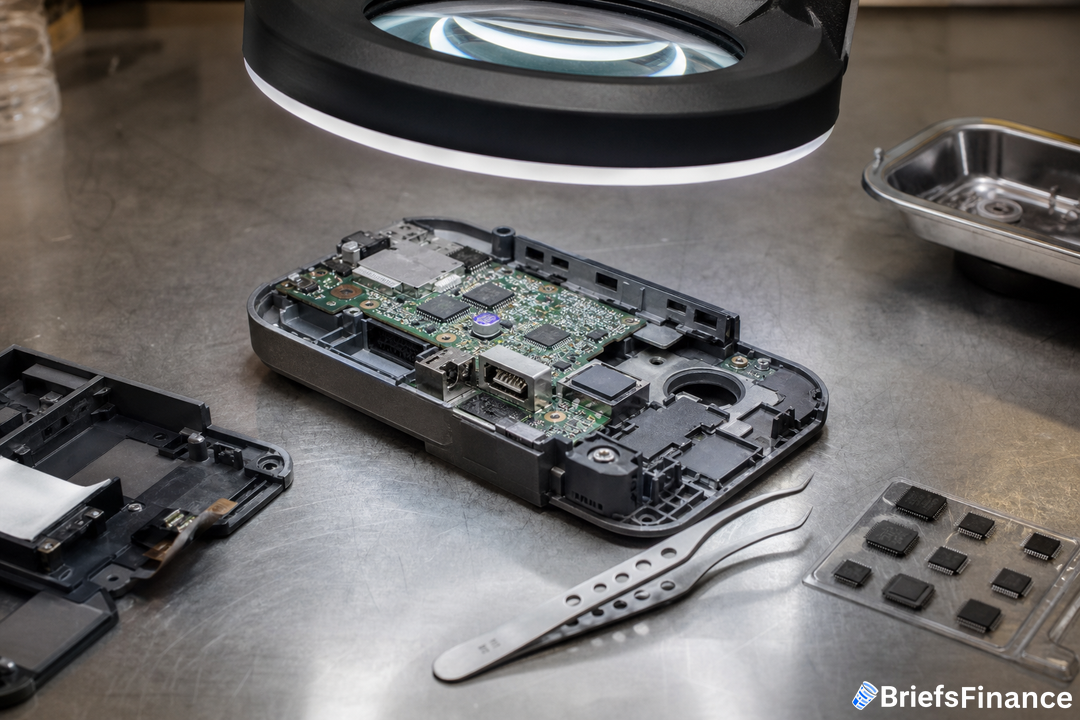
CryptoBilis, a Malaysian retailer that resells hardware crypto wallets, is now a key focus of the probe into thefts from devices meant to keep digital assets offline. Paris-based Ledger SAS, the manufacturer of the affected wallets, announced Thursday that a "highly organized criminal group" had built covert components into certain devices. Previously, the company traced the problem to CryptoBilis; however, it is now examining reports of comparable implants in units purchased from other outlets, suggesting the scope may exceed one reseller.

A Ledger spokesperson said the firm has launched an investigation, is coordinating with local authorities, and will provide further details as they become available. Requests for comment sent to CryptoBilis went unanswered.

How the attack reportedly works

Social media investigators have outlined a likely playbook. In their accounts, a secret module captures passcodes shown on Ledger screens, then sends those keys over cellular networks to attackers, who use them to access funds from other devices.

Ledger's hardware includes a protection chip, yet experts say the implant sidesteps that defense and slips past routine checks until the damage is done. The unnerving twist is physical tampering, not a software or data leak, and the full scope remains unclear even after Ledger's Thursday update.

This flare-up lands after a rough stretch for "cold wallets," the offline devices that store private keys. Over the summer, a flaw in devices made by Coinkite Inc. led to an estimated $130 million in Bitcoin being stolen, and soon after, Trezor reported a shipping-provider breach that exposed personal data for about 67,000 customers.

What investigators are finding

Ledger has rolled out several wallet designs over the years, including a new model it is marketing at $899. Legacy models, including the Nano X, occasionally make their way to intermediaries such as CryptoBilis, which then refurbish and put them back on the market.

According to Ben Yorke, a crypto professional based in Kuala Lumpur, he purchased a Ledger Flex from a Metapod outlet located in Singapore's Changi Airport. Before he set it up, he noticed what looked like tamper marks. "I noticed the subtle but suspicious markings on the side, indicating someone may have tried to pry open the back of the device," he said.

With so much to follow in markets, sign up for the free Market Briefs and get clear updates in five minutes daily

He later shipped the unit to Mark Karpelès, a founder-turned-researcher who runs Tibane Labs and previously led Mt. Gox. Based in Japan, Karpelès in 2019 received a suspended sentence for tampering with financial records tied to Mt.

Gox's collapse, and he was cleared of embezzlement. He was among the first to offer help to victims of the Ledger hack, and after examining Yorke's device he found a custom connector tapping the display, plus a cellular chip and SIM card. "This is not your guy in a garage putting implants on a Ledger," Karpelès told Bloomberg.

"This is the kind of scale you see in spy movies."

The bottom line for investors

Two takeaways. First, hardware is one link in a long chain. Aneirin Flynn, CEO of cybersecurity technology firm FailSafe, put it plainly: "Protecting against one type of attack doesn't eliminate the others." Second, process risk is real. As Esme Pau, CertiK's head of capital markets and policy, said, "This reveals that crypto storage is an operational risk, not just a cryptographic one."

In plain English: cold wallets reduce online risk, but recent episodes - implants, a $130 million haul tied to Coinkite flaws, and a Trezor vendor data leak - show attackers can reach private keys through supply chains and handling. If crypto is in your portfolio, the risk runs through how and where wallets are sourced, shipped, stored, and set up.

Because small details can matter for investors, join the free Market Briefs newsletter for concise context in five minutes a day

Disclosure

Recent News

1 2 3 … 104

Get Market Briefs delivered to your inbox every morning for free!

No fluff. No noise. No politics. Just finance news you can read in 5 minutes.

Blogs

October 16, 2026
How Boring Math Makes You Rich: The Briefs Money Spreadsheet, Explained
  • Briefs Money shows you what to do with every paycheck, and in what order: how much to spend, save, and invest, when to build an emergency fund, and which debt to pay off first.
  • The Climb to Wealth course walks you through the system step by step, and the Personal Finance Spreadsheet is where you track your own numbers.
  • Investing is one piece of building wealth. The system that gets money to your investments, and keeps it there, decides the outcome.
Read More
October 16, 2026
Common Investing Mistakes: Why a Stock Grade Is One Tool, Not the Whole Toolkit
  • The Briefs Score shows growth, income, and wealth preservation investors how well a stock fits their goal, with a separate letter grade for each one.
  • The most common mistake is treating the letter as an instruction. An A tells you a stock scores well for one goal, not that you should buy today.
  • Research works best as one input in a process you own. The grade shows how a stock stacks up. You supply the goal, the timeline, and the rules for being wrong.
Read More
October 16, 2026
How to Read a Company's Numbers Without a Finance Degree (Using Briefs Terminal)
  • Briefs Terminal lets you size up any public company in about ten minutes: what the stock costs, what it earns, how fast sales are growing, and what it pays you, all on one page.
  • It lines those numbers up against the company's closest competitors for you, so you can tell if a number is impressive or just average.
  • Below that are the income statement, balance sheet, and cash flow statement from the company's SEC filings, the latest news, and transcripts of its earnings calls.
Read More
October 16, 2026
What Type of Investor Am I? The Three Investor Archetypes, Explained
  • Briefs sorts its stock grades and monthly reports by three investor goals: growth, income, and wealth preservation. Pick yours and you know which report and which grade to read first.
  • Growth investors want stocks that beat the S&P 500. Income investors want to get paid in cash. Wealth preservation investors want stocks that hold up when the market drops.
  • The same stock can score an A- for one goal and a D- for another, so picking your goal comes before picking any stock.
Read More
October 16, 2026
How to Build a Stock Watchlist That Isn't Just Stocks You Heard About
  • A watchlist on Briefs Terminal lets you group stocks by the idea you're tracking and follow each one's price, one-day move, and 52-week high and low in one place.
  • Each list has its own name and description, so you always know why a stock is on it, and you can make as many lists as you have ideas.
  • The monthly growth, income, and wealth preservation reports under the Briefs Research tab hand you new themes to track that you didn't hear about online.
Read More
October 16, 2026
How to Choose an ETF That Matches Your Idea (Using the ETF Planning Tool)
  • The ETF planning tool takes an idea like "I want to invest in fast food companies," asks what you mean, and finds the ETFs that match, with the reasons, the holdings, and the sources.
  • Build a Plan then shows what your money could grow to in those ETFs over the years you choose, with conservative, expected, and optimistic estimates next to the S&P 500.
  • It gets you from an idea to an actual plan without researching dozens of companies one at a time.
Read More
October 16, 2026
Is This Stock a Good Buy? How to Use the Briefs Score to Tell If a Stock Fits the Way You Invest
  • The Briefs Score shows growth, income, and wealth preservation investors how well a stock fits their goal, with a separate letter grade for each one.
  • One stock can score very differently for each. Nvidia showed an A- for growth and a D- for income, because it grows fast and pays almost no dividend.
  • Seven sub scores under each grade show what earned the letter, so you can see exactly where a stock is strong or weak for your goal.
Read More
October 16, 2026
How to Tell an Asset From a Liability: The One Question to Ask Before You Buy Anything
  • The typical American household earned more in 2025 than in any year on record, yet only 30% of Americans say they could pay a surprise $1,000 bill from savings, so the problem isn't income but what the income gets spent on.
  • An asset puts money in your pocket and a liability takes money out, and the wealthy buy assets first, then let the assets pay for the fun stuff.
  • Before you buy anything, ask one question: does this put money in my pocket, or take money out of my pocket? Then you need a plan for the money you keep.
Read More
October 16, 2026
How to Build Your First $2,000 Emergency Fund and Wipe Out Every Debt Over 10%
  • Your first money goal isn't investing, it's $2,000 in its own account named Do Not Touch, built by moving 10% of every paycheck into it automatically.
  • More than a third of American adults couldn't cover a $400 surprise bill with cash or savings, according to the Federal Reserve, and that's how one bad day turns into years of credit card payments.
  • Once the $2,000 is there, attack every debt charging more than 10% interest, highest rate first, because you can't out-invest a 22% credit card so paying it off is the investment.
Read More
October 16, 2026
How to Invest Through a Crash: 3 Rules From the Worst-Timed Investor Alive
  • Meet Bunty, a fictional investor with the worst timing in history: he put $100,000 into the market in four chunks right before four crashes, never sold, and by 2025 it had grown to more than $500,000.
  • Investors who jump in and out of the market miss its best days, and missing just a handful of those days can cut your final result roughly in half.
  • The fix is ABB, Always Be Buying: you buy on a schedule through booms, crashes and scary headlines, which matches the market, and beating it takes knowing where the money is moving first.
Read More
1 2 3 … 29
Share via
Copy link










