Free NewsletterPro Login

Warning: Undefined variable $stocks in /var/www/briefs.co/htdocs/wp-content/plugins/oxygen/component-framework/components/classes/code-block.class.php(133) : eval()'d code on line 448

Warning: foreach() argument must be of type array|object, null given in /var/www/briefs.co/htdocs/wp-content/plugins/oxygen/component-framework/components/classes/code-block.class.php(133) : eval()'d code on line 448

Warning: Undefined variable $funds in /var/www/briefs.co/htdocs/wp-content/plugins/oxygen/component-framework/components/classes/code-block.class.php(133) : eval()'d code on line 472

Warning: foreach() argument must be of type array|object, null given in /var/www/briefs.co/htdocs/wp-content/plugins/oxygen/component-framework/components/classes/code-block.class.php(133) : eval()'d code on line 472
/* the link was here */

Britain's Grid Strains as Northern Wind Can't Reach Southern Demand

Published Oct 17, 2026
Share:
Summary:
  • A routine weekday tightened as Scottish wind could not be routed in sufficient volume to London and the southeast, prompting emergency action to secure additional imports from France.
  • LCP Delta says September hit a record with a little over £500 million spent balancing the system, and one Tuesday in October cost £38.4 million ($51.2 million).
  • NESO is paying to turn down Scottish wind and fire up costlier gas near cities, a setup tied to the 2010 connect and manage policy.

What actually happened this week

On Monday, Britain's grid felt unexpected strain on an otherwise ordinary day. There were no big outages or extreme weather, and Scotland's turbines were delivering strong output.

The chokepoint was the network. Not enough power could move south to London and the southeast, so the National Energy System Operator took emergency steps to secure extra electricity from France. In southeast England, transmission assets that were due to be restored to operation were still offline, further constraining transfers into the southeast. While NESO was seeking extra supply from France, southern England was still exporting electricity via other interconnectors to Belgium, the Netherlands and France.

Why the system struggled and how much it cost

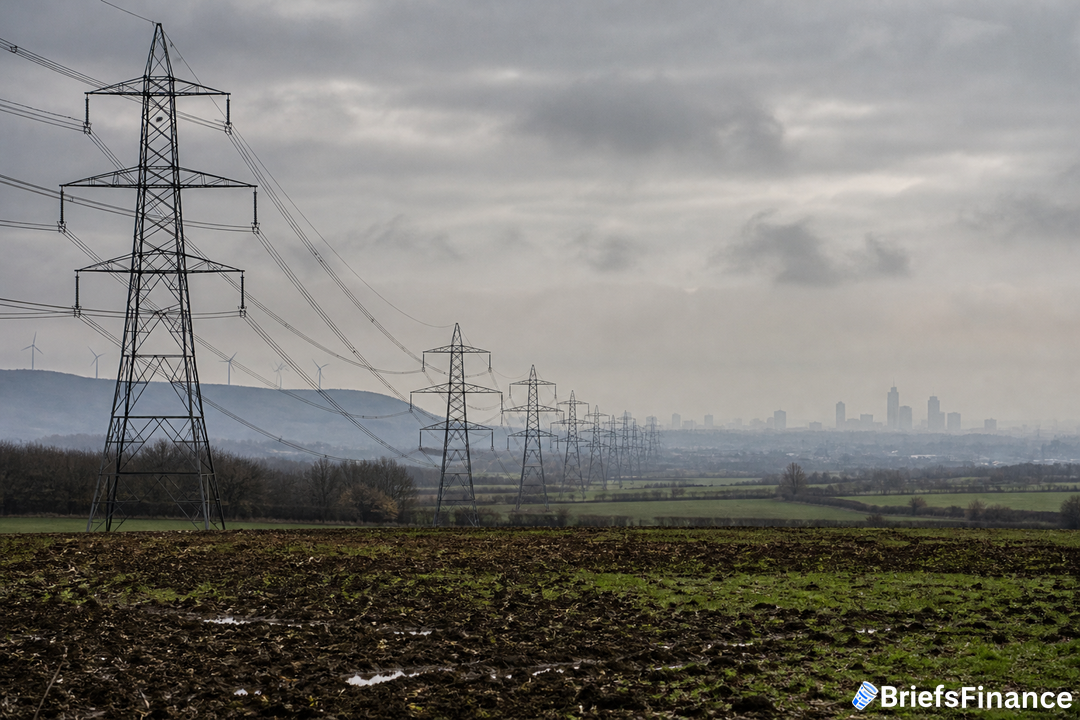
The episode highlighted a familiar weakness: the UK can have enough generation overall yet fail to deliver it to where demand clusters. Wind projects have been built far from major load centers, and they are arriving faster than the transmission to carry their output south.

That mismatch is getting pricey. LCP Delta's data shows September's balancing costs hit a record just over half a billion pounds. It also found actions on a single Tuesday in October cost £38.4 million, a one day high, equal to $51.2 million, with October figures through Oct. 11. NESO's figures indicate the UK may spend over £3 billion on grid balancing this year.

Those bills reflect what NESO spends to keep supply and demand aligned, especially managing constraints. It pays some Scottish wind farms to switch off when the network is congested, then pays much more for gas plants nearer cities to switch on. According to Jason Mann, a senior managing director at FTI Consulting, "These wind farms were built with very limited consideration of where that electricity would be consumed." "Those costs are locked in for generations." As LCP Delta's Shivam Malhotra put it, "This is something we'll keep seeing."

When markets and infrastructure affect daily life it helps to get clear, compact updates, so sign up for the free Market Briefs newsletter.

How policy choices set the stage and what regulators are probing

Many current pinch points trace back to the 2010 connect and manage approach under then Energy Secretary Ed Miliband, which let renewable projects plug in ahead of completing the grid upgrades needed to carry their output. Successive governments of both parties then subsidized rapid wind expansion without a comparable buildout of transmission.

The risk was flagged early. In 2008, John Mogg, then Ofgem chair, warned Miliband that connecting more Scottish renewables ahead of added capacity could cause constraint costs to "increase significantly." Those costs were about £300 million at the time, and based on NESO data and the operator's forecasts, this year's total could be roughly ten times that.

System resilience is also under review. Ofgem has opened a probe into NESO's conduct during an incident in a June heat spell when tight margins strained the grid. No customers lost power, and the regulator is assessing whether relevant security standards were met.

Last year, during his second term as Energy Secretary, Miliband turned down a shift to a zonal electricity market that would have established different prices across Britain to mirror the grid's physical constraints. Higher prices in the south could have signaled local gas plants to start and encouraged flows into Britain through interconnectors, reducing the need for NESO to correct imbalances after the market cleared.

The choices ahead and what it means for your portfolio

Consumers ultimately pay. When it's windy and sunny, wholesale prices can drop, but network bottlenecks can eat into those gains if NESO has to pay to start up gas plants in other locations. Energy Secretary Miatta Fahnbulleh called the current setup "candidly not fit for purpose," while saying she is "100% confident the lights won't go out this winter."

"The long-term choice for the UK is between investing once in modern grid infrastructure or continuing to pay for imported fossil fuels year after year," said Benj Sykes, UK chair of Orsted A/S. He urged faster grid upgrades, storage and other flexibility to improve security and "tackle the energy affordability challenge."

Knowing how supply and demand shape choices makes decisions easier, so subscribe to Market Briefs for a short daily rundown.

Disclosure

Recent News

1 2 3 … 103

Get Market Briefs delivered to your inbox every morning for free!

No fluff. No noise. No politics. Just finance news you can read in 5 minutes.

Blogs

October 16, 2026
How Boring Math Makes You Rich: The Briefs Money Spreadsheet, Explained
  • Briefs Money shows you what to do with every paycheck, and in what order: how much to spend, save, and invest, when to build an emergency fund, and which debt to pay off first.
  • The Climb to Wealth course walks you through the system step by step, and the Personal Finance Spreadsheet is where you track your own numbers.
  • Investing is one piece of building wealth. The system that gets money to your investments, and keeps it there, decides the outcome.
Read More
October 16, 2026
Common Investing Mistakes: Why a Stock Grade Is One Tool, Not the Whole Toolkit
  • The Briefs Score shows growth, income, and wealth preservation investors how well a stock fits their goal, with a separate letter grade for each one.
  • The most common mistake is treating the letter as an instruction. An A tells you a stock scores well for one goal, not that you should buy today.
  • Research works best as one input in a process you own. The grade shows how a stock stacks up. You supply the goal, the timeline, and the rules for being wrong.
Read More
October 16, 2026
How to Read a Company's Numbers Without a Finance Degree (Using Briefs Terminal)
  • Briefs Terminal lets you size up any public company in about ten minutes: what the stock costs, what it earns, how fast sales are growing, and what it pays you, all on one page.
  • It lines those numbers up against the company's closest competitors for you, so you can tell if a number is impressive or just average.
  • Below that are the income statement, balance sheet, and cash flow statement from the company's SEC filings, the latest news, and transcripts of its earnings calls.
Read More
October 16, 2026
What Type of Investor Am I? The Three Investor Archetypes, Explained
  • Briefs sorts its stock grades and monthly reports by three investor goals: growth, income, and wealth preservation. Pick yours and you know which report and which grade to read first.
  • Growth investors want stocks that beat the S&P 500. Income investors want to get paid in cash. Wealth preservation investors want stocks that hold up when the market drops.
  • The same stock can score an A- for one goal and a D- for another, so picking your goal comes before picking any stock.
Read More
October 16, 2026
How to Build a Stock Watchlist That Isn't Just Stocks You Heard About
  • A watchlist on Briefs Terminal lets you group stocks by the idea you're tracking and follow each one's price, one-day move, and 52-week high and low in one place.
  • Each list has its own name and description, so you always know why a stock is on it, and you can make as many lists as you have ideas.
  • The monthly growth, income, and wealth preservation reports under the Briefs Research tab hand you new themes to track that you didn't hear about online.
Read More
October 16, 2026
How to Choose an ETF That Matches Your Idea (Using the ETF Planning Tool)
  • The ETF planning tool takes an idea like "I want to invest in fast food companies," asks what you mean, and finds the ETFs that match, with the reasons, the holdings, and the sources.
  • Build a Plan then shows what your money could grow to in those ETFs over the years you choose, with conservative, expected, and optimistic estimates next to the S&P 500.
  • It gets you from an idea to an actual plan without researching dozens of companies one at a time.
Read More
October 16, 2026
Is This Stock a Good Buy? How to Use the Briefs Score to Tell If a Stock Fits the Way You Invest
  • The Briefs Score shows growth, income, and wealth preservation investors how well a stock fits their goal, with a separate letter grade for each one.
  • One stock can score very differently for each. Nvidia showed an A- for growth and a D- for income, because it grows fast and pays almost no dividend.
  • Seven sub scores under each grade show what earned the letter, so you can see exactly where a stock is strong or weak for your goal.
Read More
October 16, 2026
How to Tell an Asset From a Liability: The One Question to Ask Before You Buy Anything
  • The typical American household earned more in 2025 than in any year on record, yet only 30% of Americans say they could pay a surprise $1,000 bill from savings, so the problem isn't income but what the income gets spent on.
  • An asset puts money in your pocket and a liability takes money out, and the wealthy buy assets first, then let the assets pay for the fun stuff.
  • Before you buy anything, ask one question: does this put money in my pocket, or take money out of my pocket? Then you need a plan for the money you keep.
Read More
October 16, 2026
How to Build Your First $2,000 Emergency Fund and Wipe Out Every Debt Over 10%
  • Your first money goal isn't investing, it's $2,000 in its own account named Do Not Touch, built by moving 10% of every paycheck into it automatically.
  • More than a third of American adults couldn't cover a $400 surprise bill with cash or savings, according to the Federal Reserve, and that's how one bad day turns into years of credit card payments.
  • Once the $2,000 is there, attack every debt charging more than 10% interest, highest rate first, because you can't out-invest a 22% credit card so paying it off is the investment.
Read More
October 16, 2026
How to Invest Through a Crash: 3 Rules From the Worst-Timed Investor Alive
  • Meet Bunty, a fictional investor with the worst timing in history: he put $100,000 into the market in four chunks right before four crashes, never sold, and by 2025 it had grown to more than $500,000.
  • Investors who jump in and out of the market miss its best days, and missing just a handful of those days can cut your final result roughly in half.
  • The fix is ABB, Always Be Buying: you buy on a schedule through booms, crashes and scary headlines, which matches the market, and beating it takes knowing where the money is moving first.
Read More
1 2 3 … 29
Share via
Copy link










