What happened
According to CAPMAS, urban headline inflation fell for a second consecutive month, coming in at 13.9% for September, compared with 14.5% in August. That puts the overall rate at its lowest point since February. Month to month, prices rose 1.3%, following a 0.1% uptick in August.
It was not immediately clear what drove the moderation.
Falling inflation changes what a central bank can afford to do next. Market Briefs covers emerging market policy free every morning.
Why it matters
Price trends have been choppy since late February, when US and Israeli strikes against Iran rattled global energy and financial markets. Since then, Egypt's inflation has swung between quickening and cooling.
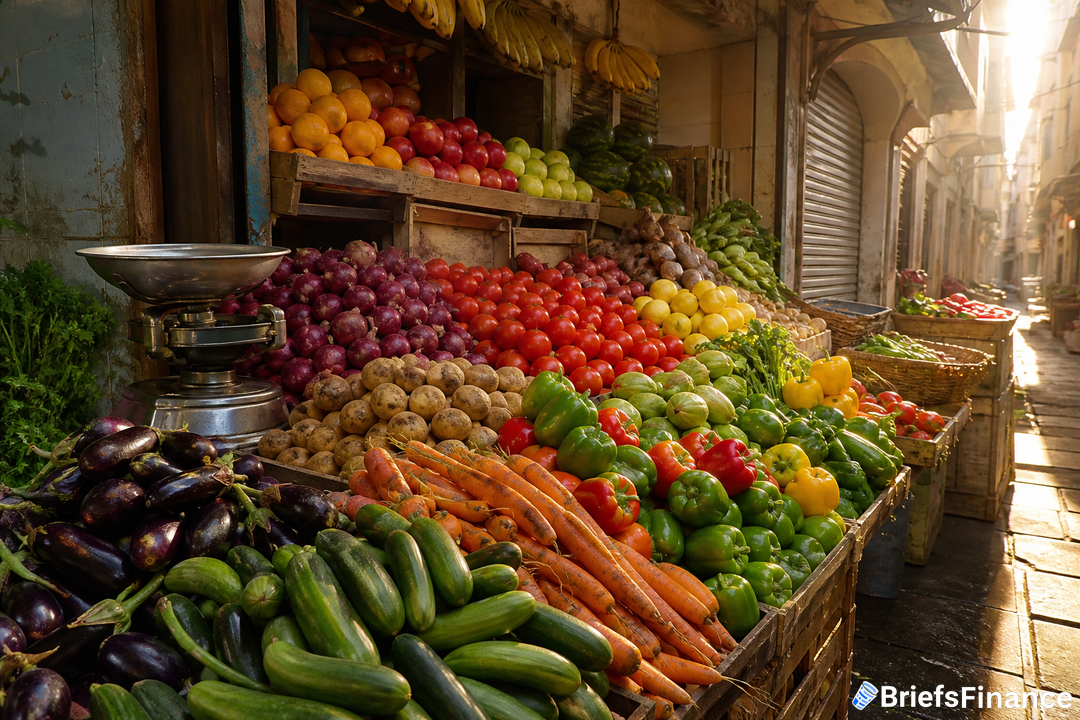
Food and beverages, the biggest weight in the basket, accelerated to 7.2% year over year in September from 6.3% in August. Month over month, they rose 2.8% after falling 1.1% the prior month. These readings follow a 12% increase in electricity tariffs for higher-consuming households that authorities unveiled at the end of July, and Egypt - once a net gas exporter - has more recently relied on imported fuel to keep the power grid running.
The policy backdrop
Egypt's central bank put a nearly yearlong easing run on hold when the Iran war erupted, and it kept rates unchanged on Sept. 24. At that meeting it also lowered its inflation forecast, indicating the headline rate would remain roughly stable, on average, during the third quarter and would subsequently decline gradually toward a 7% goal, with a tolerance band of two percentage points on either side, in the second half of 2027.
For your wallet, the takeaway is simple: inflation is cooling but still sensitive to food and energy swings. Keep an eye on grocery bills, utility changes and the central bank's next moves to gauge how much relief might actually show up in day-to-day costs.
A multi-year low is the kind of print that shifts rate expectations. Get the free Market Briefs daily newsletter and follow it.