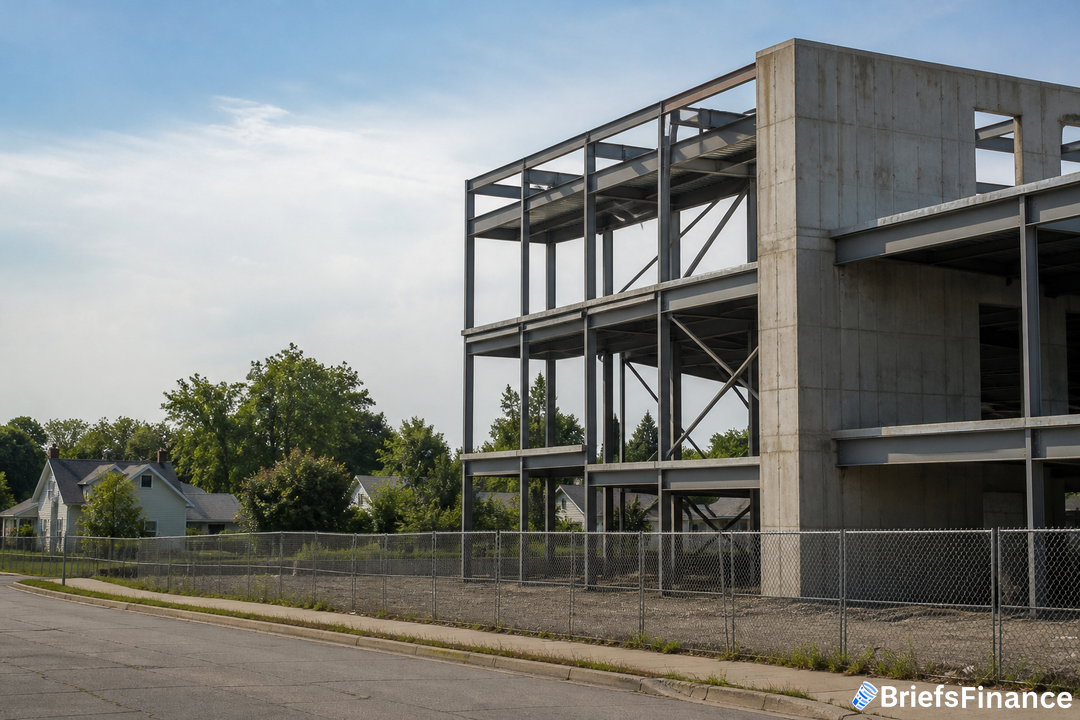
Local blowback is shaping where AI data centers get built
On Bloomberg Television with Jonathan Ferro, Lisa Abramowicz and Annmarie Hordern, Apollo's global head of infrastructure Olivia Wassenaar said the firm is working to prevent AI infrastructure financings from getting derailed by local opposition. "We listen and respond," she said, adding, "We want to make sure we are putting data centers where folks want data centers to be put."
Pushback has become its own industry hurdle as communities worry about higher utility bills and environmental harm. Wassenaar's point was straightforward: align projects with places that actually want them.
Financing structure decides which AI projects actually get built. Market Briefs covers that plumbing free every weekday.
Project Jupiter protests and bubble talk
One recent flashpoint shows how messy this can get. Oracle Corp.'s planned data center campus in New Mexico, called Project Jupiter, faced heavy protests from locals focused largely on environmental impacts. Oracle ultimately invoked force majeure on its contractual obligations.
All of this is landing alongside doubts about whether AI expectations are running too hot. Speaking in Singapore on Wednesday, billionaire Ray Dalio called artificial intelligence a "classic bubble" that's "nearing a bursting point," pointing to elevated borrowing costs and a push to turn wealth into cash.
The broader buildout: power, grids and gas
Wassenaar said Apollo worries more about falling behind on infrastructure investment than overbuilding, and stressed the thesis goes beyond AI to the energy systems that support it. As she put it, there is "the AI story and the behind-AI-story," which includes "the power, the grid, the gas demand." She also said there is "for sure" still strong appetite for financing projects tied to artificial intelligence.
Natural gas has become an important power source for U.S. data centers, and Wassenaar argued it is not just a bridge fuel. "We will be using natural gas for a long time," she said. "This is not just a transition fuel." She added that Apollo is "investing in the industrial renaissance and reshoring and the grid and power," calling these needs broader than just data and AI.
On structuring, Wassenaar said Apollo is not avoiding complex deals. "Creativity is part of what we do," she said, while noting a "flight to quality" as investors concentrate on "better names, better opportunities." Jaycee Pribulsky, Apollo's chief sustainability officer, said the current cost of capital "really requires creativity in structuring deals," and that embracing complexity helps in a higher-rate backdrop. Apollo has committed to deploy more than $100 billion by 2030 to back clean-energy projects and the decarbonization of industry. Pribulsky said meeting rising demand means calibrating the energy mix to protect affordability and energy security.
For your wallet, the takeaway is simple: the AI surge is yoked to power and grid buildouts. Where these projects land will likely follow where communities, electricity networks and fuel supply can handle the load.
Private credit is quietly underwriting the whole data center boom. Join Market Briefs free and follow the money.