The build and the business
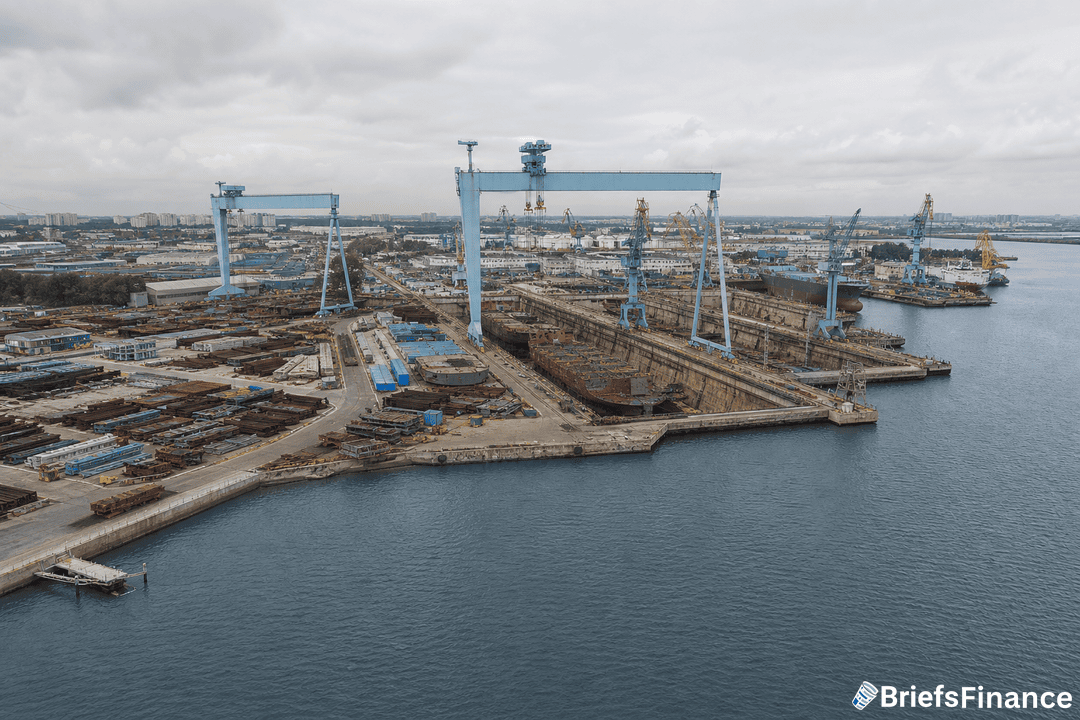
Anduril Industries plans a major push into traditional shipbuilding with a massive complex at Sparrows Point outside Baltimore, the former home of a Bethlehem Steel mill. The site will be known as Arsenal 2 and, according to Governor Wes Moore's office, is expected to employ roughly 3,100 people once it hits steady state. The company targets a 2030 opening and full-rate output in 2031.
Co-founded by Palmer Luckey, Anduril first became known for supplying software, sensors, drones, and autonomous aircraft. President and Chief Strategy Officer Chris Brose said the project is a chance to rethink what a modern shipyard looks like and how it operates. At the announcement, President Donald Trump said, "American taxpayers will receive a 40% stake in the new shipyard." An Anduril spokesperson added that the company will set up a separate subsidiary to run the yard and that U.S. taxpayers would own 40% of that entity.
To anchor the work, the U.S. Navy has awarded Anduril a performance-based contract with a ceiling of $2.9 billion to procure submarine parts built at the facility. A senior administration official said the government spending runs through a multi-year budgeting process and the Navy is not moving money around for it at this time.
What gets made and why it matters
Arsenal 2 is meant to expand capacity for nuclear-powered submarines by producing super modules and casings, the very large sections that are assembled into finished boats at the nation's nuclear submarine shipyards. Until the Maryland yard is up in 2030, Anduril will focus on making torpedo tubes in California to support the Virginia class. After the Baltimore operation comes online, the target is to add around 9 million labor hours per year, which a senior administration official said would lift overall shipbuilding capacity by 15%.
By the early 2030s, the Navy aims for a consistent cadence of producing two Virginia-class attack submarines and one Columbia-class ballistic-missile submarine each year, up from about one boat annually now. The industrial base has struggled after a 60% contraction since the Cold War. To help, the Navy has leaned into what it calls strategic outsourcing, asking additional manufacturers to build modules and components that are then shipped to the two prime assembly yards, General Dynamics Electric Boat and Huntington Ingalls' Newport News, so those teams can focus on final construction.
At the event, Trump said the facility is slated to produce America's future submarine fleet, "including autonomous subs, torpedo tubes and critical components for our cutting-edge Virginia-class attack submarines - the greatest and quietest ever built."
Defense manufacturing is pulling serious capital into industrial real estate. Market Briefs covers that build-out free every weekday.
Politics and local backing
Anduril asked Governor Wes Moore to deliver remarks; however, someone with knowledge of the matter said the White House blocked it, and Moore then opted not to attend. According to a White House official, Moore had received an invitation as a guest; they labeled his decision not to appear unfortunate and characterized it as a tantrum. Moore said he told Anduril that Bethlehem Steel "created the steel that won us World War II - you all can create the subs and the ships that can win us wars of the future."
Maryland and Baltimore County plan to match up to 13% of Anduril's private investment through economic incentives, and the state will fund a center of excellence for workforce training, Moore told Bloomberg. The project adds to a run of investments Moore has highlighted, including Samsung Biologics opening its first U.S. manufacturing site in Rockville this year and Sphere Entertainment planning a downsized iteration of its Las Vegas venue at National Harbor near Washington.
The bigger defense picture and your wallet
Anduril has also produced sizable robotic sub-sea craft, known as the Dive-XL and Dive-LD. Iran captured one of them in the Strait of Hormuz early last month. Separately, Defense Secretary Pete Hegseth last week appointed Luckey, Elon Musk, and former House Speaker Newt Gingrich to head Project Meridian, a 120-day review of how warfare and weapons are evolving. All of it points to a broader push to expand the defense industrial base and bring in unconventional players.
Bottom line for everyday investors: this is a sizable private build paired with a government purchase agreement, potential taxpayer equity, and state support to train workers. If Anduril hits its timeline, the added labor hours and targeted 15% capacity lift plug directly into the Navy's plan to go from roughly one sub a year to three in the early 2030s. That is real output, not just headlines, and it could influence how money flows to suppliers tied to Virginia and Columbia class work.
Shipyard investment reshapes regional economies for decades. Join Market Briefs free and follow the spending.