What happened on the ground
After a quieter stretch, US forces escalated strikes and carried out a fresh wave of assaults over a three-day span on Iranian assets, hitting radar installations and mine-laying gear along Iran's southern coast. Reports indicate the effort has broadened to include Iranian oil tankers, and President Donald Trump warned more operations could follow.
Tehran fired back with drone and missile barrages at US bases across the Middle East, saying it hit sites in Kuwait, Jordan, Bahrain, Iraq and the United Arab Emirates. It also targeted vessels transiting the Strait of Hormuz, the chokepoint for energy flows. The six-month standoff has already squeezed exports through the corridor that, under typical conditions, handles roughly 20% of global crude and LNG shipments. Workaround pipelines and quiet flows from producers like Saudi Arabia and the UAE helped prevent a full-scale oil crisis, but the latest flareup raises the risk of a bigger economic hit.
How prices moved
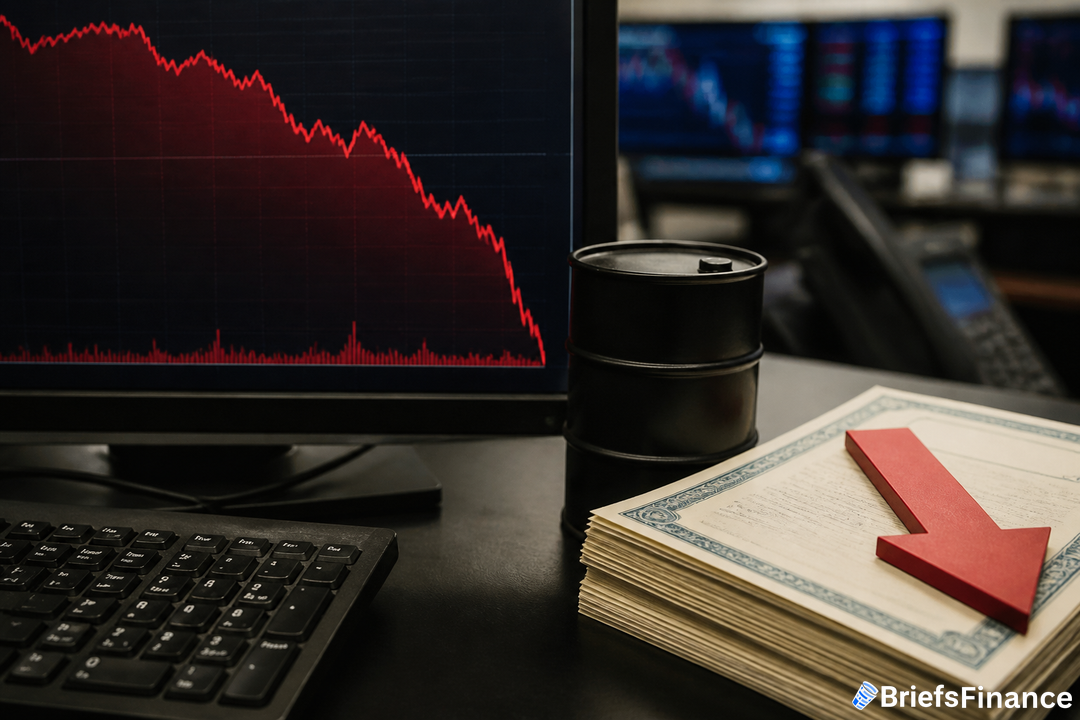
By Wednesday morning in London, Brent hovered near $95 a barrel, up 6.6% for the week, as fears over Persian Gulf supplies pushed crude closer to $100. European natural gas, the backbone fuel for industry and heating, has climbed 11% this week, with futures touching a three-year high.
At the pump, European drivers are effectively paying well above $350 a barrel for diesel and gasoline, while US prices top $150. European diesel futures eased slightly Wednesday after jumping about 5% in each of the previous three sessions, per ICE Futures Europe data. Another squeeze: an unprecedented Ukrainian drone campaign against Russian refineries is choking fuel output such as diesel.
The war is also curbing refined cargoes out of the Persian Gulf, and some refineries have been forced to halt fuel production due to the fighting. Together, these pressures jeopardize Europe's push to replenish gas stocks before winter, which sit at just 65% of capacity, the lowest for this season in records back to 2009.
The best financial decisions come from understanding the whole picture. Join Market Briefs free and get the full brief each morning.
Politics and policy are on alert
Europe's price shock is getting political. "Last year, oil prices stood at $70, this year it is $90," he said. "This means: Less growth, less tax revenue, and less room for maneuver."
Central banks are feeling the heat too. "High energy prices have started to become more relevant for the inflation outlook," said Florence Schmit, senior energy strategist at Rabobank. By mid-2027, traders expect no fewer than three additional 25-basis-point increases from the European Central Bank as well as the Bank of England. For this year, traders are penciling in about 50 basis points of additional ECB hikes and roughly 23 basis points in the UK.
The wider market reaction
Costlier energy is stoking a global bond selloff. Heavy government spending in Japan, the UK and the US keeps debt issuance elevated, prompting investors to demand higher yields to own longer maturities. The vast funding needs around the AI buildout are adding to the contest for capital, lifting borrowing costs further.
Gilt yields surged to multi-decade highs this week, wiping £12 billion, or $16.2 billion, from the UK government's fiscal buffer and giving Prime Minister Andy Burnham a harsh reminder of fragile public finances. In the US, the 10-year Treasury yield climbed to 4.81% on Wednesday, the highest since late 2023, exerting pressure on counterparts in other advanced economies. On Tuesday, Japan's 10-year government bond yield climbed to 3%, a first in the 21st century. As Claudia Kemfert of the German Institute for Economic Research put it, the energy price shock "acts like an additional tax on the economy and consumer," eroding purchasing power, growth and confidence.
Why this matters for your wallet
If you heat a home, drive a car or buy, well, anything that ships, refined fuel prices are the pain point to watch. Europe is heading into winter with lean gas storage, and the next moves in your bills hinge on whether tensions cool, refineries restore output and central banks stay patient or step harder on the brakes.