The pitch, the pattern, and the punchline
On Truth Social, Trump wrote, "Now that we have it under U.S.A. control, should we change the name Hormuz Strait to TRUMP STRAIT???" He followed with, "Like America itself, it would be 'hotter' than ever before! Thank you for your attention to this matter. President DONALD J. TRUMP."
The riff landed less than a week after he signed an executive order to rename Lake Ontario "Lake America" as his clash with Canada has been ramping up. That directive instructed Interior Secretary Doug Burgum and his staff to revise the Geographic Names Information System. Canada refused the change, even as Google and Apple have recently shown it on their maps.
It fits a broader pattern. Early in his second term, Trump likewise announced a plan to rechristen the Gulf of Mexico as the Gulf of America, which Mexico and other international counterparts declined to recognize.
Serious plan or just a post?
There is no obvious path for a U.S. president to force a new name for an international waterway that is not near the United States. When reporters pressed him Wednesday afternoon at the White House about whether he really meant to change the strait's name, Trump indicated no: "No, no ... it was just thrown out there."
This back-and-forth is taking place amid a conflict with Iran that the U.S. and Israel kicked off in late February. An image of a map, dated March 3, 2026, shows the Strait of Hormuz displayed on a computer screen.
Rates, prices and policy all end up in your budget eventually. Get the free Market Briefs daily newsletter and see it coming.
What's flowing through the chokepoint
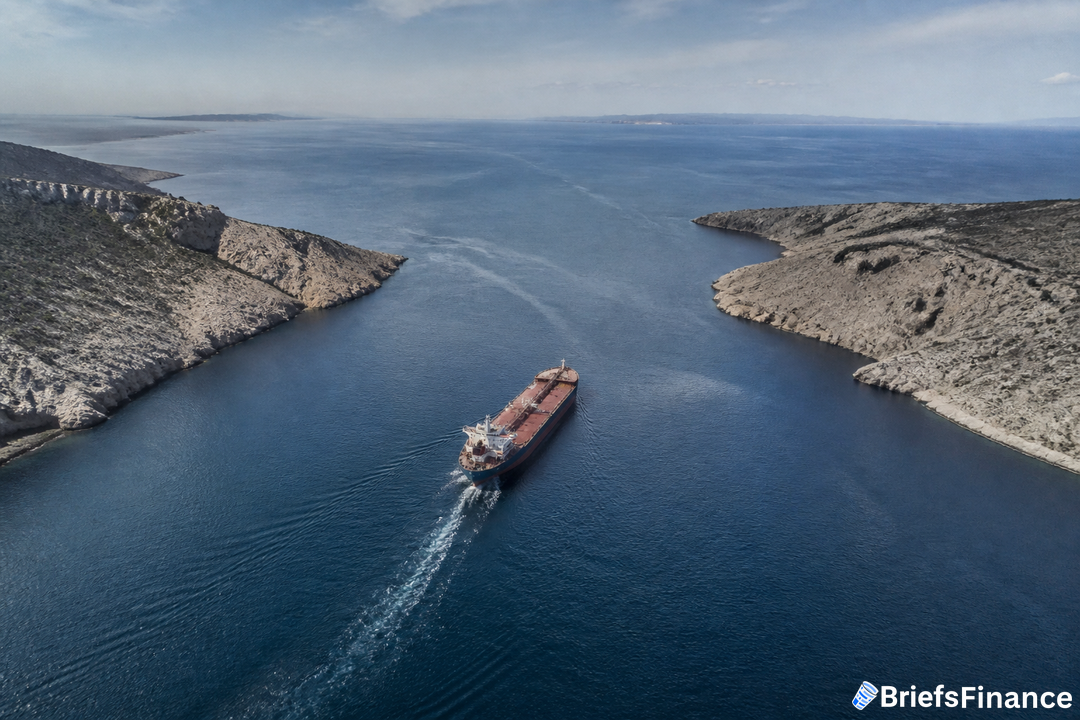
Trump and his administration have repeatedly argued that Iran no longer controls the strait. Ahead of the Feb. 28 start of the conflict, Hormuz handled about one fifth of global oil commerce, and the corridor saw on the order of 20 million barrels per day in crude and products pass through.
Today, transits are still well short of that pace. Ship trackers say activity has dropped even more in recent days as military strikes resumed after a weekslong pause. Even so, according to U.S. Energy Secretary Chris Wright's remarks to CNBC on Wednesday, more than 17 million barrels crossed on Monday, which he called a wartime record. According to the Trump administration, counting flows sent through Saudi Arabia's and the United Arab Emirate's overland pipeline routes that skirt Hormuz puts the region's combined oil exports above their prewar level.
Why it matters for your wallet
The name game is mostly noise. The strait is not. It is one of the most important energy pinch points on the planet, and how much crude and fuel gets through helps set the tone for prices you see at the pump.
With volumes still below normal and strikes back in the mix, markets stay twitchy. If seaborne flows keep recovering or those overland routes keep humming, that eases pressure. If they do not, expect the usual ripple into shipping costs and everyday prices.