Free NewsletterPro Login

Warning: Undefined variable $stocks in /var/www/briefs.co/htdocs/wp-content/plugins/oxygen/component-framework/components/classes/code-block.class.php(133) : eval()'d code on line 448

Warning: foreach() argument must be of type array|object, null given in /var/www/briefs.co/htdocs/wp-content/plugins/oxygen/component-framework/components/classes/code-block.class.php(133) : eval()'d code on line 448

Warning: Undefined variable $funds in /var/www/briefs.co/htdocs/wp-content/plugins/oxygen/component-framework/components/classes/code-block.class.php(133) : eval()'d code on line 472

Warning: foreach() argument must be of type array|object, null given in /var/www/briefs.co/htdocs/wp-content/plugins/oxygen/component-framework/components/classes/code-block.class.php(133) : eval()'d code on line 472
/* the link was here */
×
Free investor livestream — Nov 17

How To Use ChatGPT & Claude To Research Stocks Like A Pro

01
The prompt we use to break down any stock
02
How to fact-check what AI tells you
03
How to compare two stocks in minutes

SpaceX Completes Its $60 Billion Acquisition of Coding Startup Cursor

Published Aug 15, 2026
Share:
Summary:
  • Cursor confirmed on its blog that SpaceX has completed its acquisition of the AI coding startup.
  • The deal grew out of an April agreement that gave SpaceX the option to buy Cursor for $60 billion; after SpaceX went public two months later, the purchase moved forward.
  • Cursor said joining SpaceX gives it "access to the largest fleet of GPUs in the world."

The Deal Is Done

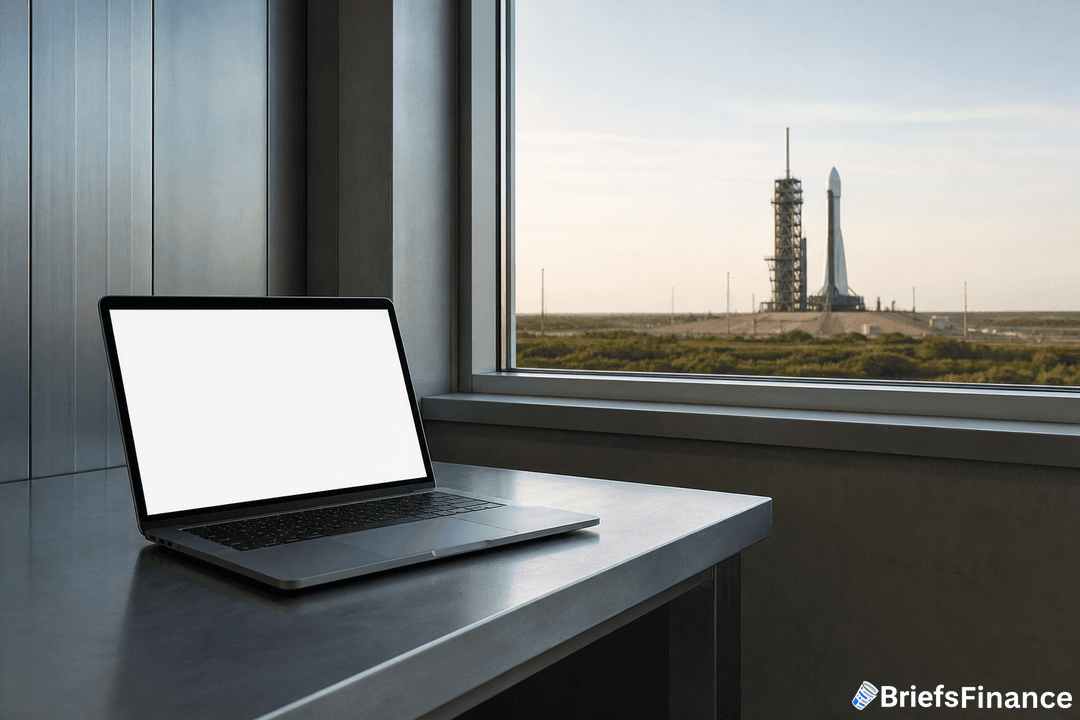
SpaceX now owns Cursor, the AI coding startup that makes a popular tool for writing software. Cursor confirmed the news on its blog on August 15, 2026, saying the purchase is complete.

That is a fast few months for a deal this size. In April, SpaceX and Cursor agreed to work together on technology, and that agreement included an option for SpaceX to buy the company for $60 billion. After SpaceX went public two months later, both sides confirmed the purchase was moving ahead. Now it is closed.

The $60 billion price tag is staggering for a startup, but it makes more sense in context. SpaceX has been building out a massive computing infrastructure that it rents to big AI players like Anthropic and Google. Cursor makes the software tools that programmers use to write code with AI assistance, and those tools need serious computing power to stay useful.

Why Cursor Wanted In

GPUs, or graphics processing units, are the chips that do the heavy lifting for AI models, and having more of them means more training power and faster results.

A few minutes a day is enough to stay genuinely informed about your money. Join Market Briefs free and start tomorrow.

In its announcement, Cursor made the upside clear. "SpaceX is building the computing capacity needed to scale intelligence far beyond what exists today," the company wrote. "Cursor will be one place where that intelligence becomes useful."

That combination works for both sides. SpaceX gets a proven, popular software product to offer alongside its hardware, while Cursor gets the massive computing engine it needs to keep improving its tools. It is the kind of deal that only makes sense when computing power has become the most wanted resource in tech.

SpaceX's data center business is central to this deal. The company has been renting computing capacity to outside AI developers, and Cursor's coding tools depend on that same kind of capacity. Putting the two together means the software and the hardware can be developed in the same place.

The Bigger AI Picture

This deal is part of a larger shift in how AI companies are building themselves. SpaceX already bought xAI earlier in 2026, and now it has added a $60 billion startup in the same calendar year. Instead of building every piece of an AI business from scratch, the largest players are buying the pieces that fit.

There is a hurdle worth watching, too. SpaceX is facing a lawsuit over pollution from gas turbines at its data center, and legal trouble at that facility could complicate expansion plans. The company's AI ambitions depend on that infrastructure running smoothly.

What This Means for Your Money

For investors, the takeaway is about where the money is heading. When a company pays $60 billion for an AI toolmaker and rents out its computing power to Google and Anthropic, it tells you how much demand there is for raw AI computing. The race to build the biggest computing pile is still accelerating, and the companies with the most powerful infrastructure are the ones setting the pace.

If you own a tech fund or an index fund, you already have a seat in that race. These deals may look like they only involve billionaires and startups, but the money flowing into AI infrastructure is part of what drives the market you are invested in. Watch how that plays out, and let the numbers tell you whether the bets are paying off.

Rates, prices and policy all end up in your budget eventually. Get the free Market Briefs daily newsletter and see it coming.

Disclosure

Recent News

1 2 3 … 128

Get Market Briefs delivered to your inbox every morning for free!

No fluff. No noise. No politics. Just finance news you can read in 5 minutes.

Blogs

November 14, 2026
Nvidia News: Jensen Huang Is Out, and the "Bank" Behind American AI Just Lost Its Founder
  • Jensen Huang is out at Nvidia over affairs with multiple people, and the company he founded has been the bank of American AI, with about $30 billion into OpenAI and $10 billion into Anthropic.
  • A hotter-than-expected inflation report has Fed officials talking about a possible 0.5% hike in December, and gold, silver, and bitcoin fell on the news.
  • President Trump said the US may not need a deal with Iran, keeping oil prices and inflation risk high. Jaspreet Singh breaks down what it all means for AI stocks and your portfolio.
Read More
November 14, 2026
Record Highs, a 57-Year Low in Jobless Claims, and a Stock Market Bubble: Inside the Weirdest Market in History
  • Stocks are booming at the fastest pace in years, jobless claims just hit a 57-year low, and most investors still feel like nobody is hiring.
  • The Fed is protecting the dollar over the economy, oil swings on every Iran headline, and a few AI companies are carrying an S&P 500 where four of five stocks sit in a correction.
  • Jaspreet Singh explains why circular financing between Nvidia, OpenAI, Anthropic, and SpaceX rhymes with 2008's house of cards, and how his three investing pillars handle a stock market bubble.
Read More
November 14, 2026
Is a Recession Coming? The Fed Just Made a U-Turn It Has Only Made Twice in 60 Years
  • The Fed has raised rates, cut them, then raised them again only twice in the last 60 years, and both times the economy fell into a recession and stocks crashed.
  • The same stop-and-go cycle is playing out now, with one big difference: US debt is 125% of GDP today versus about 30% in 1980.
  • In the 1970s gold rose roughly 24x, real estate 157%, stocks lagged, and cash lost half its value. Jaspreet Singh lays out five assets to consider before the next flip.
Read More
November 14, 2026
The 2027 Tax Brackets Are Out: How Some Investors Can Earn $135,300 and Pay $0
  • The IRS 2027 tax plan keeps the same seven rates but widens every bracket and lifts the married-filing-jointly standard deduction to $33,200.
  • The 0% long-term capital gains bracket rises to $102,100, so a household living on $135,300 of investment income could owe $0 in federal income tax.
  • C corporations still pay 21%, small businesses keep the 20% QBI deduction, and the 401(k) limit climbs to $25,500 with an $8,500 catch-up for investors over 50.
Read More
November 14, 2026
Rare Earth Stocks: Why China's January 2027 Ban Could Be the Opportunity of the Decade
  • China plans to block rare earth exports to the US on January 10, 2027, and the US produces effectively zero of the 17 metals that go into phones, cars, dishwashers, and missiles.
  • When China cut off Japan in 2010 and squeezed Germany from 2015, some rare earth prices jumped 18x and 15x, and one rare earth company went bankrupt while another soared.
  • Washington is already putting billions into MP Materials, Vulcan, and a stockpile called Project Vault, and Jaspreet Singh walks through how investors can get exposure to rare earth stocks and ETFs.
Read More
November 14, 2026
Divided Government Just Changed Where the Money Moves: 5 Market Shifts After the Midterms
  • Democrats took control of Congress, setting up a divided government with a Republican White House, and the biggest spender in the economy is about to change where it spends.
  • The day after the election the market had one of its best days of 2026 while AI stocks, Tesla, and SpaceX fell and clean energy, healthcare, treasuries, gold, and silver rose.
  • Jaspreet Singh maps the five places money is already moving and the history that says stocks rose in the 12 months after each of the last 19 midterms.
Read More
November 14, 2026
Buy the Dip or Run? What the Market's Worst Day in Years Is Telling Investors
  • The stock market posted its worst day in years one day after its best day of 2026, splitting investors into a buy-the-dip camp and a this-time-is-different camp.
  • The Fed rescued markets in 2000, 2008, and 2020, but inflation is already a problem and the Fed has committed to protecting the dollar instead of the stock market.
  • Jaspreet Singh explains why nothing material changed in 48 hours and lays out a phased way to buy the dip without betting everything at once.
Read More
November 14, 2026
The AI Bubble Isn't Jamie Dimon's Biggest Worry. The Credit Crisis Behind It Is.
  • Jamie Dimon, CEO of America's biggest bank, told Bloomberg his real concern isn't the AI bubble but the borrowing behind it, because the market "will ask for more and more and more."
  • Credit spreads sit near 1.5%, a level last seen in February 2007 and January 2000, right before the last two bubbles burst.
  • Credit crises move in five stages, from boom to pullback, and Briefs Finance CEO Jaspreet Singh maps where 2026 sits and how investors can prepare.
Read More
November 3, 2026
How to Budget Every Payday: 5 Moves So You Never Worry About Money
  • A median earner could make about $4.7 million over a career, yet most retire with closer to $13,000 in the bank because of a keeping problem, not an income problem.
  • Audit your money, save $2,000, pay off credit card debt, then automate a 75/15/10 split across three bank accounts.
  • Earn more only after your system is in place, then protect what you build with an accountant, attorneys, the right insurance, and an estate plan.
Read More
November 3, 2026
How to Invest in Stocks: 5 Things to Do Before You Invest Your First Dollar
  • Paying off credit card debt at around 22% interest beats the stock market's roughly 10% average, and even Warren Buffett's 19%.
  • Save $2,000 in a separate emergency fund, learn to research with AI, and decide whether you're a growth, income, or wealth preservation investor.
  • Write down a plan for buying during market crashes, which have happened 25 times in the last 100 years.
Read More
1 2 3 … 32
Share via
Copy link