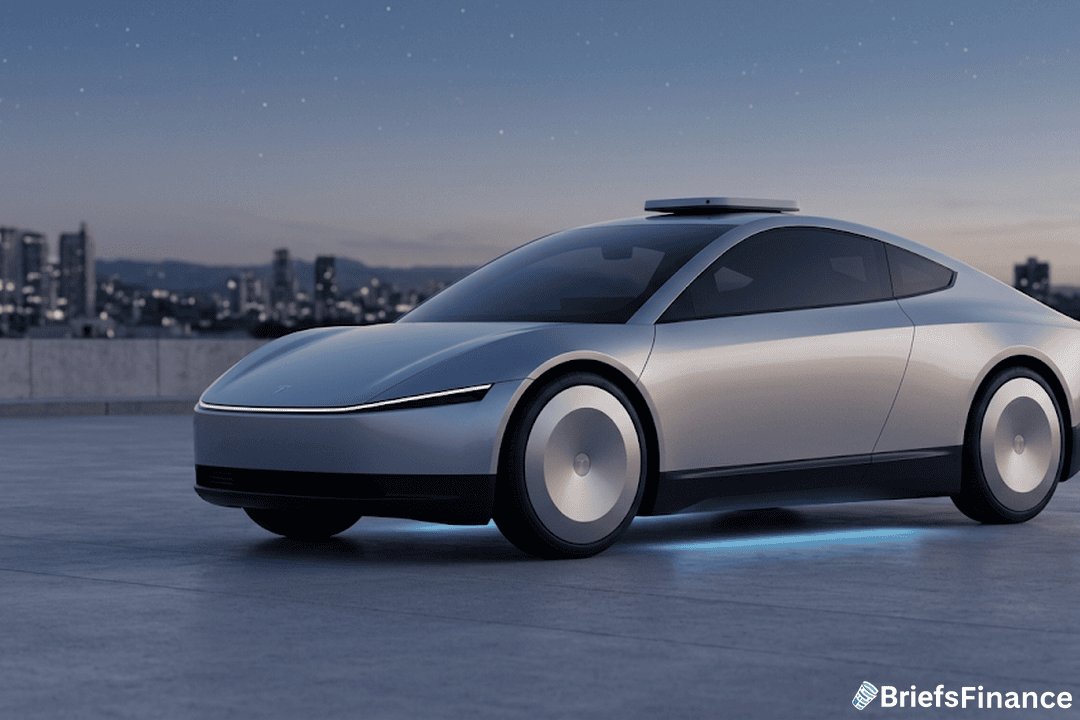
A Satellite Dish for a Self-Driving Taxi
On Monday, August 10, 2026, Tesla posted images on X highlighting what it designated the "First Cybercab with Starlink integration." The photographs reveal a square-shaped roof cutout where the satellite internet hardware has been seamlessly incorporated into the vehicle's design.
The Cybercab represents Tesla's two-seat autonomous vehicle concept. The company intends to maintain connectivity across its forthcoming driverless fleet, with the Starlink roof equipment serving as a cornerstone of that strategy. On the automaker's second-quarter earnings call, Musk explained that Starlink would resolve cellular network dead zones as the company broadens its autonomous ride-hailing operations.
"We can't have robotaxis getting stuck in these Bermuda Triangles of lack of cellular connectivity," the CEO told investors.
"Starlink, with its ability to do connectivity anywhere, is actually quite important, so we don't have robotaxis missing in action."
Entertainment and Productivity on the Go
In a follow-up X post, Musk described how passengers inside the autonomous vehicle could "watch live sports in 4k or movies or games or productivity." Since the Cybercab operates without a human driver, occupants can dedicate their travel time to these various activities.
Get the free Always Be Buying eBook and learn the simple system for building wealth on any income
The vehicle's autonomous nature fundamentally changes the passenger experience. Rather than focusing on the road, riders can transform their commute into entertainment time, a workspace, or a gaming session. This capability aligns with Tesla's broader vision of autonomous vehicles as mobile living spaces rather than simple transportation tools.
Growing Synergy Between Musk's Enterprises
The relationship between Tesla and Musk's other ventures has expanded considerably over recent years. The Cybercab's Starlink integration represents just one facet of this interconnection. Tesla currently employs Grok, SpaceX's AI assistant, as a voice interface throughout its vehicle lineup.
SpaceX has committed to purchasing substantial quantities of Tesla energy storage systems and automobiles, with investments reaching into the hundreds of millions. Additionally, both organizations have joined forces on the Terafab initiative, a collaborative semiconductor manufacturing venture.
These cooperative efforts have fueled speculation about a possible merger between the two companies. The Cybercab announcement also demonstrates Tesla's approach to maintaining connectivity for its autonomous fleet operations.
Background on Tesla's Robotaxi Ambitions
The Cybercab represents Tesla's entry into the competitive autonomous ride-hailing market. The company has positioned the vehicle as a purpose-built robotaxi rather than adapting existing models for autonomous service. Tesla's strategy involves deploying the Cybercab across its planned ride-sharing network, with the vehicle's design optimized for passenger comfort and operational efficiency.
The Starlink integration addresses a practical concern for autonomous fleets: maintaining reliable communication links in areas where traditional cellular coverage proves inadequate. By leveraging satellite connectivity, Tesla aims to ensure its robotaxis remain operational and reachable regardless of location. This approach could provide a competitive advantage as the company scales its autonomous transportation services to new markets.
Musk has previously emphasized that full autonomy will unlock significant value for Tesla owners, allowing their vehicles to generate income through the ride-hailing network while not in personal use. The Cybercab with Starlink represents a concrete step toward realizing that vision, combining the company's expertise in electric vehicles, autonomy, and now satellite communications under one roof.
Download the free Always Be Buying eBook and start putting your money to work today