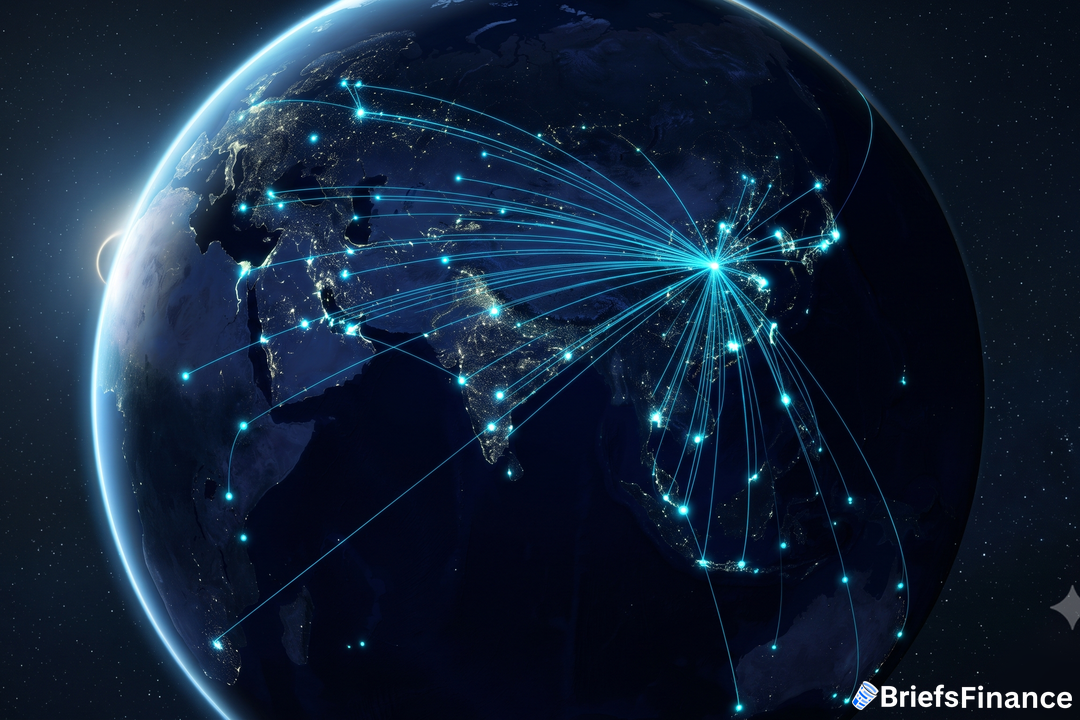
The roster includes prominent developing and emerging economies from the Global South, such as Kazakhstan, Indonesia, Pakistan, and Laos, as per a Thursday announcement by China's Foreign Ministry. Ministry officials stated that delegates from these nations signed the founding agreement in Shanghai, but they did not disclose the identities of the other signatories.
This news arrives just before the start of the World AI Conference, also being held in Shanghai.
Top global powers now view AI governance as a competitive arena, considering the technology vital for both economic strength and national defense.
Beijing aims to present itself as an advocate for open-source AI, committing to distribute the benefits of AI progress internationally. That stands in sharp contrast to the US "AI Action Plan," which aligns closely with Trump's "America First" philosophy.
Last year, Chinese Premier Li Qiang revealed plans for this global body, suggesting it would serve as a platform to bring nations together for the secure and inclusive advancement of AI. However, little information has been released about it since.
Get the market news that matters in a five-minute read with Market Briefs, our free daily newsletter
Zhaslan Madiyev, who serves as Kazakhstan's minister for AI and digital development, stated following the signing event that WAICO's creation moves the focus "from declarations to practical collaboration" and empowers nations to help craft international AI guidelines while ensuring that oversight does not stifle creativity. He added that nations now vie for technology, talent, computing power, data, and the opportunity to influence international AI standards.
Earlier, Pakistan's foreign ministry declared that it would take part. A Brazilian source with knowledge of the situation verified Brazil's involvement.
Xi Jinping, China's president, is set to attend the conference for the first time, demonstrating how much Beijing values the technology amid its escalating competition with Washington.
A Thai government spokesperson said that Prime Minister Anutin Charnvirakul is in China from Thursday through Monday, where he plans to meet with Xi and participate in the AI conference. Kazakh President Kassym-Jomart Tokayev is likewise in Shanghai and has already held talks with Xi.
China aims to persuade nations, particularly those in the Global South, that it is a trustworthy ally capable of providing a foundation for global stability and progress, especially at a time when the United States is involved in military action against Iran and behaving assertively elsewhere.
This story seems to be gaining traction. A Pew Research Center survey released on Wednesday revealed that, for the first time in nearly two decades, a greater number of people globally hold a favorable opinion of China compared to the United States.
In a Tuesday opinion piece, People's Daily, the main publication of the Chinese Communist Party, contended that AI advancement should not lead to isolated tech monopolies but should instead maintain a focus on serving the public.
According to George Chen, a partner and the head of digital practice at The Asia Group, this new organization enables China to gather supporters and establish AI governance standards. "This is not just about competing on technology - it is about competing on standards," said Chen.
The growing influence of WAICO also presses the United States to clarify its own AI strategy. While Washington has focused on security and export controls, Beijing's open-source pitch resonates with many cash-strapped developing nations that lack access to cutting-edge computing and talent. By offering shared resources and joint research, China positions itself as the more inclusive partner in the global AI race.
Join Market Briefs, our free daily newsletter, for a quick daily rundown of the markets