A Multi-Billion Dollar Gap in the Fine Print
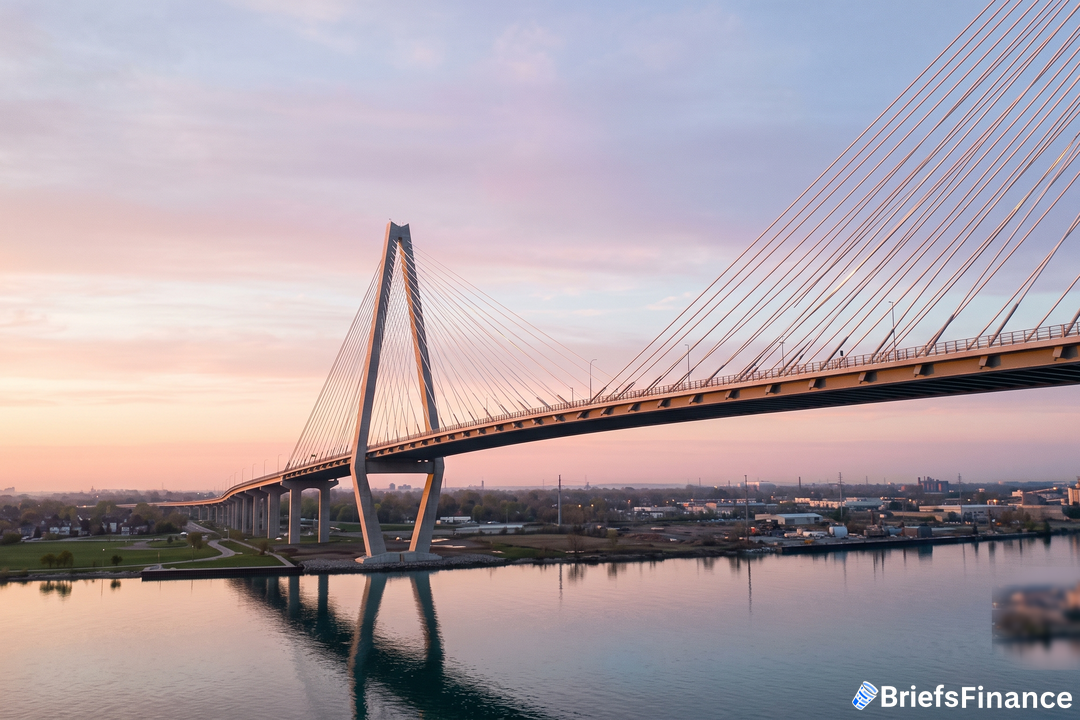
The Gordie Howe International Bridge connecting Detroit and Windsor is supposed to open in less than two weeks. But the two countries building it cannot agree on how the money will work after it does.
The total construction cost is C$6.4 billion, which works out to about $4.6 billion U.S. dollars. That means Canada is on the hook for the interest on that loan, which runs into the hundreds of millions of Canadian dollars each year.
Prime Minister Mark Carney told CTV News on July 12 that the deal works like this: "We are sharing after Canada is paid back. So we get the revenues, then the servicing of the cost of the bridge and paying the debt of the bridge. And then what's left over, there's a split of that for 15 years."
The U.S. side tells a different story. The US is "pleased to have reached an agreement with Canada on the Gordie Howe International Bridge that ensures the United States will participate in setting tolls and receive an equal share of net bridge revenues," said Benno Kass, who serves as a spokesman for the U.S. Commerce Department. An unnamed US official went further, telling reporters that loan interest and depreciation will not be deducted before the split.
Get the market news that matters in a five-minute read with Market Briefs, our free daily newsletter
That is a pretty big difference when you are talking about hundreds of millions of dollars in interest every year.
Why This Fight Started in the First Place
President Donald Trump expressed dissatisfaction with the original terms in February, stating he was unhappy with them. Under the old setup, Canada would recoup every penny before Michigan saw a dime of toll profits. Commerce Secretary Lutnick stepped in and blocked a planned opening ceremony in June.
That forced Canada to come back to the table and strike a side deal. Canada says it consented to splitting net toll revenues with the U.S. for a 15-year period after deducting debt service costs, and Lutnick gave the project the green light again.
But the details are still being worked out. The text of the deal has not been released by either country. When asked whether debt service costs are subtracted before the U.S. share of toll profits is determined, Audrey Champoux, Carney's spokesperson, gave a non-specific response. She said the two countries "agreed upon half of net profits being directed to the economic development fund for a period of 15 years, creating an incentive for both countries to make the bridge profitable," and added, "As the prime minister said, we expect these net profits to be a small portion of total bridge revenue."
What the Numbers Actually Look Like
The bridge is expected to handle about 400 commercial vehicles per hour. The minimum toll for a four-axle truck crossing will be $27.60.
The U.S. and Canada exchanged about $880 billion worth of goods and services last year, though that was down roughly 5% from 2024. A new crossing helps that flow keep moving.
The catch is that in the short term, fewer people may actually use it. Many Canadians are boycotting travel to the U.S. because of tariffs and anti-Canadian rhetoric. That could mean lighter traffic and lower toll revenue than initially expected.
Join Market Briefs, our free daily newsletter, for a quick daily rundown of the markets