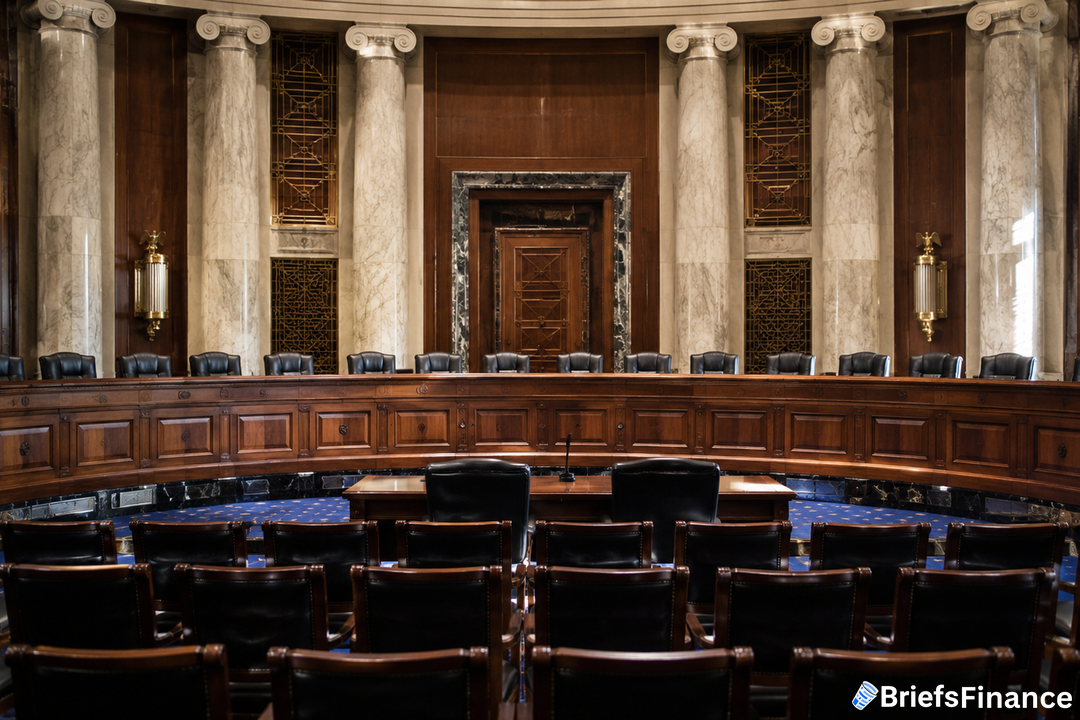
A New Fed Chair Under the Microscope
Kevin Warsh has only been running the Federal Reserve since May 2026. His first policy meeting in June ended with rates held steady, which was the easy part.
This week, he sat down for a Senate Banking Committee hearing and faced a much tougher question: Has President Trump, who nominated him, tried to lean on him?
Warsh did not dodge. He said flat out that he has told Trump "repeatedly" that he plans to do an independent job. His exact words: "They chose an independent guy to do an independent job, and that's exactly what I plan on doing."
When Democratic Senator Chris Van Hollen pressed him for details about his private talks with Trump, Warsh politely declined to share them. "I just don't want to be in the business of sharing discussions that the president and I have," he said.
Get the market news that matters in a five-minute read with Market Briefs, our free daily newsletter
But he did offer one clear answer under oath: Trump "has not tried to influence the conduct of monetary policy." Not before Warsh took office, and not after. And if Trump did try, Warsh added, "I would continue to keep my head down and do the job."
That may sound like a simple statement. But it matters because Trump has been vocal about wanting lower interest rates. In an interview that same day, Trump said, "I'd like to see them go down. I'd like to see our country have the lowest rate anywhere in the world."
He also made a point of saying he respects Warsh. But he added a curious line about the Fed's board: "Don't forget, he has a board of fellow policymakers. Maybe it's hostile."
Inflation Is Still the Problem
The reason Trump wants lower rates - and the reason the Fed might not be able to deliver them - is inflation.
The Fed's official target is 2%. Right now, inflation remains well above that, and while there is good news on that front, it comes with a catch.
Data published by the government during the same week as the hearing indicated that increases in consumer and producer prices decelerated in June. That is the kind of number that makes you think the Fed might be able to ease off.
But the bigger picture is less comforting. Energy costs are climbing, and the massive spending on AI infrastructure is pumping money into the economy. Those forces push prices up, not down. Consequently, market participants and analysts now anticipate that the Fed might need to increase rates later this year, rather than cut them.
That would be the opposite of what Trump wants. And it would test Warsh's independence in a hurry.
Join Market Briefs, our free daily newsletter, for a quick daily rundown of the markets