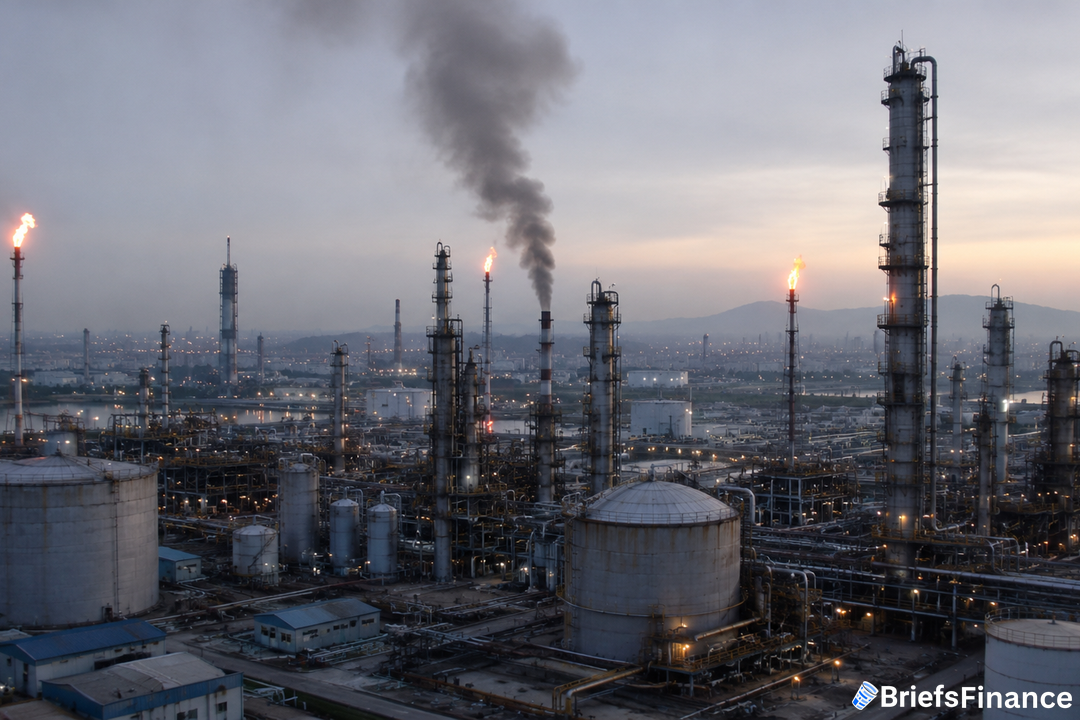
Drone Strikes Take a Third of Russian Refining Offline
Ukrainian drone attacks have been hitting Russian fuel facilities almost daily since May. More than 40 attacks have landed on everything from oil depots to refineries. The result is a supply crunch that is showing up fast at the pump.
Russian refineries processed about 3.8 million barrels of crude per day in June. That is almost a third less than they handled a year earlier. The International Energy Agency described it as "a blistering wave of Ukrainian attacks," and the numbers back that up. The price jump is already visible.
For the week of July 7 through July 13, the average retail price of gasoline in Russia hit 75.84 rubles per liter. That is roughly 98 cents per liter in U.S. dollars.
Diesel reached 91.21 rubles per liter. Gasoline prices are up 16.4% so far this year. Diesel has climbed 18%.
Both are rising way faster than Russia's overall inflation rate of 4.64%.
Get the market news that matters in a five-minute read with Market Briefs, our free daily newsletter
Fuel Shortages and a Government Crackdown on Exports
Panic buying has broken out in some regions. To keep more supply at home, the government banned nearly all foreign sales of diesel, gasoline, and jet fuel.
At least 23 out of 34 of Russia's major refineries have been struck. Moscow and St. Petersburg are not spared either. Gasoline in Moscow costs 72.84 rubles per liter. In President Putin's home city of St. Petersburg, it is 70.75 rubles per liter.
The Bank of Russia warned late Wednesday, citing its latest monthly assessment of the economy, that surging fuel prices are having "a significant impact" across the broader economy, adding that its interest-rate easing cycle could be suspended because of rising inflation. The central bank is scheduled to decide on the key rate at its meeting next week.
The Kremlin is gearing up for parliamentary elections in September. Regional authorities across the country have implemented fuel rationing to stop panic buying.
Broader Economic Fallout
The sustained drone campaign has not only disrupted refining but also strained Russia's fiscal position. With crude processing at multi-decade lows, export revenues from petroleum products have dropped sharply. The government's export ban aims to stabilize domestic prices, but it risks alienating key customers.
Meanwhile, the inflation pressure from higher fuel costs complicates the central bank's monetary policy choices. Analysts expect the Bank of Russia to hold rates steady at its upcoming meeting rather than continue easing.
Further Reading on Russia's Fuel Crisis
- An explainer covering five reasons Putin faces difficulties because of his Ukraine war
- Ukraine strikes an oil refinery located 2,000 kilometers inside Russian territory
- Crimea loses fuel, water, and electricity, yet Russian tourists remain undeterred
Join Market Briefs, our free daily newsletter, for a quick daily rundown of the markets