Free NewsletterPro Login

Walmart Is Stocking More Local Goods To Pull Shoppers Back Into Stores

Published Apr 30, 2026
Share:
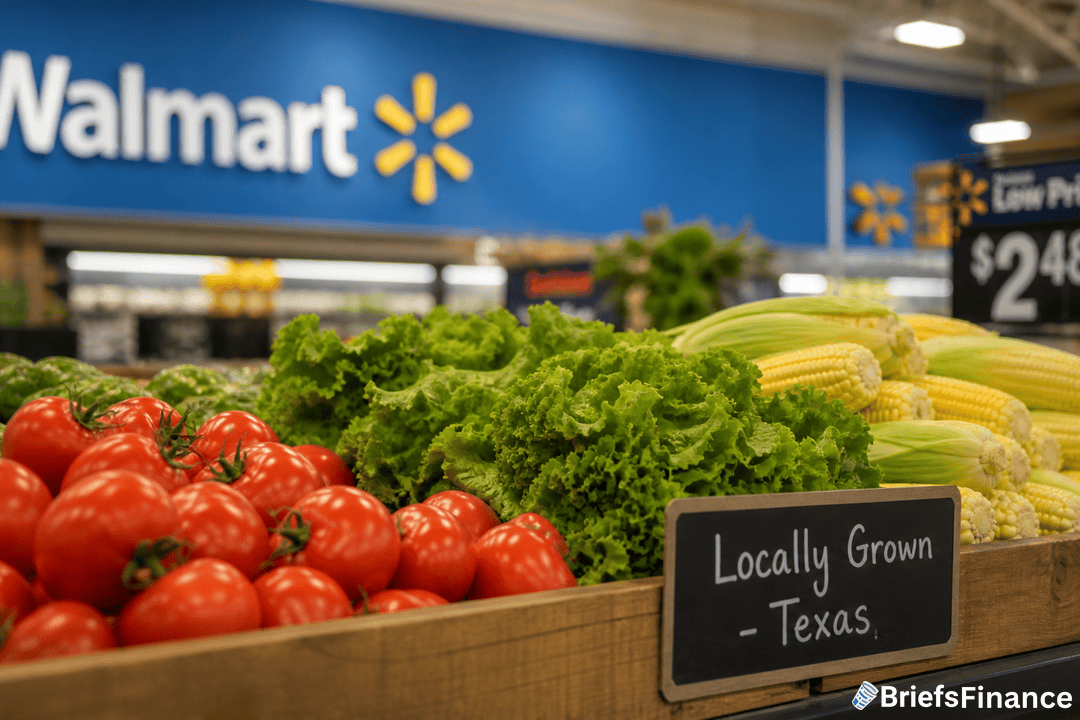
Fresh tomatoes, lettuce, and corn displayed in a Walmart produce section with a "Locally Grown - Texas" sign in front.
Summary:
  • Walmart is leaning harder on local goods to lift store traffic and higher-margin sales.
  • More than two-thirds of its U.S. spend already goes to items made or grown in America.
  • The retailer plans 650-plus store remodels and around 20 new stores by early 2027.

The biggest store chain in the country is making a small bet on something old.

Walmart wants its shelves to look different in every town. The retailer is pushing more local goods into its stores. The goal is to lift foot traffic and lift sales of items that pay better margins.

That's the opposite of what most chains are doing. Most are cutting costs by making every store look the same.

The bet has a clear logic. A shopper in Texas wants something different than a shopper in Florida. Bigger stores rarely pull that off.

Local Means Different Shelves By State

Walmart has been quietly building this for years.

Its newer "Store of the Future" sites are leading the push. The Cypress, Texas store has a Spanish-language bakery. It also has an in-store tortilla maker.

Other markets are getting bigger deli counters. Some are getting fresh produce from local farms. Others are getting dairy from nearby ranches.

Each store is built to feel like its own town's version of Walmart.

The dairy push got bigger this week. Walmart opened its third milk plant on April 29.

The new plant sits in Robinson, Texas. It sources from Texas dairy farmers. It supplies more than 650 stores in the South Central U.S. The plant also adds 400 jobs.

Walmart has done the same with greens. The chain has a deal with Plenty, an indoor farm firm. Plenty supplies fresh greens to 250 California stores from a farm in Compton.

The Bigger Bet

Local sourcing is part of a much bigger play.

Walmart has pledged to spend $350 billion on items made or grown in the U.S. by 2031. Two-thirds of its U.S. spend already meets that bar.

Over 60% of its U.S. suppliers are small firms. The chain runs a "Grow with US" program to help those firms scale up.

Walmart is also remodeling more than 650 of its stores this year. It plans about 20 new store openings by early 2027.

The new layouts come with wider aisles and bigger fresh sections. They also have more pickup areas, plus updated pharmacy and vision rooms. The goal is to make each store feel local while still moving online orders fast.

Around 280 million shoppers visit Walmart stores each week. The chain runs more than 10,900 stores in 19 countries. Even small shifts on the shelf show up fast in the numbers.

Worth Noting

Walmart's U.S. comp sales rose 4.6% in its most recent quarter. Grocery did most of the heavy lifting. Online grocery sales grew at a double-digit rate.

Fresh and local items pay higher margins than canned goods. That means trading shoppers up at the produce aisle could lift profit faster than it lifts traffic.

The local push also helps with a softer trend. Foot traffic at big-box chains has been pressured by online shopping for years. Carts get bigger. Trips get fewer.

A custom mix on the shelf is one way to bring those trips back. It's hard for an online cart to replace a store that feels like home.

The chain pulled in $713 billion of revenue in fiscal 2026. A retailer this big rarely needs new tricks.

It has one anyway.
Disclosure

Get Market Briefs delivered to your inbox every morning for free!

No fluff. No noise. No politics. Just finance news you can read in 5 minutes.

Blogs

May 30, 2026
Financial Literacy Books That Actually Build Wealth
  • The best financial literacy books don't just teach budgeting, they shift how you think about money.
  • Two classics stand out: The Intelligent Investor for valuing investments, and Rich Dad Poor Dad for the owner's mindset.
  • Reading is only step one. The real wealth comes from acting on what you learn.
Read More
May 30, 2026
What Is a Roth Conversion? A Simple Guide
  • A Roth conversion moves money from a traditional retirement account into a Roth account.
  • You pay taxes on the money now, in exchange for tax-free growth and withdrawals later.
  • It can pay off if you expect higher taxes or more income in the future, but the timing and tax hit matter a lot.
Read More
May 30, 2026
Trailing Stop Loss: How to Protect Your Gains
  • A trailing stop loss is an order that automatically sells a stock if it falls a set percentage from its recent high.
  • As the stock rises, the sell point rises with it, locking in gains while capping losses.
  • It's most useful for active strategies like momentum investing, not for long-term buy-and-hold.
Read More
May 30, 2026
5 Types of Wealth: Why Money Is Only One of Them
  • Real wealth is more than a bank balance. It spans your finances, health, mind, purpose, and freedom.
  • Money is powerful, but it amplifies the life you already have rather than fixing a broken one.
  • True financial wealth means your cash flow covers your expenses, so your money works while you live.
Read More
May 30, 2026
How to Invest in Private Equity: A Beginner's Guide
  • Private equity means investing in companies that aren't listed on the stock market.
  • Traditional private equity is built for experienced, high-net-worth investors with large amounts to invest.
  • New rules have opened more accessible paths, like startup crowdfunding and real estate deals, often starting around $100.
Read More
May 30, 2026
What Is a Call Option? A Simple Guide With Examples
  • A call option gives you the right to buy a stock at a set price by a set date.
  • Investors buy calls when they expect a stock to rise, using less money than buying the shares outright.
  • The most you can lose buying a call is the premium, but time works against you, so it's an advanced tool.
Read More
May 30, 2026
EBITDA Formula: How to Calculate It Step by Step
  • EBITDA stands for Earnings Before Interest, Taxes, Depreciation, and Amortization, a measure of a company's core profit.
  • The formula adds those four items back to net income to show what the underlying business earns.
  • Investors use EBITDA to compare companies and to judge how many times earnings a stock is selling for.
Read More
May 30, 2026
What Is a Stock Option? A Plain-English Guide
  • A stock option is a contract giving you the right, but not the obligation, to buy or sell a stock at a set price by a set date.
  • There are two types: calls (the right to buy) and puts (the right to sell).
  • Options are powerful but risky, so they suit investors who already have the basics down.
Read More
May 30, 2026
Put Option: What It Is and How It Works
  • A put option gives you the right to sell a stock at a set price by a set date.
  • Investors use puts to bet a stock will fall, or as insurance to protect shares they own.
  • The most you can lose buying a put is the premium you paid, which makes it a defined-risk tool.
Read More
May 30, 2026
Operating Margin: What It Is and How to Calculate It
  • Operating margin shows how much profit a company keeps from its core business after paying its running costs.
  • The formula is operating income divided by revenue, shown as a percent.
  • A strong, steady operating margin signals a well-run business that controls its costs.
Read More
1 2 3 22
Share via
Copy link











