Free NewsletterPro Login

Tom Brady Just Launched A Coconut Water Brand In An $11 Billion Market

Published Jun 10, 2026
Share:
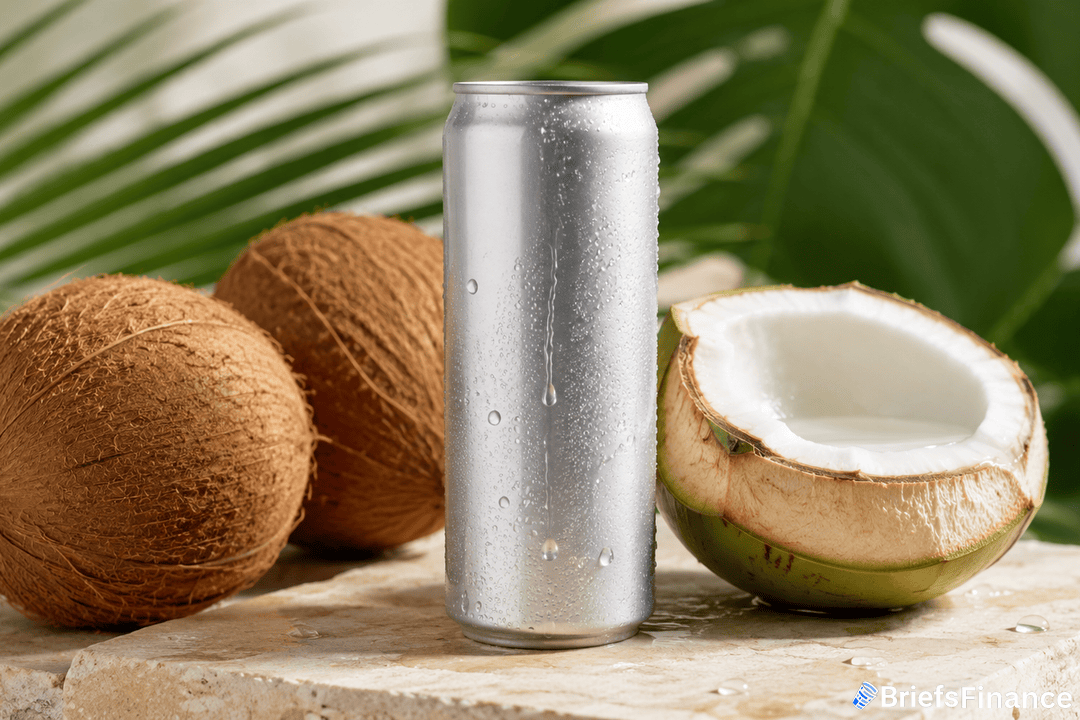
A silver beverage can with water droplets stands between two whole coconuts and one half coconut, all on a stone surface with green palm leaves in the background. The BriefsFinance logo is in the bottom right corner.
Summary:
  • Tom Brady launched Good Nut, an organic coconut water, with the delivery app Gopuff on Monday.
  • Coconut water sales on Gopuff are up 115% in the past year, and the global market could reach $11 billion by 2030.
  • Good Nut sells only on Gopuff at $3.29 a can, or $2.96 for the app's FAM members.

Tom Brady's newest job has nothing to do with football. It is coconut water.

His new brand is called Good Nut. It launched Monday with the delivery app Gopuff.

A Product Built From Sales Data

The fun part is how it got made. Gopuff watched its own app for clues.

Coconut water sales there were climbing fast. They were up 115% in just a year.

So the company did more than stock more cans. It built its own drink and put a famous face on it.

Coconut water is a staple in the Brady house. He says he has sipped it for years.

The chocolate flavor was his own pick. It is the version he keeps in his fridge.

The drink is full of electrolytes. Fans reach for it to stay hydrated.

The timing fits a bigger shift. Shoppers keep picking drinks with less sugar.

The market backs the move. Analysts expect global coconut water sales to reach $11 billion by 2030.

That is fast growth, close to 17% a year. Organic cans are the quickest-growing slice of all.

Every morning, Market Briefs breaks down moves like this in five minutes, and you get a free investing masterclass when you sign up.

Not Brady's First Bet With Gopuff

This is the second product Brady and Gopuff have made. The first was GOAT Gummies.

Those are a plant-based snack with no fake dyes or flavors. They are made with real fruit.

Good Nut leans on clean, simple ingredients. That is the same playbook as the gummies.

Brady and Gopuff struck a multiyear partnership in 2024. Good Nut is the latest piece of it.

Building a brand off app data is a smart trick. It is like a store seeing what sells out, then making its own version.

The store keeps more of the profit that way. Gopuff is playing the same game.

Private-label drinks can earn fatter margins. Gopuff keeps more of each sale than it would reselling a big brand.

Good Nut uses organic coconuts from Vietnam. It comes in a small can, just 11.8 ounces.

There are three types to pick from. They are original, chocolate, and sparkling.

The Celebrity Brand Playbook

Brady is taking a path many stars now follow. They build consumer brands once the games end.

He has built brands before this one. His past bets span supplements and apparel.

He is not the only one chasing the drink aisle. Plenty of athletes and actors have launched their own labels.

For Gopuff, the draw is a bit different. It calls itself an instant commerce leader, dropping snacks and drinks in minutes.

That puts it up against giants like DoorDash and Amazon. A famous name gives it an edge they can't copy fast.

Vita Coco rules the US coconut water aisle. Good Nut steps in as the new challenger.

Big drink makers are watching too. A hit here could pull shelf space from older labels.

What To Watch

Good Nut sells only on Gopuff. A can runs $3.29, or $2.96 for FAM members.

FAM is the app's loyalty plan. Keeping the drink exclusive gives shoppers a reason to open the app.

Better-for-you drinks are a crowded shelf now. Standing out is the hard part.

Brady made his name on the field. The next one is being built one fridge at a time.

If you want markets explained without the jargon, sign up for Market Briefs and grab the free 45-minute investing course that comes with it.

Disclosure

Get Market Briefs delivered to your inbox every morning for free!

No fluff. No noise. No politics. Just finance news you can read in 5 minutes.

Blogs

May 30, 2026
Financial Literacy Books That Actually Build Wealth
  • The best financial literacy books don't just teach budgeting, they shift how you think about money.
  • Two classics stand out: The Intelligent Investor for valuing investments, and Rich Dad Poor Dad for the owner's mindset.
  • Reading is only step one. The real wealth comes from acting on what you learn.
Read More
May 30, 2026
What Is a Roth Conversion? A Simple Guide
  • A Roth conversion moves money from a traditional retirement account into a Roth account.
  • You pay taxes on the money now, in exchange for tax-free growth and withdrawals later.
  • It can pay off if you expect higher taxes or more income in the future, but the timing and tax hit matter a lot.
Read More
May 30, 2026
Trailing Stop Loss: How to Protect Your Gains
  • A trailing stop loss is an order that automatically sells a stock if it falls a set percentage from its recent high.
  • As the stock rises, the sell point rises with it, locking in gains while capping losses.
  • It's most useful for active strategies like momentum investing, not for long-term buy-and-hold.
Read More
May 30, 2026
5 Types of Wealth: Why Money Is Only One of Them
  • Real wealth is more than a bank balance. It spans your finances, health, mind, purpose, and freedom.
  • Money is powerful, but it amplifies the life you already have rather than fixing a broken one.
  • True financial wealth means your cash flow covers your expenses, so your money works while you live.
Read More
May 30, 2026
How to Invest in Private Equity: A Beginner's Guide
  • Private equity means investing in companies that aren't listed on the stock market.
  • Traditional private equity is built for experienced, high-net-worth investors with large amounts to invest.
  • New rules have opened more accessible paths, like startup crowdfunding and real estate deals, often starting around $100.
Read More
May 30, 2026
What Is a Call Option? A Simple Guide With Examples
  • A call option gives you the right to buy a stock at a set price by a set date.
  • Investors buy calls when they expect a stock to rise, using less money than buying the shares outright.
  • The most you can lose buying a call is the premium, but time works against you, so it's an advanced tool.
Read More
May 30, 2026
EBITDA Formula: How to Calculate It Step by Step
  • EBITDA stands for Earnings Before Interest, Taxes, Depreciation, and Amortization, a measure of a company's core profit.
  • The formula adds those four items back to net income to show what the underlying business earns.
  • Investors use EBITDA to compare companies and to judge how many times earnings a stock is selling for.
Read More
May 30, 2026
What Is a Stock Option? A Plain-English Guide
  • A stock option is a contract giving you the right, but not the obligation, to buy or sell a stock at a set price by a set date.
  • There are two types: calls (the right to buy) and puts (the right to sell).
  • Options are powerful but risky, so they suit investors who already have the basics down.
Read More
May 30, 2026
Put Option: What It Is and How It Works
  • A put option gives you the right to sell a stock at a set price by a set date.
  • Investors use puts to bet a stock will fall, or as insurance to protect shares they own.
  • The most you can lose buying a put is the premium you paid, which makes it a defined-risk tool.
Read More
May 30, 2026
Operating Margin: What It Is and How to Calculate It
  • Operating margin shows how much profit a company keeps from its core business after paying its running costs.
  • The formula is operating income divided by revenue, shown as a percent.
  • A strong, steady operating margin signals a well-run business that controls its costs.
Read More
1 2 3 22
Share via
Copy link










