Bangkok asked Beijing to support at least a six month halt to mines in northeastern Myanmar to curb arsenic entering Thai rivers.
Officials from Thailand, China and Myanmar agreed Shan State mining is behind arsenic in the Kok and Sai rivers, with readings up to 30 times Thailand's safety limit.
Thailand is moving on monitoring stations, potential chemical export curbs, a Dec. 2 pollution-control zone, and backup water for nearly 20,000 people.
Why Thailand is pushing for a pause
After tests showed toxic arsenic crossing the border, Thai officials said they urged Beijing to help suspend mining in northeastern Myanmar for a minimum of six months. The appeal was made during Tuesday talks among the three governments.
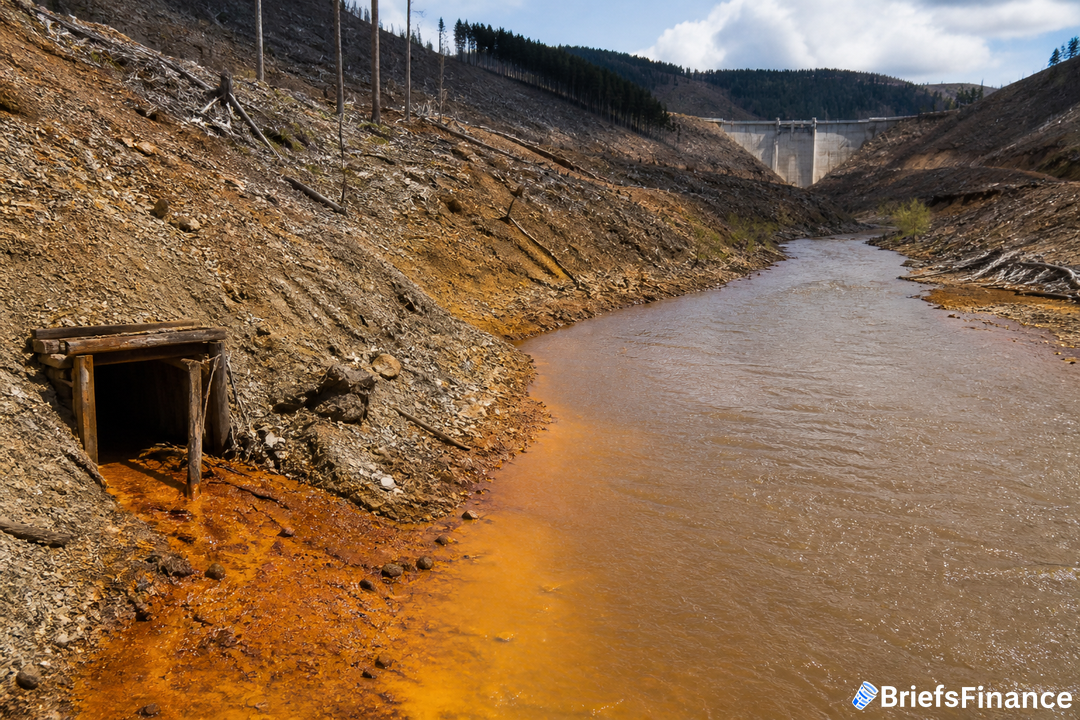
Delegates from Thailand, China and Myanmar concluded that mining in Shan State is the source of arsenic detected in Thailand's Kok and Sai rivers. Officials reported concentrations reaching 30 times Thailand's safety standard, posing risks to drinking water, farmland, and communities downstream. The Kok, Sai and Ruak rivers connect Myanmar's mining areas to northern Thailand.
What Beijing and Bangkok discussed
Foreign Minister Sihasak Phuangketkeow said Thailand wants China's involvement because private Chinese companies run some mines in the area, and he said China acknowledged that such firms operate there. Science and Research Minister Yodchanan Wongsawat added that Thailand sought Beijing's assistance to pinpoint the mines and track the minerals they produce.
China has not released its own readout of the meeting, and its Foreign Ministry and embassy in Bangkok did not promptly reply to questions about the Thai account or the proposed shutdown. Earlier this month, Beijing said it was unaware of concrete accusations tied to Chinese companies, stressed that its enterprises are obligated to safeguard the environment, and signaled readiness to work with Thailand on water-quality issues.
According to Yodchanan, the bulk of rare earth output from the mines heads to China, enabling Chinese authorities to verify whether materials entering its supply chains originate from regulated sites. He said, "If Chinese companies used these rare earth minerals for their production and other foreign companies are using Chinese products, this will impact the entire supply chain." He also said he supports ultimately releasing the companies' names following talks with China and Myanmar, adding, "There is no reason for the Thai government not to disclose it."
When local events affect global trade and resources, stay informed by signing up for the free Market Briefs daily newsletter.
On Nov. 20, Prime Minister Anutin Charnvirakul brought up the pollution issue with President Xi Jinping. Anutin said Beijing pledged technical assistance to enhance water-quality monitoring.
The clampdown and monitoring plan
Thailand intends to curb its involvement in supplying Myanmar's rare-earth industry by prohibiting the export and transit of chemicals used in those activities, pending legal review. The National Security Council cited figures showing about 70% to 80% of the chemicals under examination are shipped from Thailand to Myanmar. Officials are determining additional substances that could be regulated and assessing possible impacts on other sectors.
A Thai-Myanmar working group is slated to meet on Wednesday and Thursday to craft an action plan and schedule. Topics will include immediate measures Myanmar can take, potential mining rules, and technical support from Thai and Chinese laboratories. Natural Resources Minister Suchart Chomklin said Thailand wants four water-monitoring stations inside Myanmar and four on the Thai side, plus about 20 checkpoints to be set along the affected rivers and their tributaries.
Chaipruak Doungprapat, the National Security Council's secretary-general, said after a weekend visit that abandoned sites and unregistered mines with uncleared waste may also be contributing, with rain washing pollutants into soil and nearby waterways.
Investor take
Traceability of rare earths and a potential squeeze on mining chemicals could ripple through supply chains that depend on Chinese processing. If screening tightens, expect closer checks on mineral origins and handling, plus possible compliance costs for miners, traders and manufacturers. Watch the working group's timeline, the chemical export decision and the monitoring buildout for signals on enforcement and supply stability.
Keeping an eye on economic signals helps you feel ready, so sign up for concise morning context from Market Briefs newsletter.
Anthropic has gone public at a valuation of about $1.5 trillion, while Amazon went public in 1997 at around $440 million. Anthropic has about $33 billion in revenue this year and no profit, and investors are paying more than 40 times its sales, against about 3 times for Amazon. Briefs Finance CEO Jaspreet Singh says nobody knows what comes next, and that long-term investors use downturns to buy instead of panic selling.
Tech stocks are selling off because investors don't know who will lead Nvidia, the company that has been funding the AI industry and selling it chips.
Inflation has the Federal Reserve planning to raise interest rates, with a hike expected in December, and that puts pressure on homebuyers, private equity and the $40 trillion national debt.
Briefs Finance CEO Jaspreet Singh says nobody has a crystal ball, so his rules are to buy when markets are low, hold long term and invest only what you're willing to lose.
The national debt is above $40 trillion, and the Federal Reserve has gone from sending Washington its profits to losing money.
President Trump's four-part plan leans on shorter-term debt, stablecoin companies buying Treasuries, a bigger balance sheet and government stakes in private companies.
The goal is to outgrow the debt, not pay it off, so Jaspreet Singh points investors to the seven industries where Washington wants growth.
The Fed makes its next rate decision on December 9 and is now talking about jumbo interest rate hikes of 0.5%, though one in December looks unlikely.
Washington will pay a record $1.05 trillion in interest this year on $40 trillion of debt, and that debt resets at higher rates as the Fed hikes.
Jaspreet Singh's five moves are to pay down variable-rate debt, earn interest on your savings, know which stocks feel the pressure, look at value and hedge.
Margin debt, the money investors borrow to buy stocks, is at a record of around 4.6% of GDP, up from 3.9% in 2021.
ETF money has more than tripled in five years to 7% of GDP, while corporate buybacks and 401(k) money sit below their earlier peaks.
Margin calls and panic selling can make the next downturn deeper, so Jaspreet Singh keeps buying broad market funds and says most investors should skip margin debt.
Jensen Huang is out at Nvidia over affairs with multiple people, and the company he founded has been the bank of American AI, with about $30 billion into OpenAI and $10 billion into Anthropic.
A hotter-than-expected inflation report has Fed officials talking about a possible 0.5% hike in December, and gold, silver, and bitcoin fell on the news.
President Trump said the US may not need a deal with Iran, keeping oil prices and inflation risk high. Jaspreet Singh breaks down what it all means for AI stocks and your portfolio.
Stocks are booming at the fastest pace in years, jobless claims just hit a 57-year low, and most investors still feel like nobody is hiring.
The Fed is protecting the dollar over the economy, oil swings on every Iran headline, and a few AI companies are carrying an S&P 500 where four of five stocks sit in a correction.
Jaspreet Singh explains why circular financing between Nvidia, OpenAI, Anthropic, and SpaceX rhymes with 2008's house of cards, and how his three investing pillars handle a stock market bubble.
The Fed has raised rates, cut them, then raised them again only twice in the last 60 years, and both times the economy fell into a recession and stocks crashed.
The same stop-and-go cycle is playing out now, with one big difference: US debt is 125% of GDP today versus about 30% in 1980.
In the 1970s gold rose roughly 24x, real estate 157%, stocks lagged, and cash lost half its value. Jaspreet Singh lays out five assets to consider before the next flip.
The IRS 2027 tax plan keeps the same seven rates but widens every bracket and lifts the married-filing-jointly standard deduction to $33,200.
The 0% long-term capital gains bracket rises to $102,100, so a household living on $135,300 of investment income could owe $0 in federal income tax.
C corporations still pay 21%, small businesses keep the 20% QBI deduction, and the 401(k) limit climbs to $25,500 with an $8,500 catch-up for investors over 50.
Make sure to check your inbox for the first email.
Before you go
We’re hosting our first ever livestream on how investors can use ChatGPT & Claude to invest like a pro. It’s on 11/17 and is hosted by our CEO Jaspreet Singh.