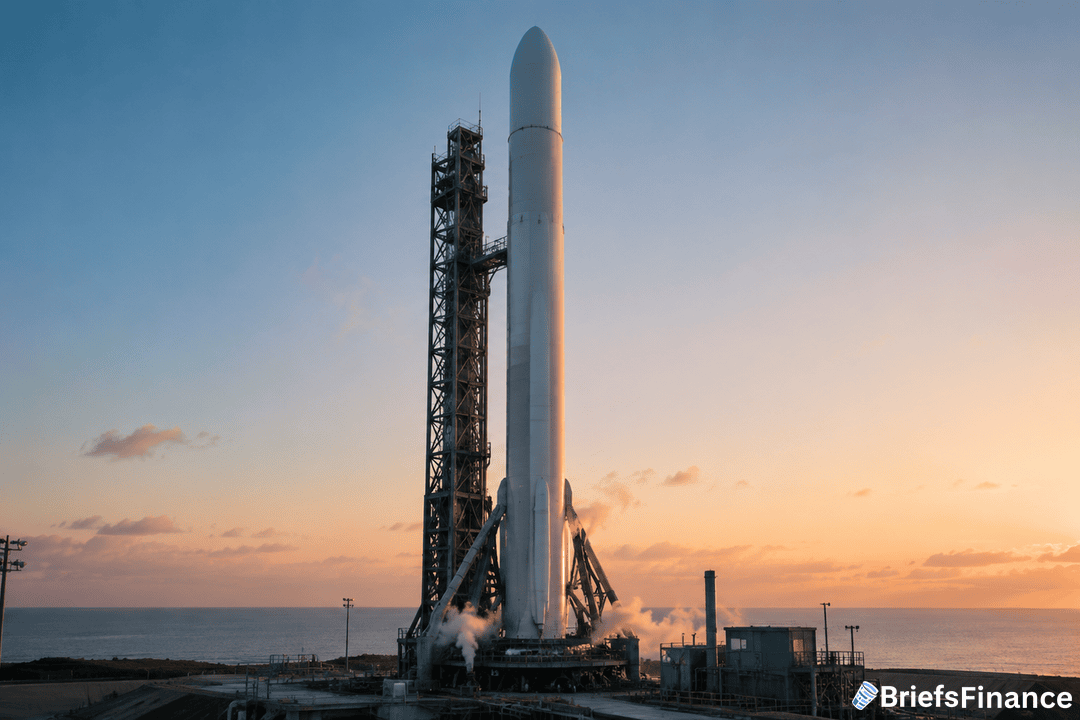
SpaceX is about to pull off the biggest IPO ever. That has some investors worried the market has hit a top.
It is the most watched IPO in years, and the hype has been building for months. But history urges calm, since one big deal rarely ends a bull run.
The Record Deal
SpaceX, run by Elon Musk, starts trading this Friday. It will sell about 556 million shares at $135 each.
That raises about $75 billion. It would be the biggest stock sale ever.
An IPO is when a private firm sells stock to the public for the first time. A record IPO is like the loudest guest at a party.
It is easy to notice, but it does not mean the night is ending. SpaceX will also list on the Nasdaq.
SpaceX merged with xAI earlier this year. That made it an AI player too.
A rule change at the Nasdaq could slip it into the Nasdaq-100. That is the index many funds track.
If it joins, owners of QQQ funds get a slice. That is just how index funds work.
We track the moves that actually matter for investors in Market Briefs, five minutes a morning, with a free investing masterclass included when you sign up.
What History Actually Shows
The numbers point the other way. Canaccord Genuity looked at the seven biggest IPOs since 2008.
The market usually rose in the year after each one. The IPO stocks themselves often did worse.
Those stocks fell about 4% on average in year one, while the Nasdaq rose about 11%. So the market often beat the very deal that scared it.
The Nasdaq rose after five of the seven big IPOs. The wins were not small, either.
Facebook's 2012 debut came before a 42% Nasdaq gain. Aramco's 2019 listing came before a 20% rise.
There were big winners and losers. Arm more than doubled after 2023, while Facebook, Alibaba, Aramco, and Rivian fell hard early.
What To Watch
There is one scary case. Visa went public in March 2008, right before the crash.
Over the next year, the Nasdaq fell about 44%. So the signal is not perfect.
Talk of a market top tends to spike around big IPOs. But one deal is rarely the cause.
Goldman Sachs says the real warning signs are not here yet. Those are weak growth, a flood of new stock, and the Fed raising rates.
Ben Snider of Goldman had one caution, though. Wild buying is a weak timing tool, he said, but it often shows up near past tops.
S&P Global also blocked a fast path into the S&P 500. So SpaceX will not join that big index right away.
Goldman added a calm note from history. When a Fed chair warned of "irrational exuberance" in 1996, stocks ran for three more years.
A record IPO grabs the headlines, but it rarely marks the finish line.
If you want history and context like this with your morning market read, join Market Briefs and get a 45-minute investing course thrown in.