The Nasdaq Composite - one of the major indexes that investors turn to for a daily gut check on how tech stocks are doing.
In fact, over 60% of the stock market index is tech stocks.
What does that mean? For the most part, tech stocks sometimes have a high growth potential.
High growth could give investors a chance to profit.
But what if you don’t want to invest in just one tech stock or the next big high-growth name?
The good news: You don't need to find the next Apple.
And you don't need to predict which tech company will win in the next decade.
Like other indexes, there are funds that can give you exposure to all of the companies with the Nasdaq all at once.
This can give some investors passive exposure to the index, without having to actively research stocks.
The question: How do you invest in the Nasdaq?
Let’s break down exactly how investors can do it, why some investors do, and the things to know before you invest.
But first: Investing in the Nasdaq is one potential opportunity.
How do you spot others?
Check out this free podcast with our CEO Jaspreet Singh and Head of Investment Research where they show you how to spot market shifts and investing opportunities.
What Is the Nasdaq, Exactly?
The Nasdaq is one of the three major stock market indexes that investors watch every day.
The other two are the S&P 500 and the Dow Jones Industrial Average.
Here's how they each break down:
| Index | What It Tracks |
| S&P 500 | The 500 largest U.S. companies by market cap |
| Nasdaq 100 | The 100 largest non-financial companies by market cap |
| Dow Jones | 30 prominent U.S. companies |
When people say "the Nasdaq is up today," they're talking about this index - a basket of the biggest non-financial companies on the market.
And because of how the Nasdaq is built, it's heavily weighted toward technology. Companies like Apple, Microsoft, Amazon, and Nvidia all live here.
Why do investors watch it? Indexes can give investors a peek into how that part of the market is performing.
In this case, the Nasdaq can help investors to understand how tech stocks are moving every day.
That makes the Nasdaq one of the most growth-oriented indexes out there.
Why Would You Want to Invest in It?
Most of the companies reshaping the economy right now - cloud computing, AI, electric vehicles, digital payments - they're Nasdaq companies.
When you invest in the Nasdaq, you're not betting on one company getting it right.
You're betting that the technology sector, as a whole, keeps growing.
That creates business risk - and any company, even promising ones, can fail.
It's also worth noting that the Nasdaq and crypto tend to move in a similar direction.
That's because crypto is a technology-first asset - and the Nasdaq is a tech-first index.
How Do You Actually Invest in the Nasdaq?
You can't buy an index directly. What you can buy is an ETF - an exchange-traded fund - that tracks the index.
An ETF is a basket of stocks that trades just like a single stock.
You buy it through a brokerage account, and it moves up or down with the index it's tracking.
The most well-known ETF for the Nasdaq is QQQ. When you buy QQQ, you're getting exposure to all 100 companies in the Nasdaq 100 index in one single purchase.
Before You Buy: How to Evaluate an ETF
Before putting money into any fund, ask yourself three questions.
1. Who created it?
Is it a reputable institution that's been around a long time?
Look for fund managers with at least $1 billion in assets under management.
The bigger ones - like Vanguard, Fidelity, and Invesco - are managing trillions.
This means they're likely not going anywhere - and they have the experience and credibility that investors can trust.
2. What's inside it?
This is the CDAA method - Companies, Dollars, and Asset Allocation.
- What companies are inside the fund?
- How many assets are under management?
- How is the fund's money spread across its holdings?
For QQQ, you're getting the top 100 non-financial companies by market cap.
A handful of big names will make up a large percentage of the fund - that's normal for this index.
3. What does it cost you?
Every fund charges a fee called an expense ratio - a small percentage taken out of your returns each year.
Pro tip: Look for expense ratios below 0.20% for passively managed ETFs.
Lower is better - the difference between 0.03% and 0.50% adds up to a significant amount over 20+ years.
The Real Secret: Consistency Over Timing
Most investors try to find the "right time" to buy - waiting for a dip, watching the news, and missing gains in the process.
Another option that takes out some of the emotions of investing is called dollar cost averaging - or DCA.
Instead of investing a lump sum once and hoping for good timing, you invest a fixed amount on a regular schedule - every week, every two weeks, or every month - no matter what the market is doing.
When the market is up, your money buys fewer shares.
When the market is down, your money buys more shares.
Over time, you end up buying at an average price - and you take emotion completely out of the equation.
One strategy that builds on DCA is what our analysts call CPA - Consistent, Patient, Automated investing.
- Pick a schedule.
- Automate it.
- Then stay the course for years, not months.
Plus, most brokerage platforms let you set up automatic investments in just a few minutes.
One Thing to Understand About Risk
The Nasdaq is a growth-heavy index.
That means it can go up fast - and it can also drop fast.
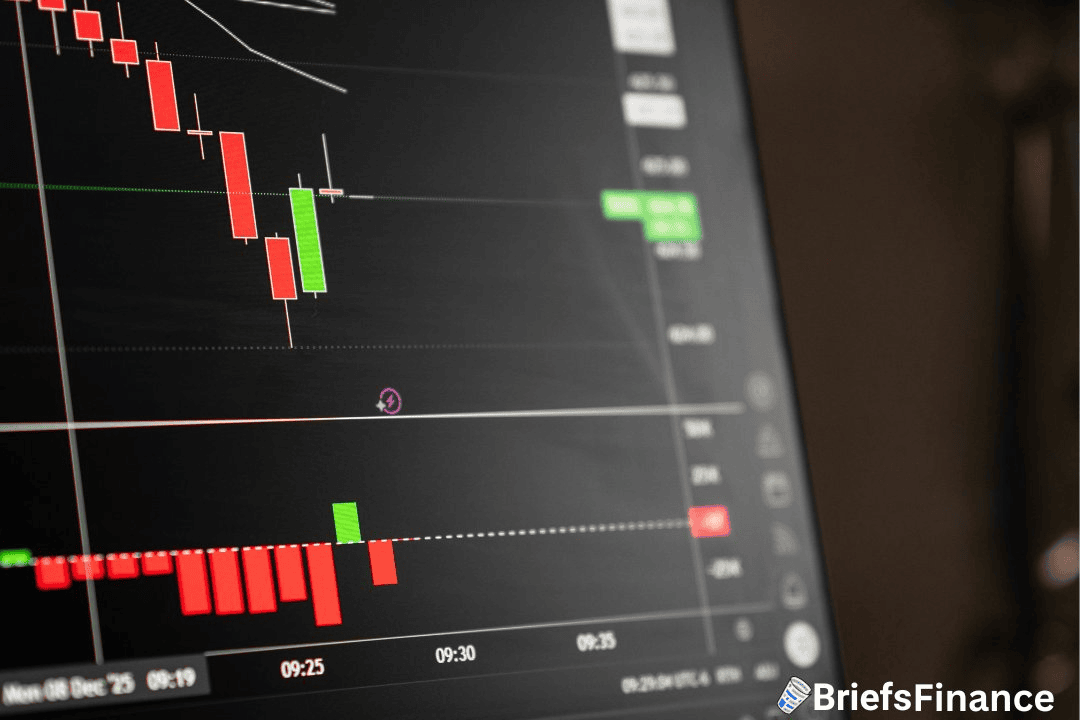
In 2022, when inflation hit a near four-decade high of 9.1%, the Nasdaq fell sharply.
In early 2025, when major tariff policies rattled markets, tech stocks took significant hits and the Nasdaq entered bear market territory.
For long-term investors, these dips are normal. The market has recovered from every downturn in history.
But if you're going to invest in a tech-heavy index like the Nasdaq, you need to be prepared for more volatility than, say, the total stock market or the S&P 500.
Nasdaq vs. S&P 500 - What's the Difference?
The S&P 500 is broader - 500 companies across every major sector of the economy. The Nasdaq 100 is narrower - 100 companies, mostly in tech and growth.
Neither is "better." They serve different purposes in a portfolio.
Some investors own both.
Other investors prefer one over the other based on their risk tolerance and time horizon.
Both give you diversification without having to pick individual stocks.
The Bottom Line On The Nasdaq
Investing in the Nasdaq doesn't require a finance degree, a Bloomberg terminal, or a stockbroker on speed dial.
It requires three things:
- A brokerage account.
- An ETF like QQQ.
- A consistent, long-term contribution schedule.
As one of the investing legends behind passive index strategies once said - don't look for the needle in the haystack.
Just buy the haystack.
The Nasdaq is a tech-heavy slice of that haystack.
And for investors who believe in the long-term growth of the companies reshaping the economy, it's a logical place to start.
Investing in the Nasdaq is one way passive investors gain exposure to companies that often have high growth potentials.
But how do you spot other opportunities?
Check out this free podcast with our CEO Jaspreet Singh and Head of Investment Research where they show you how to spot market shifts and investing opportunities.