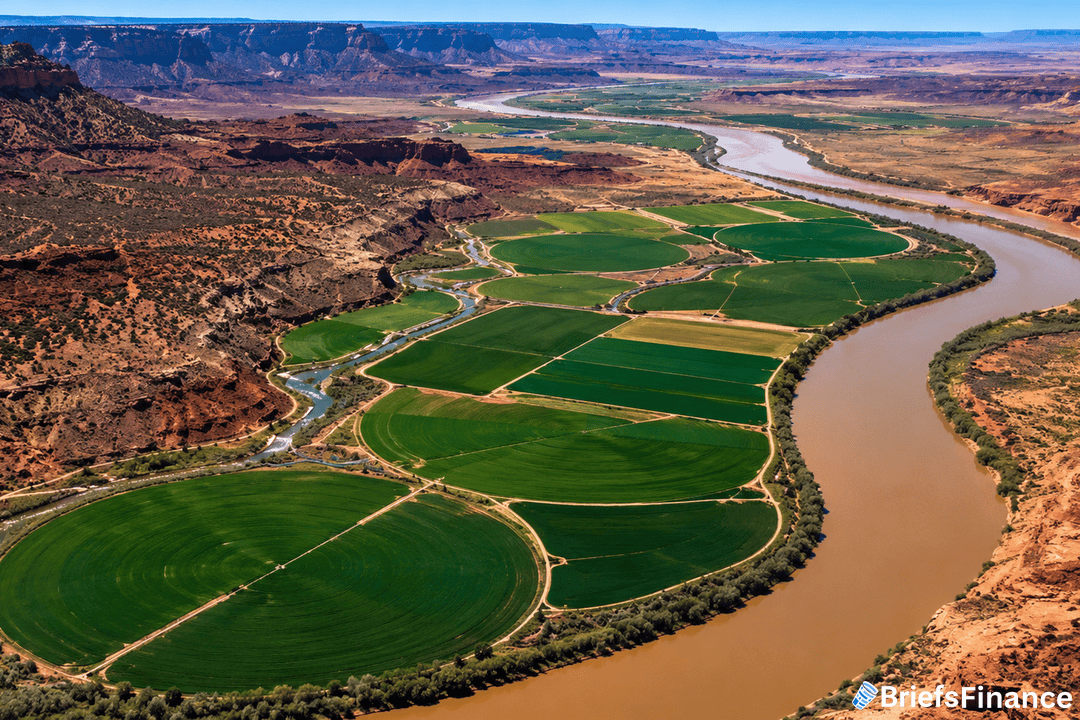
A hedge fund on Madison Avenue has become one of the biggest landowners in a rural Colorado valley. It isn't there for the farming.
Following the water, not the crops
Water Asset Management started in 2005 and now runs on this one idea. It has spent more than $20 million on land in western Colorado.
Along the way, it has picked up over 2,500 acres. Local water officials say the firm wants the rights that come with the land, not the harvest.
Its president has called American water a trillion-dollar market opportunity. The firm's own site compares scarce water this century to plentiful oil in the last one.
Not everyone is happy about it. One local water manager called investors like this "drought profiteers."
We follow where the smart money is quietly moving, every morning in Market Briefs, and joining comes with a free investing masterclass.
How the deals work
The play is simple. The fund buys a farm, then often rents it back to the family that sold it.
The farmer keeps working the land. The fund holds the water rights and waits.
The firm has said it makes farms more efficient first. Then it can sell saved water to cities that need it.
That keeps the water in "beneficial use," which protects the right. It also makes the deal easy for a retiring farmer to say yes to.
This is a slow bet, not a quick flip. The payoff comes years out, as water grows scarce.
The data backs the bet
You don't have to take the hedge fund's word for it. The USDA tracks farm prices, and the gap is huge.
In 2025, irrigated cropland in Florida was worth $12,400 an acre. Dry cropland sat closer to $9,000.
Nebraska showed the same split. Land with water ran about $8,850 an acre, against $5,600 without it.
California was the widest. Irrigated land was worth about $20,900 an acre, against $8,000 for dry.
Two farms can look identical from the road. The one with water can still cost more than twice as much.
The big names agree
This isn't a fringe trade run by one fund. Michael Burry, the investor from "The Big Short," has named water as a long-term focus.
Harvard's endowment has done it too. It bought California vineyards sitting over a major aquifer.
When that many careful buyers chase the same thing, it pays to ask why. They're buying the water under the dirt.
For everyday investors, that lands water on the same list of alternative investments the pros reach for.
What To Watch
The firms doing this rarely announce it. The value sits in the water rights, not the crops.
And those rights only grow scarcer. They're not buying farmland for the farming, and that tells you most of what you need to know.
If you want to see these moves before they're obvious, sign up for Market Briefs and you'll also get a free masterclass on finding investments.