Late Thursday, President Luiz Inacio Lula da Silva named Luiz Carlos Trabuco Cappi as finance minister.
Into week's close, the Ibovespa rose more than 6% and the real gained over 7%, its biggest weekly jump since 2020.
Rate futures repriced lower for the coming years, trimming projected borrowing costs by a bit more than 0.50 percentage point on Friday.
The move and the snapback
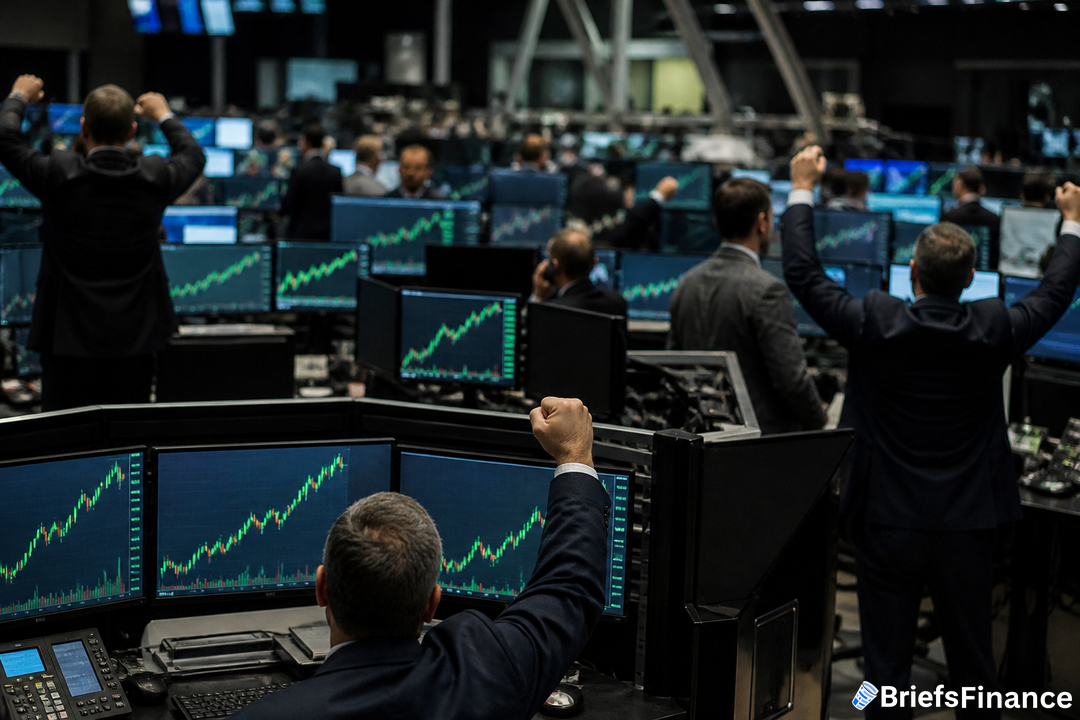
After weeks of shrugging off warnings from investors, economists and some close advisers as markets slumped, Lula picked one of Brazil's most respected bankers, Luiz Carlos Trabuco Cappi, to calm nerves and signal a shift toward tackling fiscal strains. Trading desks cheered: stocks and bonds climbed, and the real reversed part of a slide that had recently made it the world's worst performer.
The rebound followed an unusually tense stretch. Lula, fresh off a surprise win to a fourth term last month, had blasted the "bunch of yuppies" on Faria Lima - Brazil's Wall Street stand-in - for demanding spending restraint. By late week, though, optimism that fiscal discipline could ease inflation pressures helped drive the rally while rate futures pared back longer-term policy expectations.
Why this banker matters
Trabuco, a former CEO and chairman of Banco Bradesco SA and a longtime Lula confidant, has deep links to the business community and, investors hope, the clout to steer a pragmatic path. Paula Moreno, co-chief investment officer at Armor Capital, called him "the best case scenario," pointing to his ability to work with Congress and the private sector. Bruno Marques, a portfolio manager at XP Asset Management, said the pick was "a 180-degree shift in the market's perception of the government," noting that his name had not been on investors' short lists.
The mood turn was also about how dark things had gotten. Many money managers had bet on challenger Flavio Bolsonaro to oust Lula, and the real had fallen up to 16% from election day onward. A leadership change at Finance signaled engagement that markets had not expected.
When financial news moves quickly, stay grounded with the free Market Briefs newsletter that summarizes it clearly.
The fiscal job ahead
Brazil faces a budget gap around 10% of GDP and debt near all-time highs, which likely means spending cuts that Lula has resisted in recent years. Steps are starting to surface: legislation to tighten fiscal rules could deliver up to 60 billion reais (about $10 billion) in 2027, and reports say Lula approved a plan to slow the growth of mandatory expenditures. Reining in spending could ease the inflation pressures that prompted policymakers at the central bank to hold borrowing costs at high levels, a stance that has pinched households and increased the government's interest burden.
Caution remains. Isabela Fukase, a portfolio manager with Tivio Capital, an asset manager overseeing more than 30 billion reais, said, "An improvement in risk perception is one thing - a change in the fundamentals of the economy is another," adding that markets will watch how much autonomy Trabuco gets and whether he has political backing to curb spending.
What to watch for your portfolio
By week's end, the relief rally was clear, and traders marked down the path of rates. But execution will decide what sticks. Gordian Kemen, Standard Chartered's head of emerging market sovereign strategy, argued that the rate curve still does not factor in a full easing cycle and that the real's rebound recovers less than half of its post-election drop, leaving room for more if reforms progress. Vinicius Marujo, portfolio manager at Persevera Asset Management, put it this way: conditions have improved meaningfully, even if nothing changed overnight.
The bottom line: markets liked the signal, but they will demand concrete moves on spending and credible fiscal rules before pricing a sustained turnaround.
For busy readers who want clear context each day, sign up for Market Briefs to get concise daily updates.
Anthropic has gone public at a valuation of about $1.5 trillion, while Amazon went public in 1997 at around $440 million. Anthropic has about $33 billion in revenue this year and no profit, and investors are paying more than 40 times its sales, against about 3 times for Amazon. Briefs Finance CEO Jaspreet Singh says nobody knows what comes next, and that long-term investors use downturns to buy instead of panic selling.
Tech stocks are selling off because investors don't know who will lead Nvidia, the company that has been funding the AI industry and selling it chips.
Inflation has the Federal Reserve planning to raise interest rates, with a hike expected in December, and that puts pressure on homebuyers, private equity and the $40 trillion national debt.
Briefs Finance CEO Jaspreet Singh says nobody has a crystal ball, so his rules are to buy when markets are low, hold long term and invest only what you're willing to lose.
The national debt is above $40 trillion, and the Federal Reserve has gone from sending Washington its profits to losing money.
President Trump's four-part plan leans on shorter-term debt, stablecoin companies buying Treasuries, a bigger balance sheet and government stakes in private companies.
The goal is to outgrow the debt, not pay it off, so Jaspreet Singh points investors to the seven industries where Washington wants growth.
The Fed makes its next rate decision on December 9 and is now talking about jumbo interest rate hikes of 0.5%, though one in December looks unlikely.
Washington will pay a record $1.05 trillion in interest this year on $40 trillion of debt, and that debt resets at higher rates as the Fed hikes.
Jaspreet Singh's five moves are to pay down variable-rate debt, earn interest on your savings, know which stocks feel the pressure, look at value and hedge.
Margin debt, the money investors borrow to buy stocks, is at a record of around 4.6% of GDP, up from 3.9% in 2021.
ETF money has more than tripled in five years to 7% of GDP, while corporate buybacks and 401(k) money sit below their earlier peaks.
Margin calls and panic selling can make the next downturn deeper, so Jaspreet Singh keeps buying broad market funds and says most investors should skip margin debt.
Jensen Huang is out at Nvidia over affairs with multiple people, and the company he founded has been the bank of American AI, with about $30 billion into OpenAI and $10 billion into Anthropic.
A hotter-than-expected inflation report has Fed officials talking about a possible 0.5% hike in December, and gold, silver, and bitcoin fell on the news.
President Trump said the US may not need a deal with Iran, keeping oil prices and inflation risk high. Jaspreet Singh breaks down what it all means for AI stocks and your portfolio.
Stocks are booming at the fastest pace in years, jobless claims just hit a 57-year low, and most investors still feel like nobody is hiring.
The Fed is protecting the dollar over the economy, oil swings on every Iran headline, and a few AI companies are carrying an S&P 500 where four of five stocks sit in a correction.
Jaspreet Singh explains why circular financing between Nvidia, OpenAI, Anthropic, and SpaceX rhymes with 2008's house of cards, and how his three investing pillars handle a stock market bubble.
The Fed has raised rates, cut them, then raised them again only twice in the last 60 years, and both times the economy fell into a recession and stocks crashed.
The same stop-and-go cycle is playing out now, with one big difference: US debt is 125% of GDP today versus about 30% in 1980.
In the 1970s gold rose roughly 24x, real estate 157%, stocks lagged, and cash lost half its value. Jaspreet Singh lays out five assets to consider before the next flip.
The IRS 2027 tax plan keeps the same seven rates but widens every bracket and lifts the married-filing-jointly standard deduction to $33,200.
The 0% long-term capital gains bracket rises to $102,100, so a household living on $135,300 of investment income could owe $0 in federal income tax.
C corporations still pay 21%, small businesses keep the 20% QBI deduction, and the 401(k) limit climbs to $25,500 with an $8,500 catch-up for investors over 50.
Make sure to check your inbox for the first email.
Before you go
We’re hosting our first ever livestream on how investors can use ChatGPT & Claude to invest like a pro. It’s on 11/17 and is hosted by our CEO Jaspreet Singh.