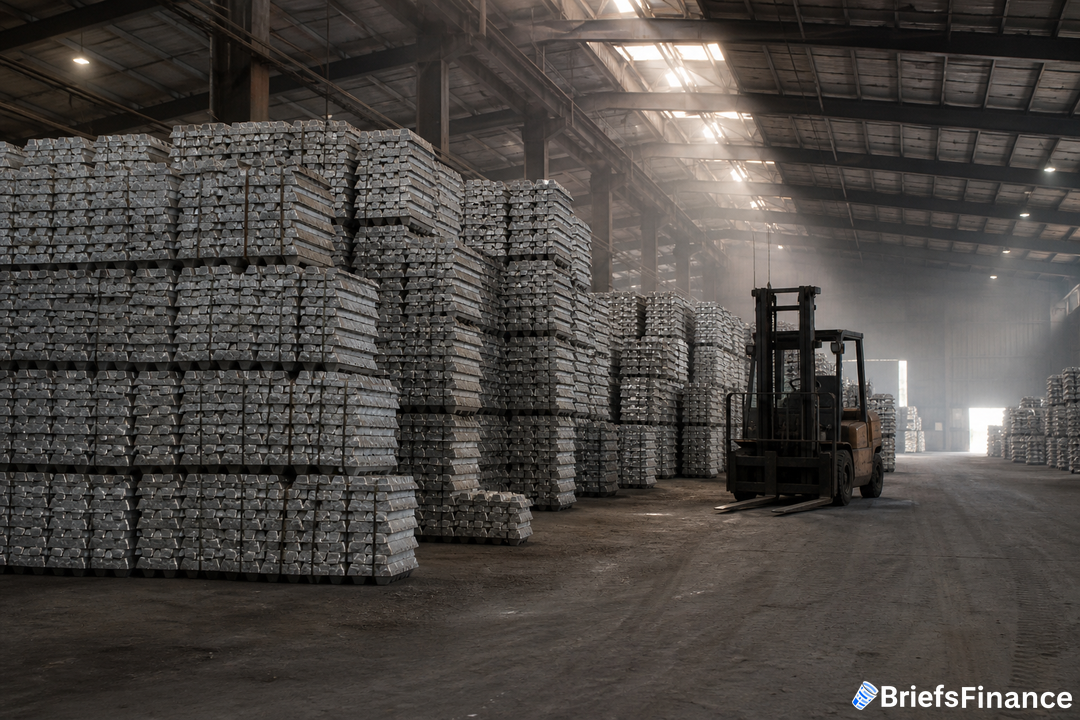
A sharp squeeze in early November sent spot aluminum far above futures, triggering urgent pleas from manufacturers and traders for the London Metal Exchange to act.
The LME responded by speeding up smelter registration, approving PT Hua Chin Aluminum Indonesia for delivery next week, and tightening position rules around 3:14 p.m., which knocked the key spread from $400 a ton to $67.
At the peak, rolling a spot hedge to December cost $250 a ton - roughly 8% for a month - as some warned of losses, possible defaults, and severe stress across the value chain.
What happened
In early November, aluminum sold off alongside tech shares and other raw materials, yet under the surface the market's gears jammed. Spot prices vaulted over futures, setting up the steepest penalties in decades for shorts coming due as exchange inventories fell to their lowest since 1990.
Across the opening weeks of November, the LME judged the curve to reflect a short-term supply squeeze. However, after the primary November contract rolled off last week with very little metal delivered, worries mounted that - since Indonesian tons were still absent - the market might face unusually large nearby premiums for an extended period. By then, manufacturers and trading houses were flagging heavy hedge losses and some were warning about the risk of defaults.
Why the market flipped into backwardation
When immediate supply is scarce, spot prices can exceed longer-dated futures - a setup called backwardation. That made sense here: the expected boost from Chinese-built Indonesian smelters had not materialized, production at key Middle Eastern facilities was disrupted by the war involving Iran, and inventories on the exchange were already lean.
Normally, a jump in near-term premiums draws metal onto the exchange and eases the crunch. Not this time. Much of the aluminum backing the contract is older Russian-origin material produced before Western sanctions barred new Russian deliveries, and many buyers prefer other sources.
Large Middle Eastern stocks were delayed because shipping through the Strait of Hormuz was fraught with logistical hurdles. And metal from new Indonesian smelters had not yet been cleared for LME delivery.
Those frictions spilled over globally. Europe's physical premiums - paid on top of the LME price - dropped by more than half as companies rushed to unload metal to avoid maintaining hedges. In China, the Shanghai Futures Exchange also fell into a sharp near-dated premium, which could pull more imports from the rest of the world.
When markets can be confusing, stay calm and get clarity with the free Market Briefs newsletter every morning.
How the LME intervened and what changed
Physical users called the LME in growing distress, and the exchange moved. A spokesperson declined to comment, but the playbook reflects reforms since a rogue copper incident in 1996 and hard lessons from the scramble around nickel in 2022.
On Tuesday morning, the LME said it would cut the waiting period to register new smelters for delivery and cleared PT Hua Chin Aluminum Indonesia to be deliverable starting next week. Then, at about 3:14 p.m., it issued a notice tightening controls on participants with sizable positions, including those below 50% of available stocks. Within a minute, spreads slid, with the cash to 3 month falling from $400 a ton to $67. As one trader put it, "whether you made or lost money came down to how fast you could read."
The new measures were aimed at limiting the ability to engineer squeezes. The LME also set a practical ceiling on the size of the one day Tom next premium when any single trader controls more than 30% of inventories. A caveat remains - the market can still be vulnerable if several players each hold just under 30%. Meanwhile, the exchange's older requirement to lend stock at capped rates kicks in only when one holder exceeds half of available inventories, a threshold that did not apply where positions were spread across multiple firms.
The fallout and what it means for your portfolio
Routine dealing seized up as companies shed inventory to escape hedge exposure, since rolling short hedges in backwardation locks in losses. At the peak, moving a spot hedge into December cost $250 a ton - about 8% for a month. Ross Strachan of CRU Group said, "I literally don't remember a situation quite like this before," adding, "The reality of the situation is that it is going to have squeezed people in various parts of the value chain in various ways," and, "And it's going to hit them hard."
The structure of deliverability added to the strain. Many firms cannot meet exchange specs with their finished products - for instance, rolled sheet for beverage cans and auto panels - and traders in alumina, the input for smelting, also cannot deliver it to settle LME positions. In a twist, some traders had planned to deliver aluminum to the LME just before the rule change, but pivoted once spreads collapsed.
The immediate crunch eased, then partially returned - spreads rose again on Thursday and Friday, though remained below pre intervention extremes. Morgan Stanley's Amy Gower wrote, "Near-term physical tightness is likely to persist until inventories rebuild." For investors, the bottom line is simple: watch inventories, track whether newly eligible Indonesian metal shows up, and remember how market mechanics can swing costs fast - from a one minute plunge in the key spread to a punishing monthly roll cost that ripples into the prices and hedges linked to your portfolio.
Markets often surprise us, so sign up for Market Briefs to receive a quick, free daily guide you can trust.
Anthropic has gone public at a valuation of about $1.5 trillion, while Amazon went public in 1997 at around $440 million. Anthropic has about $33 billion in revenue this year and no profit, and investors are paying more than 40 times its sales, against about 3 times for Amazon. Briefs Finance CEO Jaspreet Singh says nobody knows what comes next, and that long-term investors use downturns to buy instead of panic selling.
Tech stocks are selling off because investors don't know who will lead Nvidia, the company that has been funding the AI industry and selling it chips.
Inflation has the Federal Reserve planning to raise interest rates, with a hike expected in December, and that puts pressure on homebuyers, private equity and the $40 trillion national debt.
Briefs Finance CEO Jaspreet Singh says nobody has a crystal ball, so his rules are to buy when markets are low, hold long term and invest only what you're willing to lose.
The national debt is above $40 trillion, and the Federal Reserve has gone from sending Washington its profits to losing money.
President Trump's four-part plan leans on shorter-term debt, stablecoin companies buying Treasuries, a bigger balance sheet and government stakes in private companies.
The goal is to outgrow the debt, not pay it off, so Jaspreet Singh points investors to the seven industries where Washington wants growth.
The Fed makes its next rate decision on December 9 and is now talking about jumbo interest rate hikes of 0.5%, though one in December looks unlikely.
Washington will pay a record $1.05 trillion in interest this year on $40 trillion of debt, and that debt resets at higher rates as the Fed hikes.
Jaspreet Singh's five moves are to pay down variable-rate debt, earn interest on your savings, know which stocks feel the pressure, look at value and hedge.
Margin debt, the money investors borrow to buy stocks, is at a record of around 4.6% of GDP, up from 3.9% in 2021.
ETF money has more than tripled in five years to 7% of GDP, while corporate buybacks and 401(k) money sit below their earlier peaks.
Margin calls and panic selling can make the next downturn deeper, so Jaspreet Singh keeps buying broad market funds and says most investors should skip margin debt.
Jensen Huang is out at Nvidia over affairs with multiple people, and the company he founded has been the bank of American AI, with about $30 billion into OpenAI and $10 billion into Anthropic.
A hotter-than-expected inflation report has Fed officials talking about a possible 0.5% hike in December, and gold, silver, and bitcoin fell on the news.
President Trump said the US may not need a deal with Iran, keeping oil prices and inflation risk high. Jaspreet Singh breaks down what it all means for AI stocks and your portfolio.
Stocks are booming at the fastest pace in years, jobless claims just hit a 57-year low, and most investors still feel like nobody is hiring.
The Fed is protecting the dollar over the economy, oil swings on every Iran headline, and a few AI companies are carrying an S&P 500 where four of five stocks sit in a correction.
Jaspreet Singh explains why circular financing between Nvidia, OpenAI, Anthropic, and SpaceX rhymes with 2008's house of cards, and how his three investing pillars handle a stock market bubble.
The Fed has raised rates, cut them, then raised them again only twice in the last 60 years, and both times the economy fell into a recession and stocks crashed.
The same stop-and-go cycle is playing out now, with one big difference: US debt is 125% of GDP today versus about 30% in 1980.
In the 1970s gold rose roughly 24x, real estate 157%, stocks lagged, and cash lost half its value. Jaspreet Singh lays out five assets to consider before the next flip.
The IRS 2027 tax plan keeps the same seven rates but widens every bracket and lifts the married-filing-jointly standard deduction to $33,200.
The 0% long-term capital gains bracket rises to $102,100, so a household living on $135,300 of investment income could owe $0 in federal income tax.
C corporations still pay 21%, small businesses keep the 20% QBI deduction, and the 401(k) limit climbs to $25,500 with an $8,500 catch-up for investors over 50.
Make sure to check your inbox for the first email.
Before you go
We’re hosting our first ever livestream on how investors can use ChatGPT & Claude to invest like a pro. It’s on 11/17 and is hosted by our CEO Jaspreet Singh.