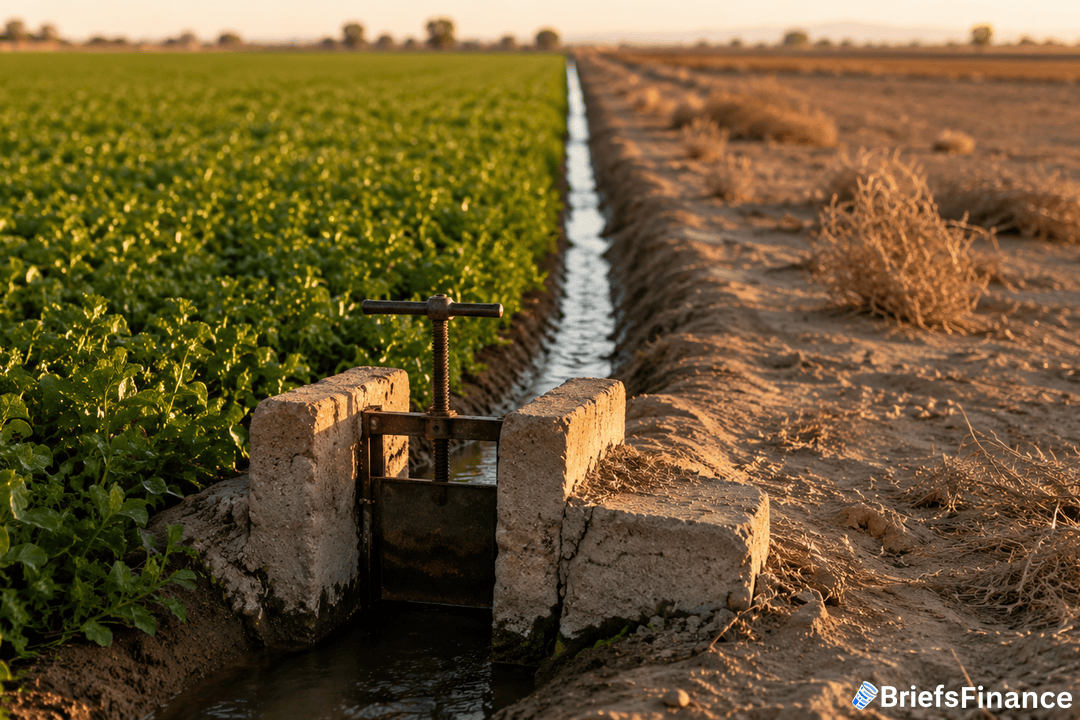
Here's a strange fact about the American West. You can own a piece of a river.
Not the riverbank. The right to use the water itself.
That right is what a growing group of investors is really after.
First in time, first in right
Western water runs on a rule called prior appropriation. In plain English, whoever claimed the water first has the strongest claim.
Those older claims are "senior" rights. The newer ones are "junior" rights that sit further back in line.
When a drought hits, senior rights get filled first. Junior rights wait, and often get nothing.
Think of a senior right as a front-row seat that never loses its view. That's why California holds such a strong hand on the Colorado River.
A 1963 Supreme Court ruling locked in its share at 4.4 million acre-feet a year.
You buy the land to get the water
Western water rights are "appurtenant." That legal word means the right is attached to the land itself.
So the usual way to buy the water is to buy the farm on top of it. There's a catch built into the law: use it or lose it.
A right left unused for too long can be taken away. That's why investors who buy these farms keep them farming.
They often lease the land right back to the original family. The crop pays the bills and protects the right, while the water does the real work on value.
We explain how quirky markets like this actually work, in five minutes a day, over at Market Briefs, and new readers get a free investing masterclass too.
The priority ladder is strict
The rules can lead to odd results. A Saudi dairy company once pumped Arizona groundwater to grow alfalfa.
It shipped the crop home to feed cattle. Arizona later declined to renew the company's leases.
Alfalfa is a thirsty crop, using about five acre-feet of water per acre. The average home uses less than half an acre-foot a year.
On the Colorado River, California's top users follow a set order. Palo Verde farmers come first, then a Yuma project, then the Imperial and Coachella valleys.
Those valleys grow most of the country's winter salad greens. The water rights are what make that possible.
Why the math works
More than 80% of the water in the West goes to farms. That's also where the oldest, most valuable rights sit.
So a buyer who wants secure water doesn't bid on a reservoir. They bid on an old farm with old rights.
That makes water one of the few real assets that comes bundled with dirt, crops, and a legal guarantee.
Worth Noting
Owning and trading water still feels strange to most people. The West has worked this way since before statehood.
Buy the right farm, and you're really buying the water underneath it. For investors, that puts water rights beside other alternative investments that reward people who learn the rules first.
Want to understand the market without the jargon? Join 350,000+ readers getting Market Briefs each morning and get a free 45-minute investing course as a bonus.