Free NewsletterPro Login
S&P 500 6,287 +0.42%
DOW 44,521 -0.18%
NASDAQ 21,103 +0.71%
S&P 500 +12.4%
Briefs Finance Fund +24.8%
JOIN THE FUND →

Hawkish Fed Could Squeeze Credit Spreads Near Multi-Decade Lows

Published Jun 18, 2026
Share:
Summary:
  • Corporate credit spreads are near multi-decade lows, leaving investors with almost no extra yield to absorb a shock if conditions deteriorate.
  • A hawkish Fed holding rates higher for longer pressures companies that borrowed cheaply and now face refinancing at significantly higher costs, squeezing earnings and margins.
  • The bulk of the corporate maturity wall lands in 2027 and 2028, with high yield borrowers in energy, real estate, and consumer cyclicals most exposed to tightening credit conditions.

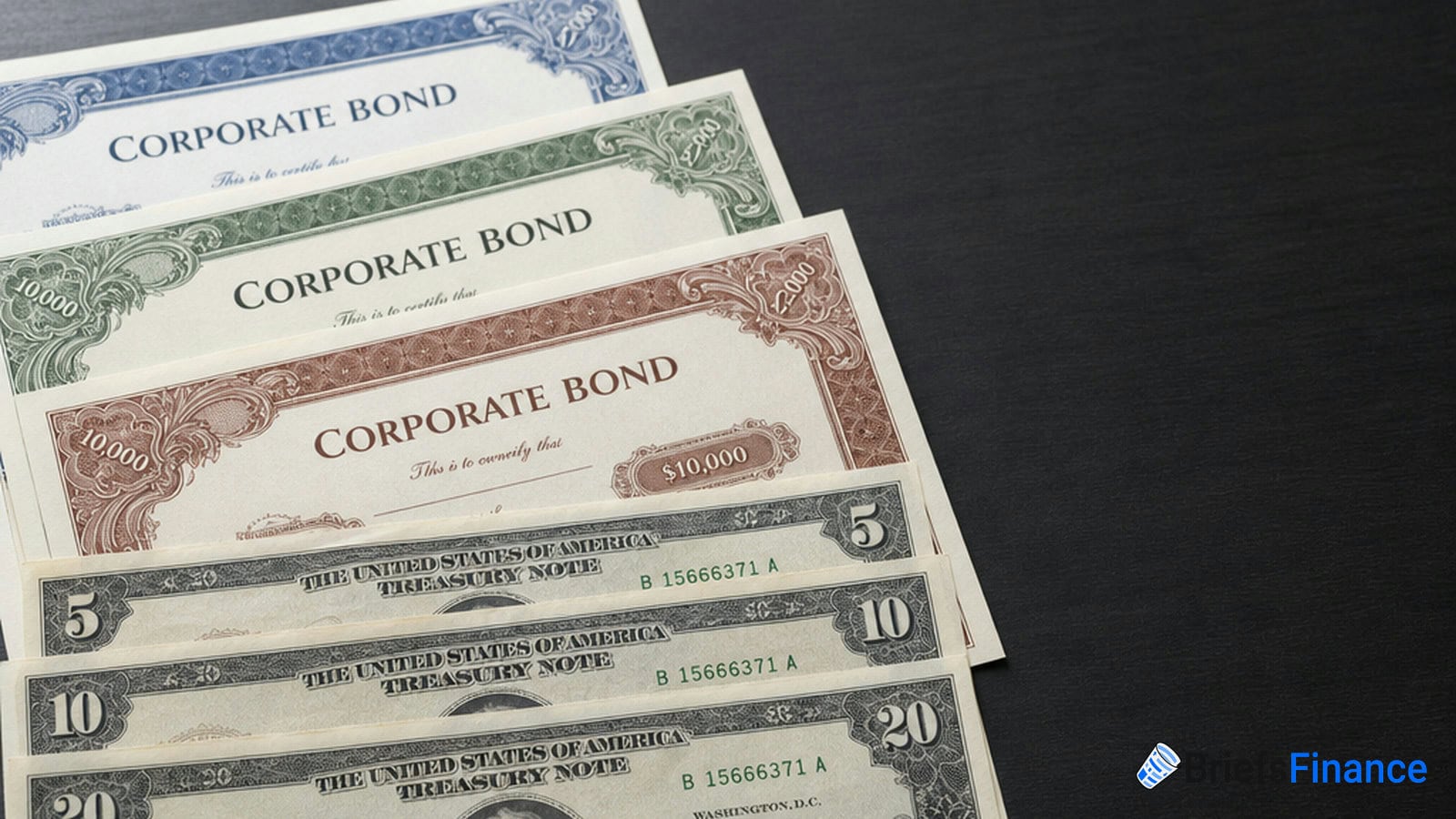
Corporate bonds are supposed to pay you extra for taking on more risk than a Treasury. Right now, that extra payout is almost nothing.

Investors are basically lending to companies at the same rate they'd lend to the U.S. government - which leaves almost no cushion if anything goes wrong.

The Fed could be that something, especially with an economy that may not give it room to cut as fast as the market expects.

Credit Spreads Sit Near Multi-Decade Lows

Credit spreads are the extra yield investors get for holding corporate bonds instead of Treasuries - it's the price of taking on company risk.

Right now those spreads are sitting near multi-decade lows across investment grade and high yield alike.

That pricing reflects a market betting on almost no corporate defaults, no recession trouble, and no refinancing surprises - all at the same time.

Credit cycles have historically turned when investor confidence is highest. Market Briefs breaks down what's actually moving in credit and rates every morning in five minutes - plus you get a free investing masterclass when you sign up.

Why The Fed Is The Pressure Point

A hawkish Fed means rates stay higher for longer, which puts pressure on every company that borrowed cheaply during the zero-rate years and now has to refinance at much higher costs.

Think of it like a homeowner who locked in a 3% mortgage in 2021 and now has to refinance at 7% - same loan, much bigger monthly bill.

For companies, that bigger bill comes straight out of earnings, and weaker borrowers may not have the cash flow to absorb it.

Multiply that math across thousands of corporate borrowers, and the strain shows up in profit margins across the index.

The pain usually shows up in stages, starting with more expensive refinancings, moving into slipping earnings, and finishing with downgrades from ratings agencies - which is when spreads finally react.

So far, spreads haven't budged much, with the market betting the Fed cuts before the damage shows up.

What To Watch

Watch the high yield market first, because that's where the weakest borrowers live - smaller companies, more leverage, less room for error.

Energy, real estate, and consumer cyclicals tend to be the first to feel the pressure when financing gets tight.

Watch refinancing activity too, because a growing chunk of corporate debt comes due over the next few years, and every deal that closes at a higher rate eats into earnings.

High yield refinancing activity is peaking in 2025 and 2026, with the bulk of the maturity wall now sitting in 2027 and 2028 - meaning the test is already on the calendar.

Bank lending standards are another early signal, since tighter credit at the bank level usually shows up in bond spreads a few months later.

And watch what the Fed actually says next, not just what it does, since tone shifts move credit before rate moves do.

Credit spreads are priced for stability, and the Fed is the variable most likely to disrupt that pricing.

Join 350,000+ investors reading Market Briefs for the daily read on rates, credit, and what's actually moving markets - delivered every morning, with a free 45-minute investing masterclass thrown in.

Disclosure

Get Market Briefs delivered to your inbox every morning for free!

No fluff. No noise. No politics. Just finance news you can read in 5 minutes.

Blogs

June 18, 2026
What Is a Stop Loss Order? A Simple Guide
  • A stop loss order automatically sells a stock once it falls to a price you set.
  • It's a tool to cap losses or lock in gains without watching the market all day.
  • It works best for active strategies, and can backfire if used carelessly on long-term holdings.
Read More
June 18, 2026
Best S&P 500 Index Fund: How to Choose One
  • The best S&P 500 index fund for most investors is simply the cheapest, most established one that tracks the index well.
  • Funds like VOO, IVV, and SPY all hold the same 500 companies, so the biggest difference is the fee.
  • Pick one, automate your buys, and let time do the heavy lifting.
Read More
June 17, 2026
What Are Penny Stocks? Risks and Rewards Explained
  • Penny stocks are very low-priced shares of very small companies, often trading for just a few dollars or less.
  • They promise huge gains but carry huge risks: low liquidity, high failure rates, and wild price swings.
  • Most investors are better served by quality companies and funds than by chasing cheap shares.
Read More
June 17, 2026
Best Stocks for Beginners With Little Money
  • The best stocks for beginners with little money usually aren't individual stocks at all - they're low-cost index funds.
  • You can start with $100 or less and use small, regular investments to build wealth over time.
  • Focus on diversification and consistency, not on picking the next big winner.
Read More
June 16, 2026
Tech Stocks: A Simple Guide for New Investors
  • Tech stocks are companies in the information technology and related sectors, from software to chips to the internet giants.
  • They've driven much of the market's growth, but they can be volatile and richly valued.
  • The smart approach is to understand what you own and not let one sector run your whole portfolio.
Read More
June 16, 2026
What Is a Joint Stock Company? A Simple Guide
  • A joint stock company is a business owned by many people, each holding shares of stock that represent a slice of ownership.
  • It's the basic idea behind every public company you can buy on the stock market today.
  • Owning a share makes you a part-owner, entitled to a piece of the profits and growth.
Read More
June 16, 2026
Capital Gains Tax in California: A Simple Guide
  • Capital gains tax is what you owe when you sell an investment for more than you paid for it.
  • How long you held it matters: long-term gains are taxed more gently than short-term gains at the federal level.
  • Smart investors lower the bill with tools like tax-loss harvesting and holding for the long run.
Read More
June 15, 2026
Top Covered Call ETFs: How to Compare Them
  • Top covered call ETFs are income funds that own stocks and sell call options against them to generate steady cash.
  • The best one for you is the fund whose income, holdings, and fees fit your goals, not simply the one with the flashiest yield.
  • They all share one trade-off: more income today, less upside in a big rally.
Read More
June 15, 2026
What Are Stock Options? A Plain-English Guide
  • Stock options are contracts that give you the right, but not the obligation, to buy or sell a stock at a set price by a set date.
  • There are two kinds: calls (the right to buy) and puts (the right to sell).
  • Options can multiply gains or wipe out your money fast, so they suit investors who already know the basics.
Read More
June 15, 2026
EBITDA Margin: What It Is and How to Calculate It
  • EBITDA margin measures how much core profit a company keeps from each dollar of sales, before interest, taxes, and accounting deductions.
  • The formula is EBITDA divided by revenue, shown as a percent.
  • A higher, steadier EBITDA margin usually signals a more efficient, more durable business.
Read More
1 2 3 23
Share via
Copy link










