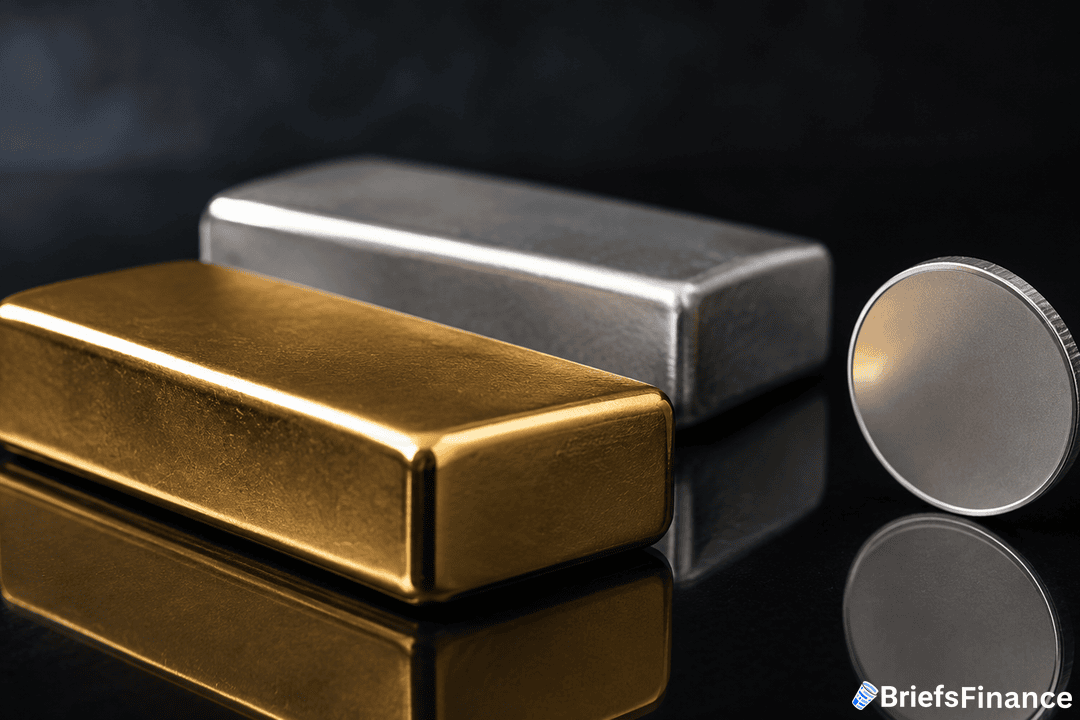
There's a war on, and that's usually when investors run to gold. This week they ran the other way.
They sold gold, silver and bitcoin all at once. The fighting wasn't the trigger, though.
The real driver was interest rates.
Investors Shifted Focus Back To Rates
Gold pays you nothing to hold it. So when safe bonds pay more, gold loses its shine.
Picture gold as a parked car that earns nothing while everything around it collects interest. The longer rates stay high, the more that car costs you.
That's the trade playing out now. Investors expect rates to stay high, so they're stepping back from gold and silver.
The price moves were clear. Spot gold fell 2.4% to about $4,161 an ounce, while silver dropped 2% to near $64.
Bitcoin slid too, down about 1.3% to roughly $61,049. None of them got the safe-haven bump you'd expect in a war.
What's pushing them down? ING strategist Ewa Manthey points to oil.
Higher oil prices from the Middle East lift inflation, which keeps central banks tight. Tight policy pushes real yields higher.
Real yields are simply what a bond pays after inflation. When they rise, any asset that pays nothing looks worse.
Gold sits right at the top of that list.
Every morning, Market Briefs breaks down what moves like this mean for your money in five minutes, and you get a free 45-minute investing masterclass when you join.
Markets Now Expect The Fed To Hold
A few months ago, traders bet on rate cuts. Now they expect the opposite.
Markets price a 98.2% chance the Fed holds next week. They even see about a 40% chance of a hike by October.
Friday's hot jobs report only pushed those bets higher. Strong jobs make a rate cut harder to justify.
When rates look set to rise, the assets that pay nothing get sold first. Gold and silver just stood closest to the door.
Analysts Are Split On Gold's Next Move
The drop is steep, but some pros see a breather rather than a top. Wellington's Alex King notes gold has climbed since late 2022.
He calls this slide normal cooling, not a broken trend. Citi's team is less calm about it.
It warns gold could fall another 20% by the fall. Even so, King sees a floor under prices.
He points to steady central bank buying of precious metals. That demand tends to hold up over time.
The pressure isn't only American, either. The European Central Bank is expected to raise rates on Thursday.
That adds to the case for tight money worldwide. It gives gold one more reason to slip.
What To Watch
The next test is fresh U.S. inflation data. A soft reading could pull yields down and lift gold again.
A hot reading could do the reverse and send metals lower. For now, the math on rates is beating the fear trade.
If you want this kind of read on the market every morning, join the 350,000+ investors reading Market Briefs - it's free, and a 45-minute investing course comes with it.