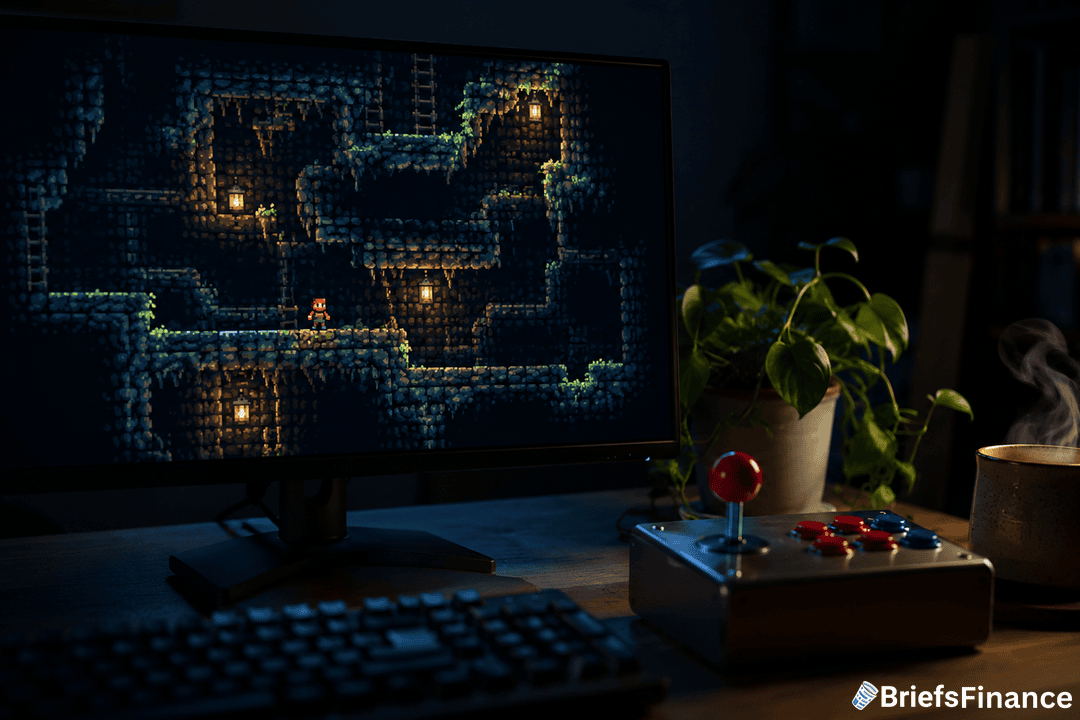
Building a simple game used to take a small team and a few weeks. A University of Pennsylvania researcher just made several of them with one prompt each.
The tool was Anthropic's new Claude Fable 5. And it barely needed help.
What It Actually Made
Ethan Mollick is an AI researcher at Wharton. He put the model to work and walked away with games.
One game, Snake, is the kind of thing arcades ran in the 1980s. Another dropped the player into a maze of tunnels, lighting lanterns along the way.
He even made a game built around old poems by Rilke. The player wanders a dark field as lines of verse appear.
None of them will win awards. The point isn't that they're polished.
It's that a single sentence made a working video game at all.
Fable didn't stop at games. Mollick also used it to build a travel-time map of a whole region.
The detail, he said, was striking.
We track how fast AI is moving and who profits from it every morning in Market Briefs - five minutes a day, and you get a free investing masterclass when you sign up.
Why Investors Should Care
Mollick said Fable 5 beat every other public model he had tried "by a considerable margin." It also ran on its own for up to a dozen hours.
It did that on long, detailed instructions. All of it came from one prompt typed into Claude Code.
That staying power is the real headline. Fable 5 is the first public version of a model Anthropic calls Mythos.
Think of an intern who needs a check-in every hour. Now think of one you can hand a week-long project.
The second one changes how much work gets done. That's the shift Fable 5 hints at.
It points to smaller teams doing bigger work. And it points to faster results for the firms that pull it off.
The Bigger Picture
Some jobs once needed a whole team. Building a game or mapping software is a good example.
Now that work can start from one request. Fans of quick, casual coding even have a name for it.
They call it vibe coding, and Fable feeds it well. For companies, that raises a real question.
How many people does a project really need? The timing matters too.
Anthropic and OpenAI have both confirmed plans to go public. How fast their tools improve is exactly what investors will price in.
Worth Noting
One researcher playing with a new model isn't proof of a revolution. But the floor for what these tools can do keeps climbing.
And it's climbing faster than most people expected. Each new model resets what one person can build.
Investors are watching that floor rise in real time. For now, it's one smart tool in the hands of one curious user.
But tools like this rarely stay in one place for long. The click of a button is starting to do a lot more than it used to.
Want to know which companies win as AI keeps leveling up? Join 350,000+ investors reading Market Briefs and get a 45-minute investing course thrown in.