Free NewsletterPro Login
S&P 500 6,287 +0.42%
DOW 44,521 -0.18%
NASDAQ 21,103 +0.71%
S&P 500 +12.4%
Briefs Finance Fund +24.8%
JOIN THE FUND →

Chipotle Just Reversed Its Sales Slide. Wall Street Wasn't Expecting That

Published May 1, 2026
Share:
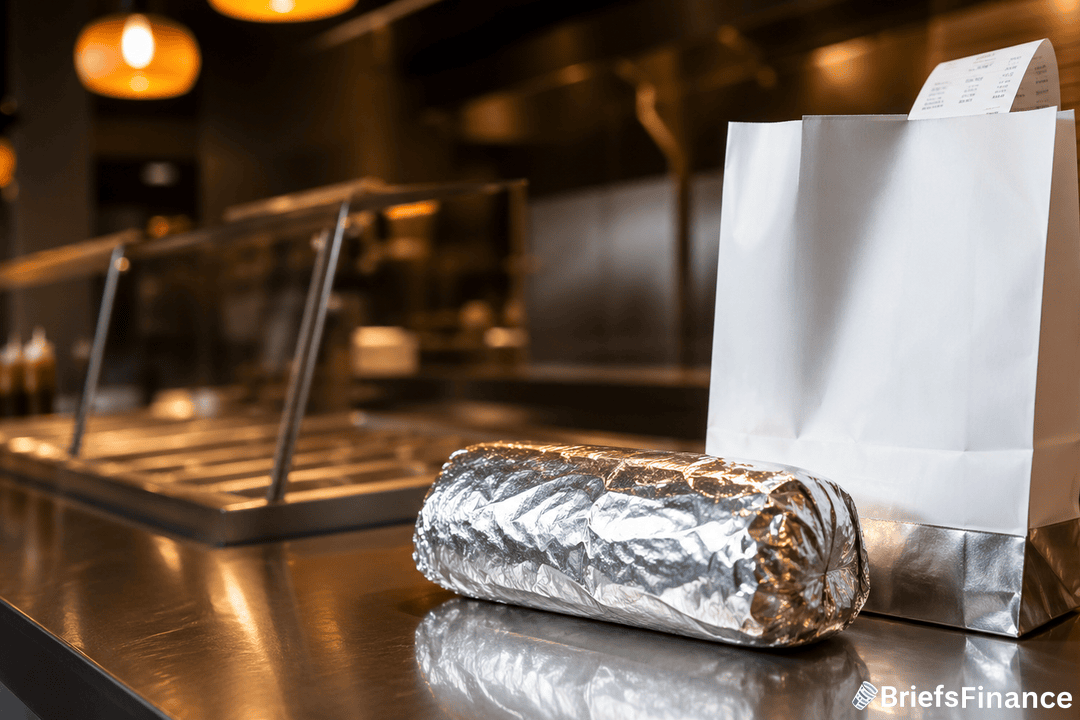
A foil-wrapped burrito sits on a counter in front of a white paper takeout bag in a restaurant.
Summary:
  • Same-store sales rose 0.5% in Q1 2026 versus a 0.7% drop expected by Wall Street.
  • Revenue hit $3.09 billion, up 7.4%, with traffic up 0.6% after a 2.3% drop a year earlier.
  • Net income fell to $302.8 million as wage inflation and higher beef prices weighed on margins.

Chipotle was the fast-casual problem child last year. Customers stayed home, same-store sales slid into the red, and the stock took a beating.

Then Q1 happened. Same-store sales actually grew, while traffic ticked up for the first time in a while.

The win is small at 0.5% same-store growth. But Wall Street had penciled in a 0.7% drop, sending shares up about 3% in extended trading.

CEO Scott Boatwright said momentum has carried into Q2. That's a much better setup than the company had three months ago.

Younger Customers Are Coming Back

Chipotle has been pulling on two levers. New menu items like cilantro lime sauce, plus limited returns of fan favorites like Chicken Al Pastor.

Pair that with a loyalty push, and the brand is winning back younger diners. That group started packing lunch in 2024 to save cash, and the dropoff was visible in last year's traffic numbers.

Revenue rose 7.4% to $3.09 billion, slightly above the $3.07 billion estimate. Adjusted earnings came in at 24 cents per share, in line with what analysts had projected.

Traffic increased 0.6% after dropping 2.3% in the same quarter last year. That swing is the cleanest sign the fixes are working.

Same-store sales - the comparison of sales at stores open at least a year - is the metric Wall Street watches most for restaurants. Q4 went negative for the first time in years, so the Q1 rebound matters.

The company also named Fernando Machado as its newest chief brand officer this week. He came over from Restaurant Brands International, the parent of Burger King and Tim Hortons.

The Margin Story Is Less Pretty

Net income fell to $302.8 million, or 23 cents a share, from $386.6 million, or 28 cents, a year earlier. Three things ate into margins: a heavier tax rate, more expensive labor, and beef prices that keep climbing.

The whole industry is paying more on both ends. That means the cost squeeze isn't only Chipotle's problem.

CFO Adam Rymer kept the full-year call for flat same-store sales, calling the outlook careful given how jumpy the consumer has gotten. Most rivals have not raised their full-year outlook either.

Boatwright said sales softened in March after the U.S. war with Iran started lifting fuel prices. The conflict could also slow store openings tied to a deal with Alshaya Group, which runs Chipotle locations in the region.

What to Watch

The Q1 print says Chipotle's fixes are working faster than Wall Street thought. The harder question is whether margins recover with sales.

The full-year guide is flat for a reason, since beef and wages keep getting more expensive while the consumer keeps getting jumpier. Watch the next print to see whether the traffic gain holds when gas prices stay high.

That's the real test of the comeback. A second straight quarter of positive traffic would be the green light for the rest of the year.

For now, the stock is back in the conversation. That's a place it hadn't been in a while.
Disclosure

Get Market Briefs delivered to your inbox every morning for free!

No fluff. No noise. No politics. Just finance news you can read in 5 minutes.

Blogs

June 18, 2026
What Is a Stop Loss Order? A Simple Guide
  • A stop loss order automatically sells a stock once it falls to a price you set.
  • It's a tool to cap losses or lock in gains without watching the market all day.
  • It works best for active strategies, and can backfire if used carelessly on long-term holdings.
Read More
June 18, 2026
Best S&P 500 Index Fund: How to Choose One
  • The best S&P 500 index fund for most investors is simply the cheapest, most established one that tracks the index well.
  • Funds like VOO, IVV, and SPY all hold the same 500 companies, so the biggest difference is the fee.
  • Pick one, automate your buys, and let time do the heavy lifting.
Read More
June 17, 2026
What Are Penny Stocks? Risks and Rewards Explained
  • Penny stocks are very low-priced shares of very small companies, often trading for just a few dollars or less.
  • They promise huge gains but carry huge risks: low liquidity, high failure rates, and wild price swings.
  • Most investors are better served by quality companies and funds than by chasing cheap shares.
Read More
June 17, 2026
Best Stocks for Beginners With Little Money
  • The best stocks for beginners with little money usually aren't individual stocks at all - they're low-cost index funds.
  • You can start with $100 or less and use small, regular investments to build wealth over time.
  • Focus on diversification and consistency, not on picking the next big winner.
Read More
June 16, 2026
Tech Stocks: A Simple Guide for New Investors
  • Tech stocks are companies in the information technology and related sectors, from software to chips to the internet giants.
  • They've driven much of the market's growth, but they can be volatile and richly valued.
  • The smart approach is to understand what you own and not let one sector run your whole portfolio.
Read More
June 16, 2026
What Is a Joint Stock Company? A Simple Guide
  • A joint stock company is a business owned by many people, each holding shares of stock that represent a slice of ownership.
  • It's the basic idea behind every public company you can buy on the stock market today.
  • Owning a share makes you a part-owner, entitled to a piece of the profits and growth.
Read More
June 16, 2026
Capital Gains Tax in California: A Simple Guide
  • Capital gains tax is what you owe when you sell an investment for more than you paid for it.
  • How long you held it matters: long-term gains are taxed more gently than short-term gains at the federal level.
  • Smart investors lower the bill with tools like tax-loss harvesting and holding for the long run.
Read More
June 15, 2026
Top Covered Call ETFs: How to Compare Them
  • Top covered call ETFs are income funds that own stocks and sell call options against them to generate steady cash.
  • The best one for you is the fund whose income, holdings, and fees fit your goals, not simply the one with the flashiest yield.
  • They all share one trade-off: more income today, less upside in a big rally.
Read More
June 15, 2026
What Are Stock Options? A Plain-English Guide
  • Stock options are contracts that give you the right, but not the obligation, to buy or sell a stock at a set price by a set date.
  • There are two kinds: calls (the right to buy) and puts (the right to sell).
  • Options can multiply gains or wipe out your money fast, so they suit investors who already know the basics.
Read More
June 15, 2026
EBITDA Margin: What It Is and How to Calculate It
  • EBITDA margin measures how much core profit a company keeps from each dollar of sales, before interest, taxes, and accounting deductions.
  • The formula is EBITDA divided by revenue, shown as a percent.
  • A higher, steadier EBITDA margin usually signals a more efficient, more durable business.
Read More
1 2 3 23
Share via
Copy link











