Warren Buffett doesn't usually share trades with Japanese conglomerates. The two camps invest on opposite sides of the world, in opposite styles.
They're now lining up on the same one: American houses.
The Shortage Nobody's Filled
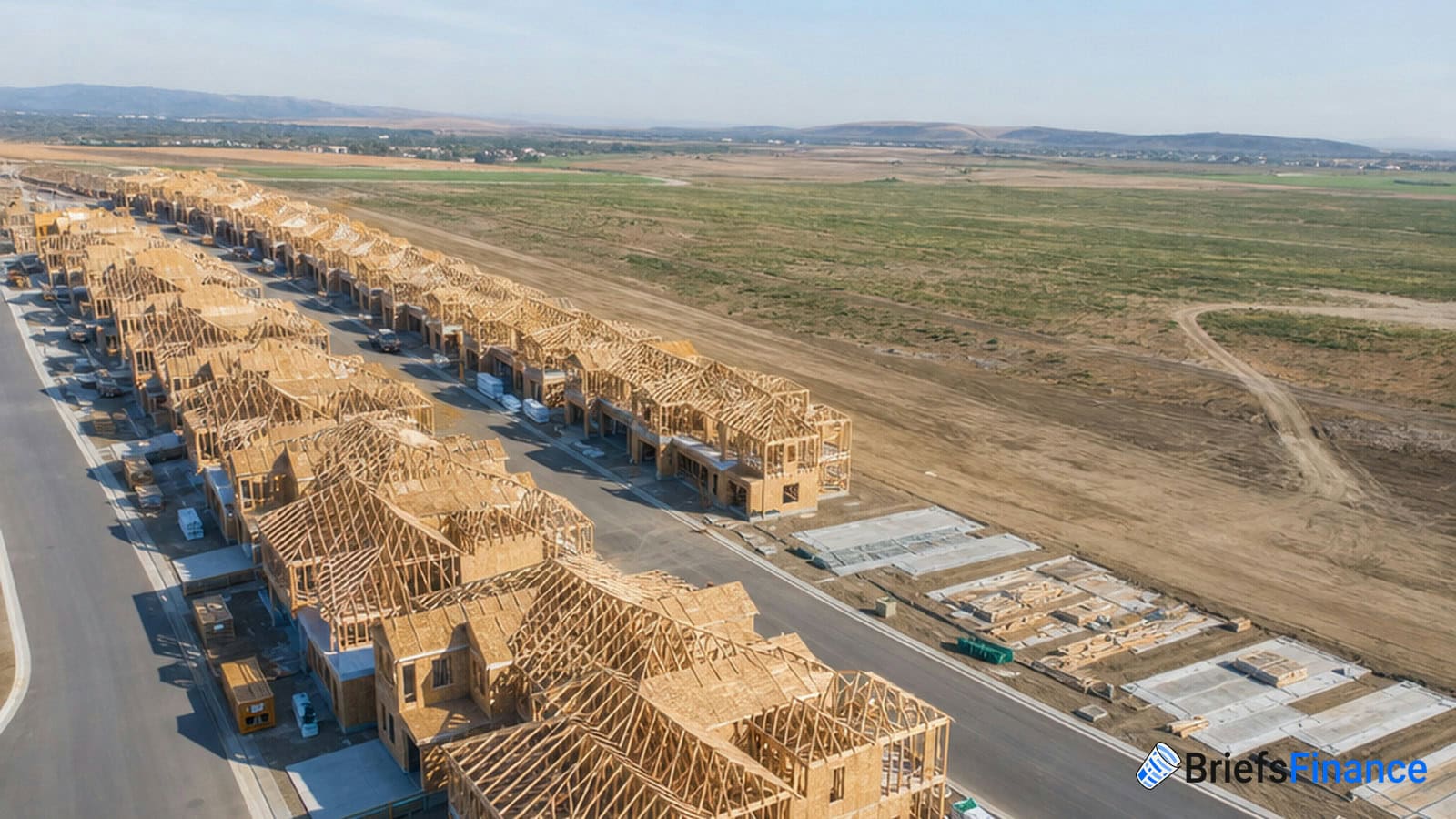
The U.S. hasn't built enough homes since 2008, with estimates of the gap running from 1.5 million to over 5 million units.
Builders pulled back after the financial crisis and never fully ramped back up, leaving more buyers than houses today.
Prices keep rising even with mortgage rates stuck above 6.5% - elevated by recent-decade standards.
That kind of supply-demand mismatch tends to last. Homes take years to plan, permit, and build - you can't fix a decade-long shortfall in a quarter.
Every morning, Market Briefs breaks down the trades smart money is actually making - in five minutes a day, plus a free investing masterclass when you sign up.
Why Japan Showed Up
Japan's builders are running out of room at home, with a shrinking population and falling household formation.
Big builders like Sekisui House, Sumitomo Forestry, and Daiwa House run mature businesses in a market that no longer needs new houses.
So they came shopping in the U.S. Sekisui House bought MDC Holdings - the parent of Richmond American Homes - for roughly $4.9 billion.
Sumitomo Forestry has been picking up U.S. builders for years - most recently closing a $4.5 billion deal for Tri Pointe Homes - and Daiwa House owns Stanley Martin Homes.
The pitch is straightforward: use cash from a home market that's shrinking to buy into one that can't build fast enough.
Berkshire's Angle
Buffett's been in housing for a long time. Berkshire owns Clayton Homes for manufactured housing, Benjamin Moore for paint, Shaw for carpet, Acme Brick, Johns Manville for insulation, and MiTek for engineered building components.
And in May 2026, Berkshire agreed to acquire Taylor Morrison - America's No. 6 homebuilder - for $8.5 billion, the deal that put Berkshire and Japan's builders side by side in the headlines.
Stack them together and Berkshire isn't really a housing investor. It's a vertically integrated housing platform - the company that builds the homes also makes the bricks, the paint, the carpet, and the parts that hold the roof up.
The thesis matches Japan's: America needs more homes, and the companies that build them, supply them, and finance them should benefit for a long time.
What To Watch
Mortgage rates are the single biggest variable. Lower rates pull buyers off the sidelines and into closings, while higher rates keep them parked.
Watch builder gross margins too. If they hold up while volumes grow, the thesis is working.
When Buffett and Japan's biggest builders end up at the same trade, it's worth a closer look.
If you want to spot setups like this before they're obvious, join 350,000+ investors reading Market Briefs - you also get a 45-minute investing course thrown in as a bonus.