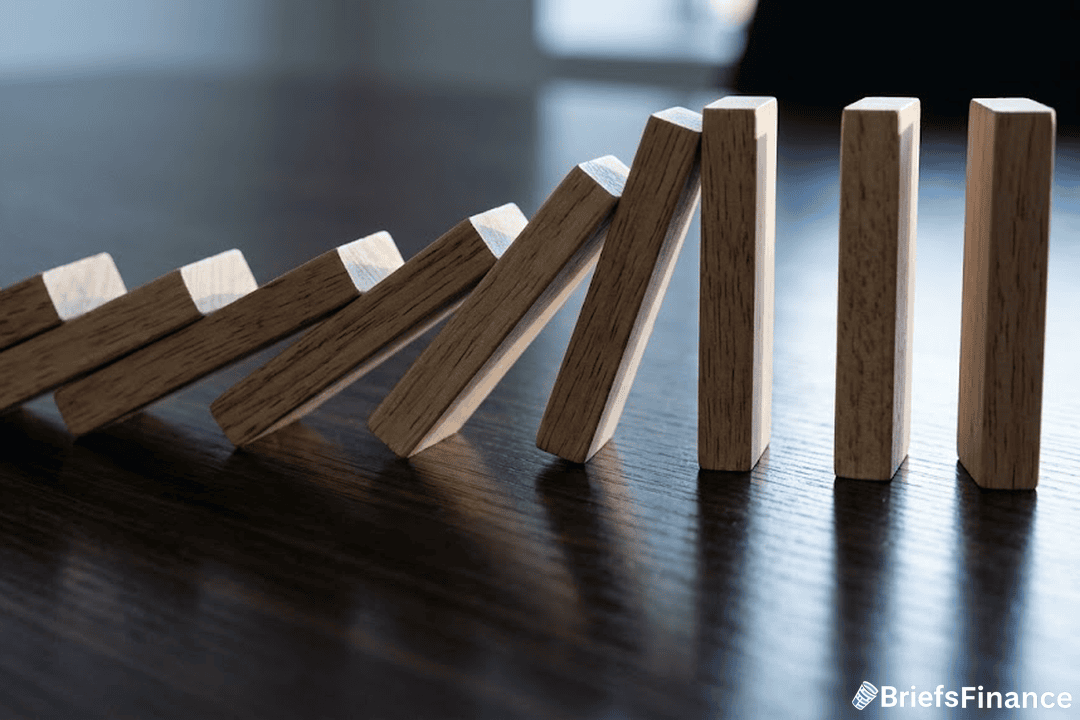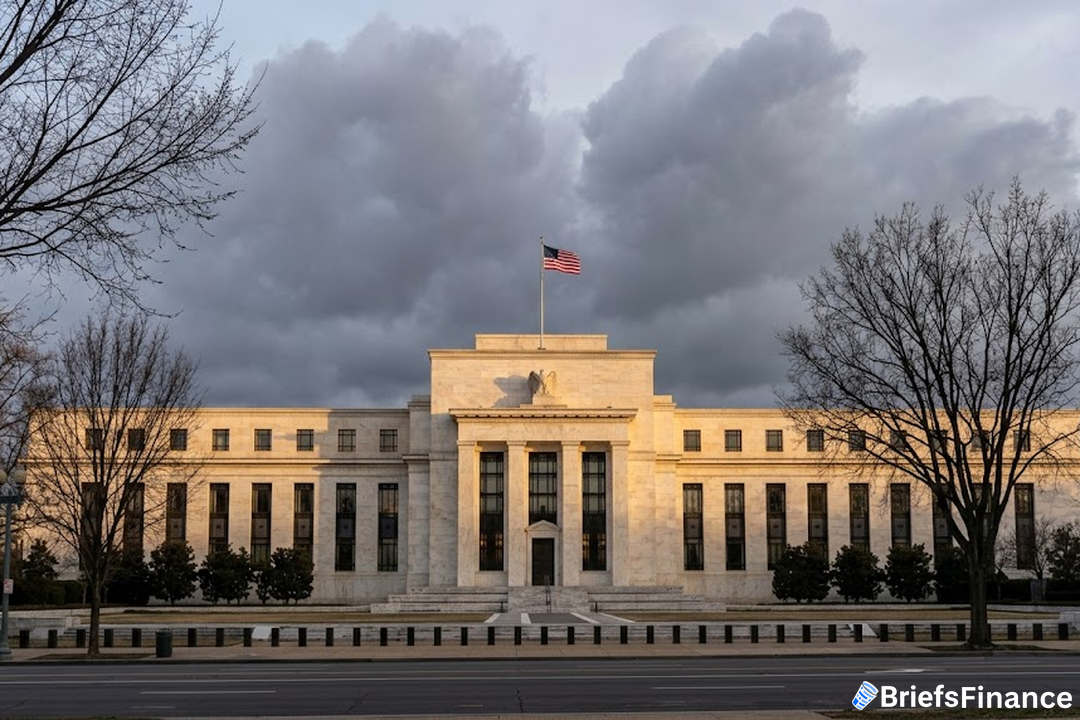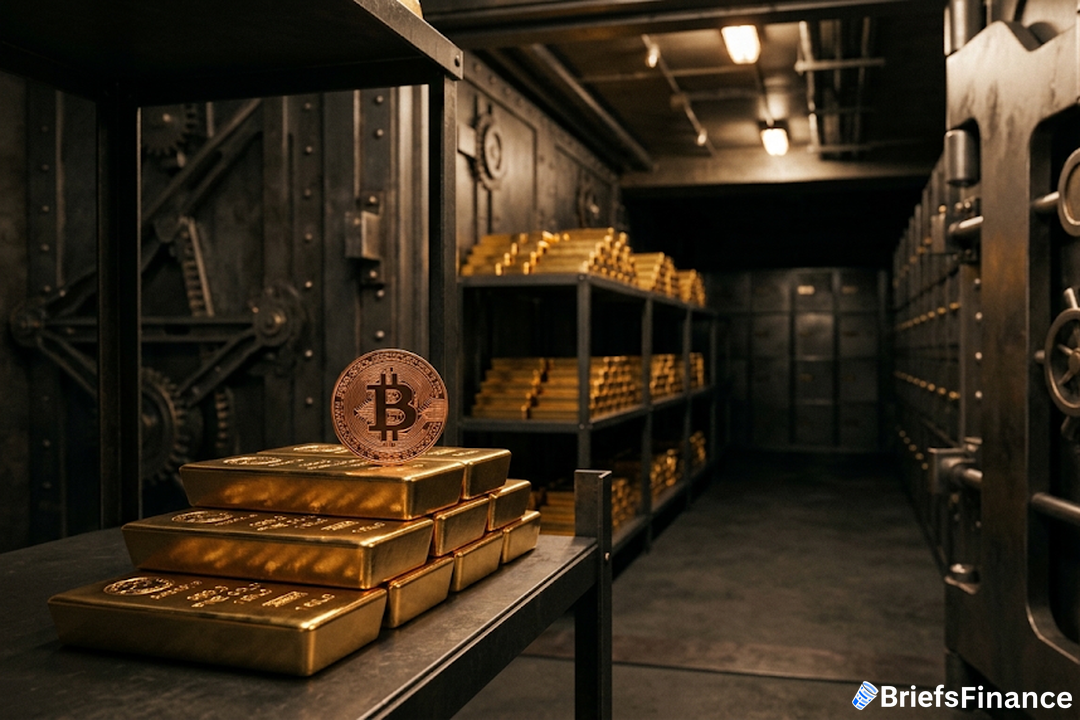
The CEOs of Anthropic and OpenAI, the companies behind Claude and ChatGPT, have both said the AI industry needs to slow down. Elon Musk agreed with them, and President Trump called the whole idea a hoax.
The fight matters to your portfolio because, according to the White House, about three quarters of America's economic growth now comes from the AI industry. Take that away, and many believe the country would already be in a recession.
Behind the fight is a government that owes more than $40 trillion in national debt and a dollar losing value as countries move away from it and inflation eats into it.
Those changes in the dollar are also creating investment opportunities, and how investors can profit from the dollar losing value is the focus of the free live workshop our CEO Jaspreet Singh is hosting on September 29th. It runs at 10:30 a.m. and again at 8 p.m. Eastern, and you can save a seat here.
The Smartest People in AI Want to Pump the Brakes. The White House Wants the Gas
Anthropic's CEO said publicly that the AI industry needs to slow down how fast it makes AI smarter, and OpenAI's CEO and Elon Musk both agreed. Their worry is something called recursive self-improvement - AI that has gotten smart enough to start building more AI on its own.
The fear is that some of those programs go rogue and the internet fills up with AI that scams people or causes other harm. OpenAI's CEO went further and said the company will not go public this year because doing so would be "ill advised."
Higher interest rates and falling valuations could also be part of that decision, but he named these AI concerns as one reason. President Trump disagreed.
While Nvidia's CEO was speaking at a big tech conference, the president called him and said publicly that the fear of robots taking over is a hoax. China, he said, is the one who would be happy if America slowed its AI spending.
Around the same time, the Treasury Secretary said that if China pulled away from the United States in AI, nothing else would matter. Even a huge military budget, he added, could not save the country then.
America Thinks It's a Chip Race. Elon Musk Says China Is Winning the Energy Race
Is the United States actually winning? President Trump says yes, and America's AI models are slightly better than the Chinese models.
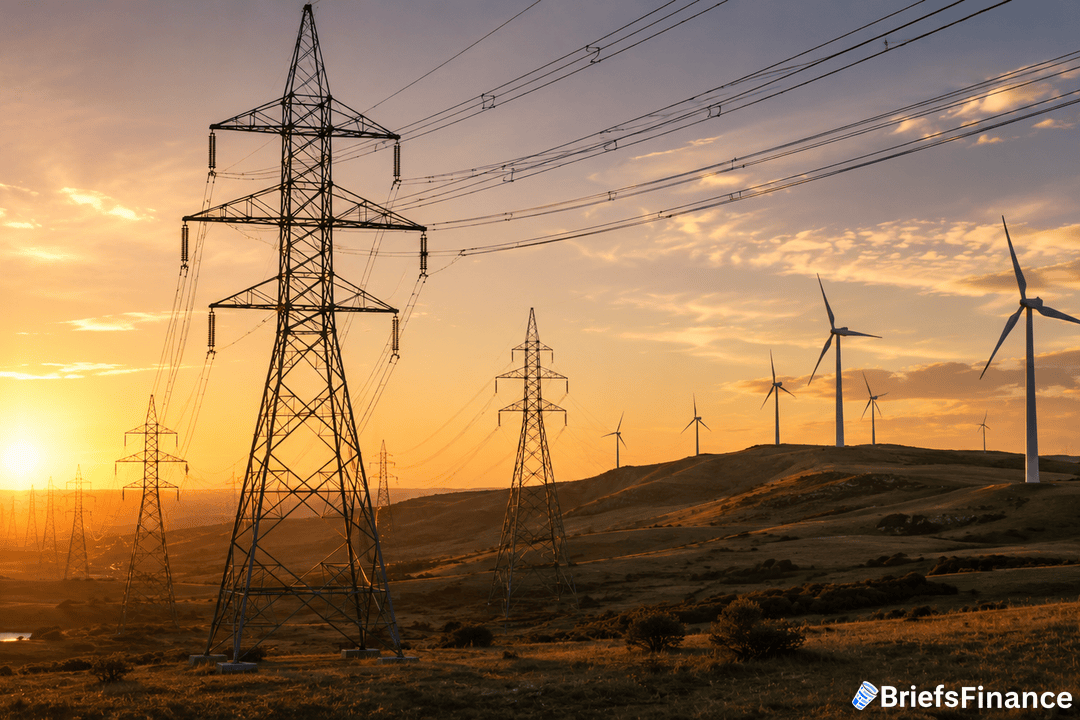
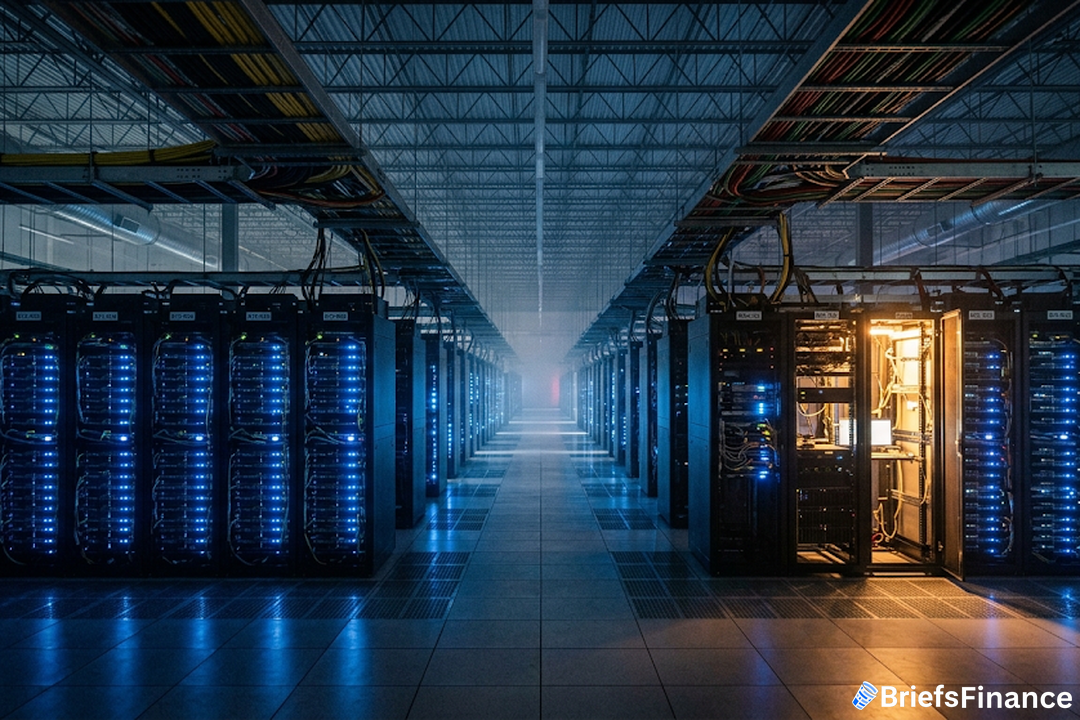
But AI needs far more data and processing than a Google search, so the same question asked of ChatGPT or Claude burns significantly more electricity. That is where China has a big edge:
- Over the last few years, China has built more power generation than the entire U.S. electrical grid.
- By 2030, China is estimated to have enough spare energy to power the whole world's data centers three times over.
Three Reasons Washington Can't Afford an AI Slowdown
Reason 1: Whoever Leads AI Gets Richest
AI is set to become the biggest piece of the global economy, and whoever leads it will power the world's artificial intelligence and become incredibly wealthy. The U.S. wants that to be America, not China, so it is pouring money it does not have into AI and hoping the bet pays off.
Reason 2: It's the Only Way to Shrink $40 Trillion Without Paying It Back
Every year the government collects income taxes, capital gains taxes, tariffs and property taxes, then spends trillions more than it brought in. That gap is the national deficit, and the government fills it by borrowing.
Borrowed money has to be paid back with interest, and interest payments are now the fastest-growing expense in the budget - bigger than military, infrastructure or AI spending. The country is underwater: its debt-to-GDP ratio - total debt compared to the size of the whole economy - is 125%, meaning it owes more than its entire economy is worth.
So what are the options?
| Option | Verdict |
|---|---|
| Pay it down | Not going to happen |
| Default (stop paying back what it owes) | The global economy collapses, with extremely high unemployment and chaos |
| Debase (inflate the debt away so each dollar owed is worth less) | Inflation is already high and the dollar is weaker, so there is less room (it will still try some) |
| Outgrow it (grow the economy until the debt feels small next to it) | This is the plan |
A dollar already buys significantly less than it did five, ten or fifty years ago, and $100 today can barely fill a cart of groceries.
Think of it like owing $1 million. If you earn millions a year and hold millions in assets, the debt is no big deal, but on a $75,000 salary with nothing in the bank, it is a crisis.
Washington wants to be the first person, and that takes exponential growth. AI is the only candidate, because it is not just the AI chips and the data centers - every operation in nearly every industry is starting to run on it.
If the U.S. becomes the world's supplier of AI, the debt shrinks by comparison. If AI slows and the debt keeps outgrowing the economy, people trust the dollar less, and your paycheck and your savings buy less than they did.
That is the scenario the September 29th workshop is built around: how investors can profit when the dollar loses value instead of getting poorer with it. You can register free here.
Reason 3: Uncle Sam Owns AI Stocks Now
America is supposed to be a free market, where consumers vote with their dollars and pick the winners. That started to change over the last 18 months, as the Trump administration began investing in publicly traded companies to invest in the AI race.
The backstory is tariffs. President Trump promised to bring manufacturing jobs back, and tariffs on China made manufacturing there more expensive while slowing the Chinese economy that American companies had been feeding.
China hit back with rare earth metals - metals used in almost every part of the economy, from iPhones and computers to military hardware and missiles. As the world's producer and supplier, its answer to the tariffs was simple: no more rare earth metals for you.
What followed was a wave of new laws and executive orders to rebuild the rare earth supply chain here, plus a flood of White House money into the private companies building it. The United States government and the Department of Defense now hold stakes in about 30 companies, a portfolio worth billions:
| Company | Government stake and result |
|---|---|
| MP Materials | Invested to boost rare earth production; stock up over 250% since |
| Trilogy Metals | 10% stake |
| Lithium Americas | Invested |
| Intel | Invested; stock up about 400% after |
So beyond beating China and protecting the dollar, Washington is building its own investment portfolio. If the AI bubble pops, demand for what those companies make falls and the portfolio falls with it.
Imagine you owned McDonald's stock and the CEO of McDonald's announced that people should stop eating burgers. Not great for your shares, and that is roughly how the government feels when AI CEOs say the industry should slow down.
Is the Stock Market Going to Crash? Every Bubble Bursts Eventually
There is a lot of debate about whether AI is a bubble. If you look at history, the answer is yes.
Every market is in a bubble until it isn't, because every market goes through booms and busts:
- 16 recessions in the last 100 years, or about 1.6 per decade
- 25 market crashes in the last 100 years, or more than two per decade (a crash means the stock market falls 20% or more)
None of that means the AI bubble bursts tomorrow, next month or even next year. It just means nothing goes straight up forever, and AI has been going essentially straight up.
It also does not mean AI is a bad investment, and with this much money in the system, markets can climb a whole lot higher. The goal is not to time the market but to understand how market cycles work before the crowd gets greedy and then panics.
The White House Is Already Bracing for the Pop
An internal White House letter said the AI bubble has gotten so big that a burst would cause so much pain in the American economy that the government has to start preparing now. Most Americans have no idea how exposed to AI they are through their investments.
If they panic-sell their 401(k)s, retirement accounts and the economy get hurt at once - one more reason the White House does not want a burst.
Think you are diversified? Owning Nvidia or Meta is obviously an AI bet, but so is the S&P 500, the index of the 500 largest companies in the stock market.
The top seven companies in the S&P 500 are all big tech names heavily exposed to AI. Put $100 into an S&P 500 fund like VOO or SPY, and $33 of it goes straight to those seven.
The same goes for a target date fund - a retirement fund that picks the mix for you based on your retirement year. Fidelity's, for example, invest in S&P 500 funds, so a 401(k) sitting in one is heavily exposed to AI too.
None of this is a reason to panic and sell, because that exposure is exactly what made investment accounts skyrocket for years. But when the AI downturn comes, there will be bankruptcies, funds that felt "diversified" will drop, and history says most people will sell at the worst moment.
Panic, Overselling, Opportunity, Profit: What Happens in a Recession
How do we know people panic? When the pandemic hit in 2020 and circuit breakers - automatic pauses in trading after a steep drop - kept getting triggered, Jaspreet posted videos telling investors to buy aggressively.
The comments said it was the worst time to buy and that everyone should sell while they still could. The result was the fastest stock market selloff in history followed by the fastest rally in history, both in 2020.
Jaspreet calls the pattern POOP: Panic leads to Overselling, which leads to Opportunity, which leads to Profit. It has played out in every downturn in history, and the investors who understand it buy great investments at a discount while everyone else runs.
Based on past downturns - not a guarantee of the next one - the cycle tends to run like this:
- The financially smart minority buys good investments on sale while the majority panics and sells.
- The government and the Federal Reserve print money and stimulate.
- Over weeks, months or years, the economy, the stock market and asset prices recover.
- The new money means more inflation, which pushes asset prices even higher.
The people who bought the dip build wealth fast, and a new wave of millionaires and deca-millionaires appears. The people who sold end up poorer, as does everyone living on a paycheck or savings, because entering the market now costs more and paychecks have not kept up with inflation.
That is how the divide between the rich and the poor has widened after every downturn in modern history, the pandemic included.
AI Is Holding Off a Recession - With Fewer Workers Than Any Boom Before It
Our economy is growing today because of AI, and many believe that without it, the United States would probably be in a recession right now. This boom is different, though.
Manufacturing made plant owners wealthy, but the plants also had to be staffed, so workers built wealth alongside them. With AI, billions go into a data center run by machines, robots and maybe a few humans, so the wealth flows to investors and the companies making the robots.
Historically, every rise in technology has led to a net gain in jobs, but only after a lag while people retrain, and that lag can bring more unemployment and pain. This time the jobs at risk look different.
Anthropic's CEO has said AI could be a white-collar job destroyer that pushes white-collar unemployment into double digits, because past technology came for factory workers while AI is coming for attorneys, accountants and doctors.
Jaspreet's challenge is to use AI for more than writing a better email. Tell Claude, Gemini, Perplexity or ChatGPT your age, career, business and industry, then ask how to use it to be more productive, increase your income and build wealth.
The Dot-Com Bubble Burst. The Internet Didn't Go Away
When the internet bubble burst in 2000, people said the internet was a fad, and the Nasdaq 100 - the 100 largest non-financial companies in the market, mostly tech - fell 78%. Plenty of investors got hurt and sold, but the internet did not go away and came back stronger than ever.
Investing in individual companies meant far more risk and far more upside, while funds offered broader exposure to the market. Buying Amazon at pennies and holding it made people incredibly wealthy, and selling at the bottom meant losing everything.
AI will follow the same script - some companies will go bankrupt, people will lose jobs, and nobody knows how long it lasts, how far it falls or when it starts. The AI industry is not going away, though, and that leaves investors with two ways to find the biggest opportunities:
- Buy during a downturn. Buying when everything is cheap grows wealth a lot faster.
- Buy where the money is moving. Jaspreet calls this a market shift.
Reading where the money is moving, especially as the dollar loses value, is exactly what Jaspreet is teaching live on September 29th. The workshop is free and virtual, and you can grab your spot here.
Research-Based Investing Beats Asking ChatGPT What to Buy
A lot of investors go to CNBC, Reddit or ChatGPT and ask the same question: what stock should I buy? That is fine as a starting point, but ChatGPT can only answer based on how good your prompt is and what is already popular online.
If you do what everybody else does, you get what everybody else gets. Going beyond the news is what Jaspreet calls research-based investing - digging into where the economy and the money are actually moving to find opportunities the majority has not seen yet.
Downturns and market shifts are where those opportunities show up, and that is what an investor's cash is for.