Oil fell about 5% on Monday after the U.S. and Iran reached a deal to end the war, the kind of drop that usually signals the worst has passed. The traders who move this stuff for a living say it hasn't.
Why Prices Dropped
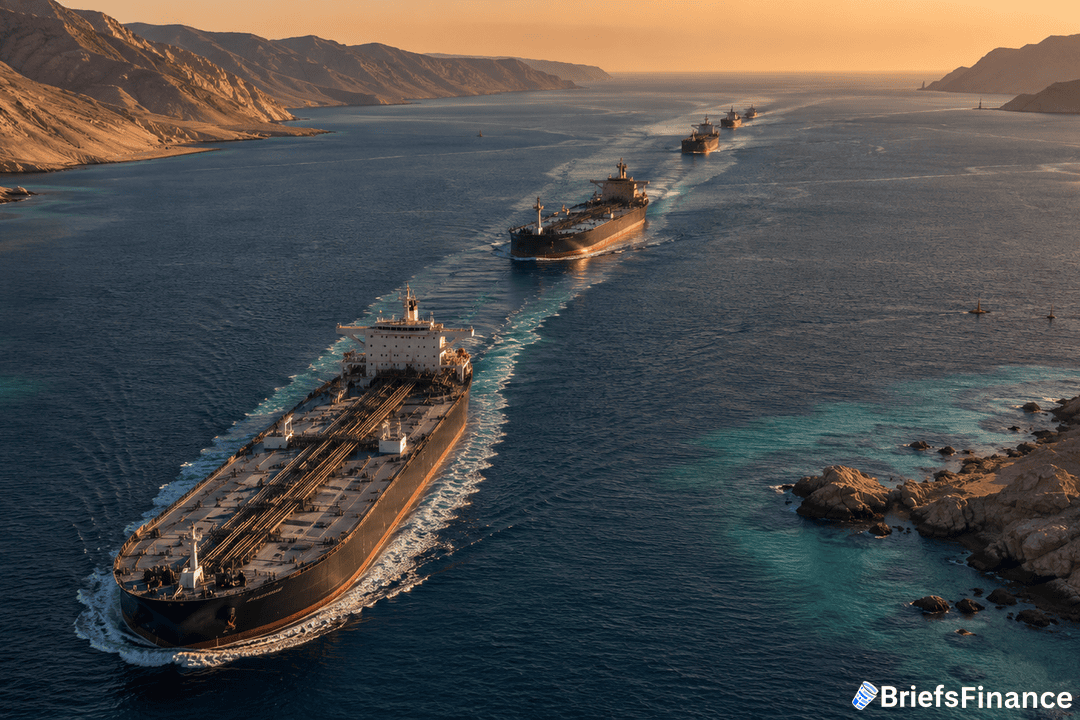
The deal would reopen the Strait of Hormuz, the narrow lane that carries a big share of the world's oil. When that lane looked blocked during the war, prices shot up.
Prices had climbed toward $100 a barrel during the fighting. Monday's drop unwound a big part of that jump.
Brent had spiked well past $100 at the peak of the war. Drivers and shoppers had felt it at the pump for weeks.
The promise of reopening it sent prices back down. Brent crude, the global benchmark, fell about 5% to roughly $83 a barrel, and U.S. crude dropped to about $80, its lowest since March.
President Trump said the Strait would reopen "toll free." He also said the U.S. would end its blockade of Iran's ports.
Iran's draft plan called for the Strait to reopen within 30 days, and the two sides plan to sign the deal in Switzerland on Friday.
Every morning, Market Briefs breaks down what moves like this mean for your portfolio in five minutes, and you get a free 45-minute investing masterclass when you join.
The Recovery Will Take Time
An open Strait on paper isn't the same as oil flowing freely. Daniel Hynes at ANZ said shipping won't return to pre-war levels anytime soon.
He put the recovery at weeks, maybe a month or two. The reason: stockpiles ran low while the lane was shut, and they take time to refill.
Think of it like turning the water back on after a burst pipe. The tap works, but the tank is still empty.
Hynes also pointed to mines left in the water and ships that still need repairs after being stuck in the region.
Bart Melek at TD Securities went further. He thinks about 800 million barrels of supply will still be gone by November, even if ships moved freely tomorrow.
The Risk Premium Is Back
The phrase analysts keep using is "geopolitical risk premium." That is just extra money baked into the price.
Traders add it because they no longer trust the region to stay calm. Even with a deal, Melek said the market is not out of the woods yet.
ANZ expects prices to sit in the low $90s into the third quarter. Higher oil pushes up the cost of almost everything else, which is why this reaches well past the gas pump.
Melek added that big price jumps could still be avoided. That depends on whether China stops pulling oil from its own stockpile.
What To Watch
The pain is already hitting the economies least able to handle it. HSBC's Willem Sels flagged weak data out of South Asia as a source of more swings ahead.
Markets will also watch whether ships actually start moving this week.
A deal on paper is not the same as oil in the tank.
Want this kind of read on the market every weekday morning? Join 350,000+ investors reading Market Briefs and get a free investing course thrown in.