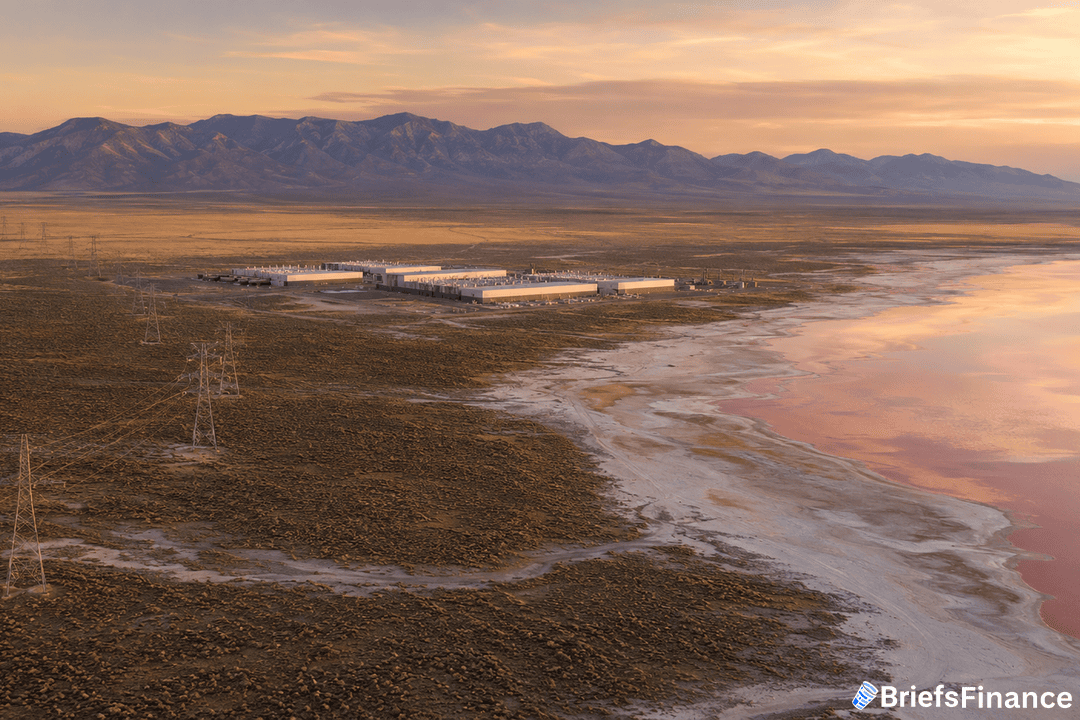
Kevin O'Leary pitched Stratos as one of the largest AI data centers on Earth. Now it is getting cut before it is even built.
He has agreed to shrink it by three quarters. That is a huge climbdown for a project he once called historic.
A Letter From The Statehouse Changed The Plan
The project sits on about 40,000 acres in Box Elder County, Utah. Last Monday, a letter landed on O'Leary's desk.
It came from Utah Senate President J. Stuart Adams. Adams asked O'Leary to cut the site to about 10,000 acres.
He also asked for stronger green rules. O'Leary's answer was blunt.
"I have no choice," he told NBC News at an AI event in Washington.
O'Leary thinks the demand is partly about politics, as local pushback to the project keeps growing. He plans to send lawmakers a new plan by Friday.
He first sold Stratos as a way to rival China in AI. That big pitch made it a political prize from day one.
We follow the money and the politics colliding around AI builds in Market Briefs, and signing up comes with a free investing masterclass.
The Real Fight Is Over Water
The pushback is about resources. Big AI data centers use huge amounts of water.
Box Elder County sits next to the Great Salt Lake, which is already shrinking. Adams asked the project to limit water use.
He wants any extra clean water sent to the lake. He also wants deals to protect wildlife and farmland.
Why so much water? Big data centers run hot.
They use water to cool the servers. The bigger the site, the more water it drinks.
All that computing needs power, too. For an investor, that is the part to file away.
Building AI is no longer just chips and electricity. Now it is also land, water rights, and the patience of local lawmakers.
Utah Is Watching Closely
This is bigger than one project. Several Utah committees are now studying large builds.
They are looking at water, energy, and land use. The state has also put more than $1 billion into water projects.
Adams asked for more, too. He wants public updates and clear plans to protect the land.
O'Leary has pushed back before. He once called some of the opposition false claims.
Local residents are not sold yet. Many worry about water, power, and the strain on nearby towns.
Adams framed it as a balance. He said Utah can grow and still protect its land and water.
The fight is not just a Utah story, either. Across the country, AI projects keep hitting the same wall.
Several committees will keep digging for months. Their findings could shape every big build that follows.
Worth Noting
A 75% cut to a flagship project is a loud signal. The places that host AI are starting to set the terms.
They are not just taking the jobs anymore.
If you want this kind of read every morning, sign up for Market Briefs here - it is free, and you get a 45-minute investing course as a bonus.