What the audit found
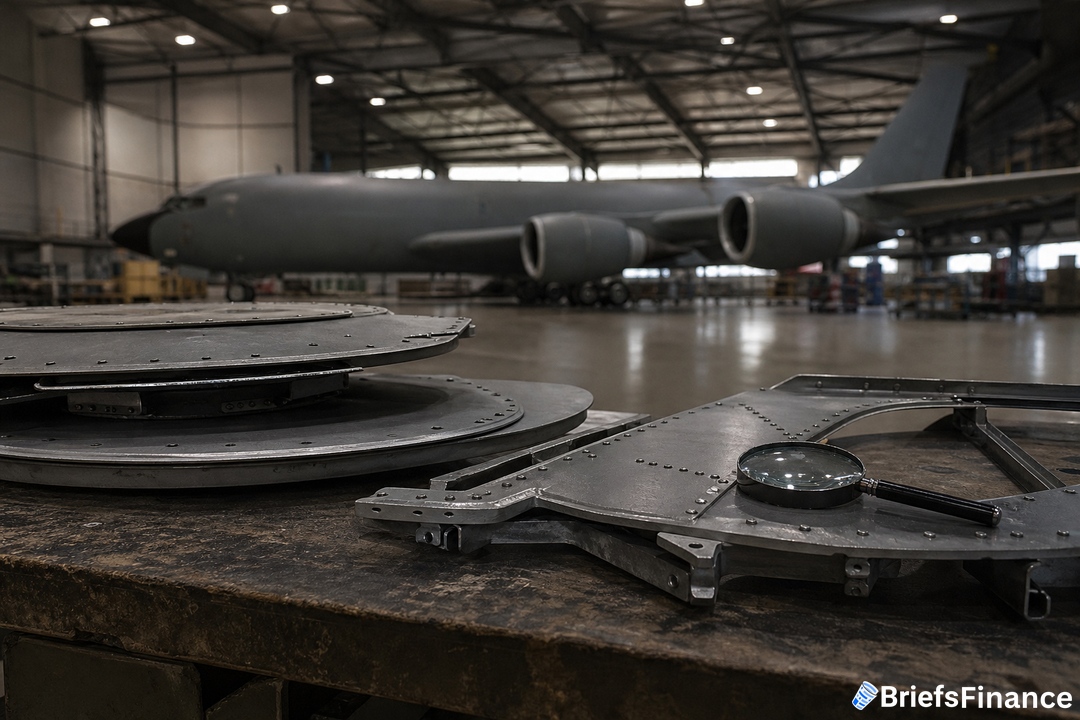
The Inspector General said buyers at the Air Force Life Cycle Management Center at Wright-Patterson in Ohio failed to secure prices deemed "fair and reasonable" for six parts. Among the items were digital computers, flight control processors, indicator assemblies, assembly sensors, and display units; all are installed on Boeing's KC-46 tanker and come from Collins Aerospace, an RTX company.
According to the report, officials "did not apply sound business judgment, as required by the Federal Acquisition Regulation," in part by treating big price swings as routine market movement rather than a signal of too little competition. The IG concluded the items were purchased "for significantly more than the average sales price."
The price math and redactions
Across 100 parts the IG examined, at least $23.6 million was paid "in excess of fair and reasonable prices." For the six Collins items, the command "could request a voluntary refund of $19.2 million." Looking ahead, the IG said the current Collins contract could lead to another $9.9 million in overpayments through 2031 if nothing changes.
The public version of the report is heavily blacked out, obscuring both the paid prices for Collins parts and the percentages tied to potential overpricing.
When decisions affect budgets and contracts, stay informed with the free Market Briefs newsletter that explains key economic context
Reactions and what comes next
Brigadier General William Ottati, who oversees the mobility portfolio at the center, said contracting officers will "audit the delivery and invoicing status for the Collins part numbers identified in the report, and if no contractual remedy is available, will pursue a voluntary refund with completion expected by April 2027." An RTX spokesperson declined to comment Tuesday afternoon.
The findings add to roughly a decade of reports on spare parts pricing that have sometimes spurred Hill scrutiny and pushes for clearer cost data from defense suppliers. In August, Deputy Defense Secretary Steven Feinberg ordered the department's workforce to secure "full transparency" on cost and pricing across all tiers - starting with prime contractors and extending to subs. The IG also cautioned that if officials stick with current pricing practices for KC-46 parts, overpayments may continue.
What this means for your portfolio
For investors in defense, these numbers matter. A potential $19.2 million refund, the identified $23.6 million above "fair and reasonable" levels, and a possible $9.9 million hit through 2031 all speak to revenue risk for suppliers and tighter scrutiny in future negotiations. Translation: more pricing transparency push from the Pentagon and greater variability in aftermarket margins for contractors tied to the KC-46 program.
Good reporting raises questions about oversight, so sign up for the free Market Briefs to get plain explanations each morning