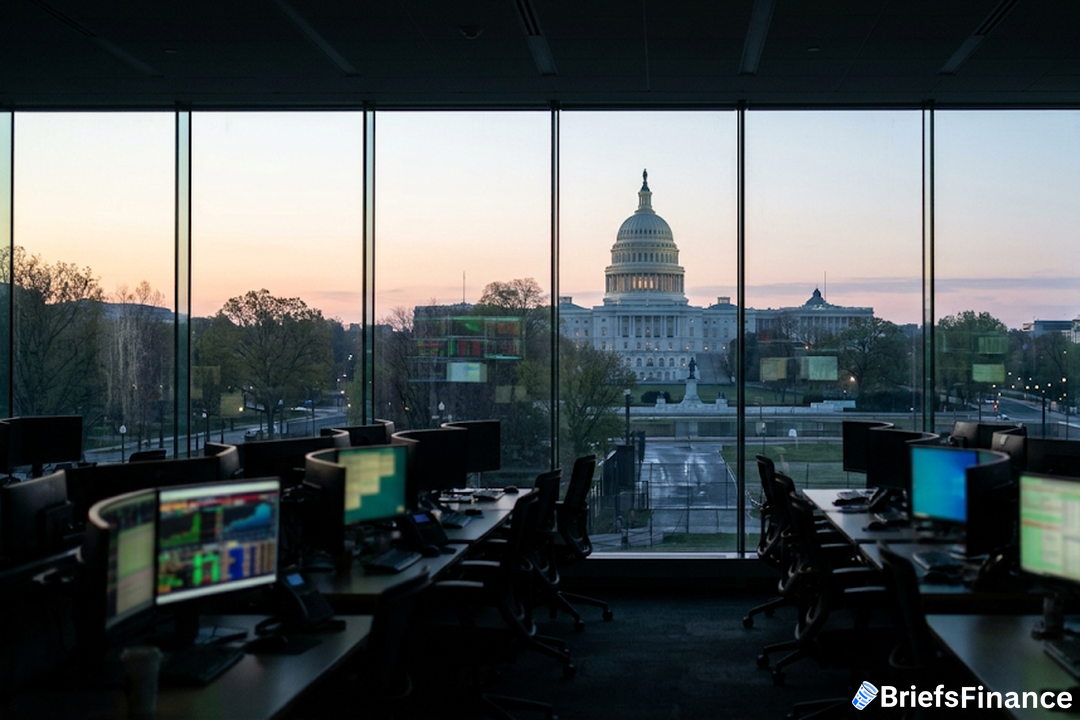
Warsh sets the stage
Federal Reserve Chairman Kevin Warsh opened a public conference at the San Francisco Fed on Monday with prepared remarks introducing a new task force to study how artificial intelligence could reshape productivity and the labor market. He stayed away from commenting on interest rates, aligning with his preference to avoid near term guidance on policy.
He emphasized that the AI paths under discussion are not predictions. He said the central bank's role is neither advocacy nor opposition, but to wrestle with one of the economy's biggest unknowns, often referred to in federal usage as super intelligence.
Three ways AI could reroute the economy
Fed staff have begun drafting what if plans for AI's macro impact. One path envisions stronger growth and productivity with gains shared between employers and workers. A second imagines higher activity offset by large job losses. A third considers AI falling short of expectations, which Warsh said could cool markets and the economy: "After significant capital investment and stock market gains, expected returns could turn down and equity valuations could fall, leading to an economic slowdown and a more notable rise in unemployment," he said. "In time, the economy would recover, but without the productivity gains."
On its website, the Fed's conference listing highlighted emerging tech such as super intelligence (SI). The wording echoes a September executive order from President Donald Trump that instructs federal departments to label artificial intelligence "Super Intelligence" and "SI" in official communications.
Who is in the room and what comes next
In June, soon after taking the helm, Warsh unveiled five task forces run by external experts to rethink how the Fed communicates and implements policy, including one dedicated to AI. He surprised observers by naming two tech executives to that AI group - Marc Andreessen and Asha Sharma - alongside Stanford academic Charles Jones. Sharma serves as executive vice president and as XBOX CEO at Microsoft Corp.
Expected speakers include Stanford University's Nick Bloom; Palo Alto Networks' Nikesh Arora, its chairman and chief executive officer; and billionaire venture capitalist Marc Andreessen. Within Warsh's group focused on productivity and employment, Marc Andreessen is the only member slated to appear at the event.
Investors who learn to use new tools thoughtfully often find clearer paths through uncertainty. We're hosting our first ever investor livestream on 11/17 to show you how to use ChatGPT and Claude to invest like a pro, hosted by Briefs Finance CEO Jaspreet Singh. Save your seat.
Warsh has said the task forces plan to present recommendations near year-end, after which the Federal Open Market Committee - the 19-member body that sets monetary policy - would review them.
Data check and the investor angle
Warsh has argued that an AI driven productivity boom could both lift growth and slow inflation. He also noted in October that the surge in prices for materials and inputs powering the AI buildout is adding to broader inflation pressures. As he said at an International Monetary Fund event in Bangkok, "It's obviously hitting the demand side of the economy before it's going to hit the supply side of the economy."
Labor productivity climbed at a 3.6% annualized pace in the third quarter, the fastest in a year. Economists say AI's contribution so far is small. The bottom line: the Fed is building scenarios, not promises, and they range from a shared productivity lift to job losses to a disappointment that drags on markets. For portfolios, the key watch items are the task force's year end recommendations and how the FOMC frames them.
A steady curiosity about emerging tools can give investors a gentle advantage over time. On 11/17, our CEO Jaspreet Singh goes live for our first ever investor livestream on how to use ChatGPT and Claude to invest like a pro. Register to join him.