2027 is around the corner. Briefs Finance CEO Jaspreet Singh says the biggest threat to the economy is not the war in the Middle East, inflation or even the AI bubble.
It is the more than $40 trillion of national debt, which is growing faster than the economy. He points to the British, Dutch and Roman empires, which he says fell because they could not sustain their debt levels.
Democrats won Congress in the midterms, making it harder for President Trump to pass laws they don't approve. He still has a four-part plan for the debt.
The biggest spender in the economy is the U.S. government. When it builds a plan to shrink its debt burden, money moves, and the investment opportunities change with it.
Getting ahead of those shifts takes research. Jaspreet says AI tools like ChatGPT and Claude are more valuable than ever for it, as long as you use them the right way.
On November 17, he is hosting a free livestream on how he and his analysts use those tools to research investments and find stocks.
The National Debt Just Lost Its Side Income
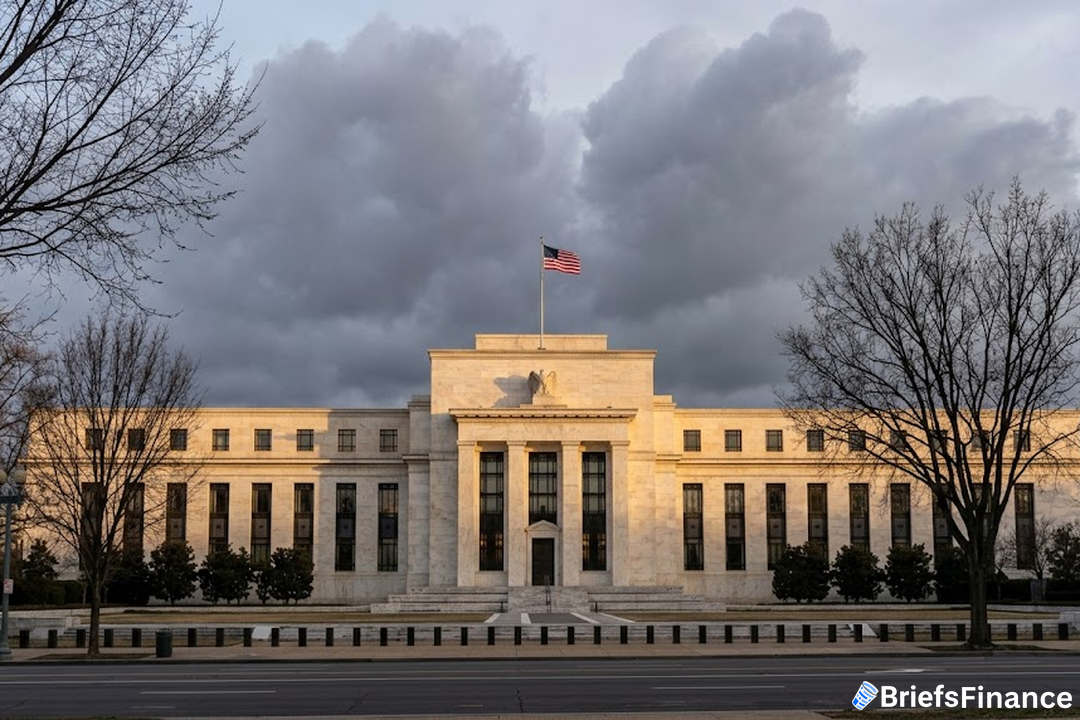
Jaspreet often says the government has one source of revenue: tax dollars. It used to have one more, and that was the Federal Reserve.
In 2025, the government collected right around $5 trillion in taxes and spent around $7 trillion. It borrowed the other $2 trillion from foreign countries like Japan, the United Kingdom and China, from regular people and from the Fed.
The Fed is not a bank you can deposit money in, and it is not sitting on cash reserves. What it can do is create money out of thin air and control interest rates.
How the Fed Made Money for Washington
The Fed creates money, lends it to the government and collects interest. On the other side, it pays interest to the banks that deposit money with it, at a rate the Fed sets.
For over a century, that was a profitable game, and the profit went straight to the U.S. government. It was extra revenue the government could spend, and a lighter burden on taxpayers.
Why the Fed Is Losing Money Now
From 2020 to early 2022, the government spent trillions of dollars it did not have on unemployment checks, stimulus checks, loans and bailouts. The Fed printed that money at a rate never seen before.
Interest rates were at their lowest levels ever, so the Fed gets paid approximately 2% on what it lent.
Today the federal funds rate, the rate the Fed sets, is close to 4%. The Fed is earning about 2% and paying banks about 4%, and at this volume of money it is losing money.
| Year | Fed profit sent to the U.S. government |
|---|---|
| 2019 | $54 billion |
| 2021 | $109 billion |
| 2023 to now | No profit. Losses of billions of dollars, in some instances more than $100 billion |
The Fed has no cash reserves, so a loss has to be printed. Printed money lands on taxpayers as inflation.
So the government lost this revenue while its spending has not slowed down. Taxes are not going up either, because President Trump signed the One Big Beautiful Bill Act, which is designed to cut them.
Part 1: Shorter-Term National Debt, the Blunder That Became the Plan
Before the pandemic, the government usually borrowed with long-term loans of 10 or 30 years. In 2020 that flipped, and it started issuing a lot of short-term debt.
It could have taken a 30-year loan at 2.2% or 2.5%. It chose five-year loans at 1.8% instead, which saved money for the first five years and left the refinancing as a problem for 2026 or 2027.
That debt is now resetting at much higher rates, and rates are set to go even higher. Jaspreet says many people are calling the shift to shorter debt the biggest blunder in U.S. history.
Even so, the government is focusing on shorter debt again. It cannot find lenders for the long kind.
Earlier in 2026, so few people wanted long-term U.S. debt that there was a crisis in the bond market. Bond rates kept going up because nobody wanted to lend.
The White House's answer was for the government to buy its own debt, which Jaspreet calls a bandaid for a much bigger problem. Shorter-term Treasuries carry the same risk the pandemic loans did: they can reset at much higher rates.
Part 2: Stablecoin Companies Become Forced Buyers of the National Debt
If lenders are hard to find, the next question is how to create them. President Trump's answer is a law called the GENIUS Act.
A stablecoin is a cryptocurrency backed by something else, in this case U.S. dollars, so one coin should be linked to one dollar. The GENIUS Act says stablecoin companies must back their coins 1 to 1 with U.S. Treasuries.
A company that issues $1,000 of stablecoins has to own $1,000 of Treasuries. That part of the law goes into full effect in January, and it forces these companies to lend money to the U.S. government.
Jaspreet's phrase for it is "manufacturing buyers" of the debt. About five years ago stablecoin companies owned almost none of it, and today they own hundreds of billions of dollars' worth, more than many countries.
They are the fastest-growing owner of U.S. debt and are projected to own trillions of dollars of it in the coming years. Jaspreet expects them to become its largest owners, ahead of foreign countries.
These are private companies, not government entities, and that is the risk. If they become unstable and have to sell off the debt, he says it could trigger a global bond market selloff and a global financial crisis.
Part 3: A Bigger Balance Sheet to Set Against the National Debt
A balance sheet is your assets minus your liabilities. When you ask a bank for a loan, it asks what you make and also what you own, because assets make a lender more comfortable.
The U.S. has the same issue with its lenders. Its $40 trillion of debt is bigger than its economy of about $32 trillion to $33 trillion, so the plan is to show more assets.
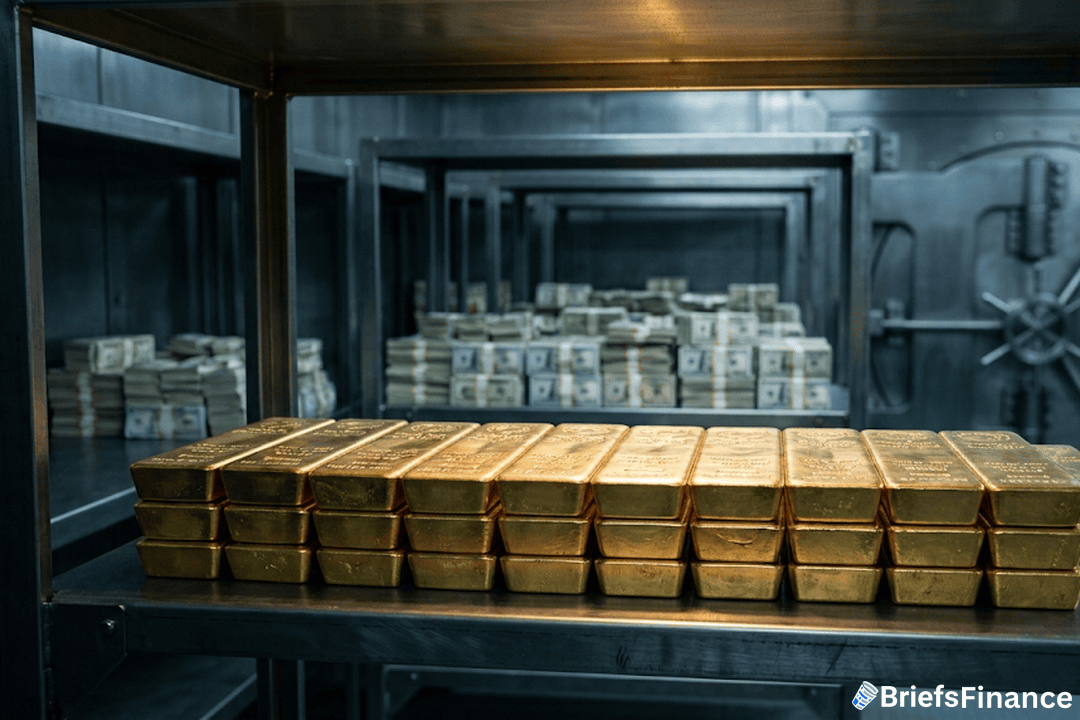
One of those assets is gold, and according to the government's numbers the U.S. holds 261 million ounces. The balance sheet values them at approximately $42 an ounce, not the market price of around $4,000.
| How the gold is valued | Price per ounce | Value |
|---|---|---|
| On the balance sheet today | About $42 | About $11 billion |
| Revalued closer to the market price | Around $4,000 | Close to an additional $1 trillion |
That is a lot, but still quite a bit smaller than the national debt. Jaspreet is also transparent that the signals have been conflicting: President Trump brought up the idea, and then the Federal Reserve was talking about it.
The U.S. is building a strategic crypto reserve as well, which would put more assets on the balance sheet.
Part 4: Washington Becomes an Investor
The Trump administration is now an investor in about two dozen private U.S. companies, on the idea that they will grow and make the government's assets look bigger. If those investments go down, taxpayers pay the price.
The Plan Is to Outgrow the National Debt, Not Pay It Off
The U.S. government is not going to pay off $40 trillion. It wants the economy to grow big enough that $40 trillion doesn't feel that big.
That growth is not guaranteed, but Washington is putting tax dollars into seven industries where it hopes to see it. Jaspreet says this is where AI can help with your research and analysis.
His free livestream on November 17 covers how he and his analysts use ChatGPT and Claude to research investments.
He gives one example of how to get exposure to each industry, and he is clear that he is not telling you what to invest in:
| Industry | Why money is flowing there | His example |
|---|---|---|
| Artificial intelligence | President Trump has said many times that he wants the U.S. to be the world's leader in AI | An AI ETF |
| Robotics | The physical side of AI: robots, robotic cars and machines that do factory jobs. China has a lot of robots and the U.S. does not | A robotics ETF like ROBO |
| Semiconductors | The administration wants more American-made chips and has invested tax dollars in U.S. chip makers | A semiconductor ETF like SMH |
| Rare earth metals | Needed for missiles, iPhones, dishwashers and cars. After U.S. tariffs, China said no more rare earths, so the U.S. is rebuilding its own supply chain | A rare earth ETF |
| Defense | More defense and military spending, with the war in the Middle East and the Russia-Ukraine conflict | A defense ETF |
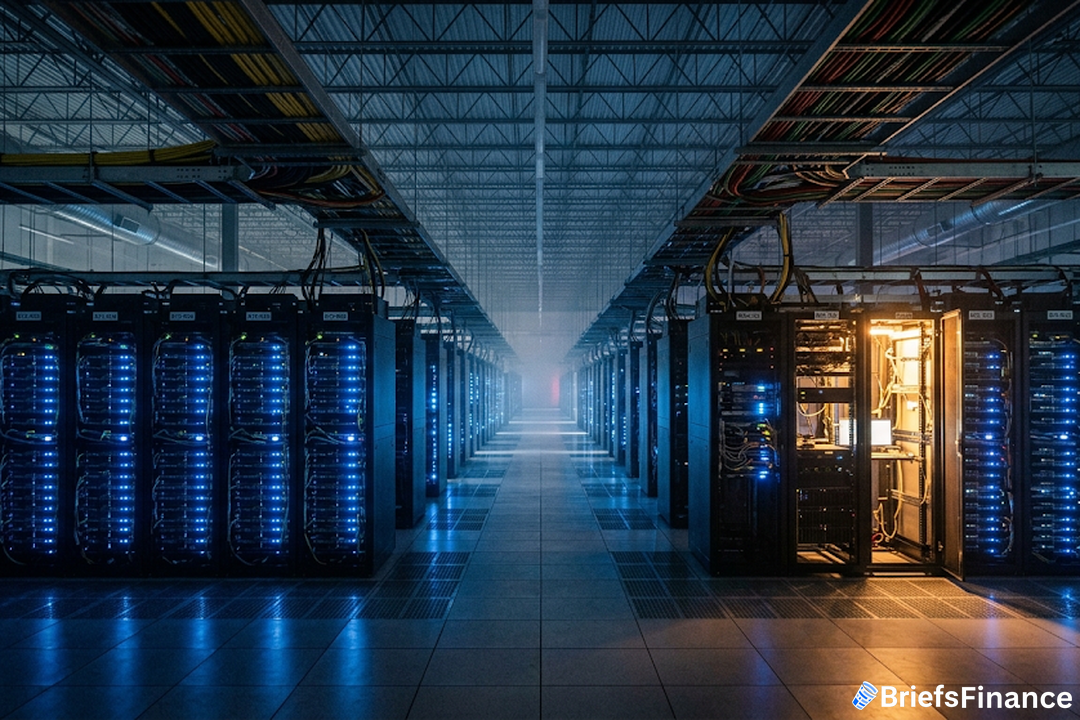
| Data centers | More AI needs more buildings that store the data powering it | A data center ETF |
| Quantum computing | Supercomputers that could take AI to the next level. The industry hasn't fully taken off yet, and the administration wants to lead it | A quantum computing ETF |
Two More Plays: Wait and See, or Protect Yourself
Wait and See
If you don't know what's going on, you can put money aside and be ready for the next downturn. There have been 25 market crashes in the last 100 years, and most people lose money in them because they panic and sell.
A few people get rich because they came prepared with the money and the knowledge to buy. While you wait, a high-yield savings account can pay around 4% a year, as long as it is reputable and FDIC insured.
An ETF of short-term Treasuries is another option that pays steady monthly interest. It is not FDIC insured, but it is backed by the U.S. Treasury, and you generally don't pay state or local taxes on the interest.
Protection
This is a hedge against the U.S. dollar and the U.S. economy. Jaspreet gives three ways to do it:
- Gold. You can buy physical gold yourself or own "paper gold" through a gold ETF like GLD. The ETF is a lot easier, but you don't own the gold yourself.
- Bitcoin. Some people, though not everybody, see it as another way to protect their money, but it is more volatile, more speculative and has moved more like tech companies than like gold. You can buy Bitcoin itself or an ETF like IBIT.
- International stocks. A broad international fund gives you exposure to companies, economies and currencies that are not the United States.
Whatever you choose, Jaspreet's rule is to invest where the money is moving, not where it was.