What happened on Sunday
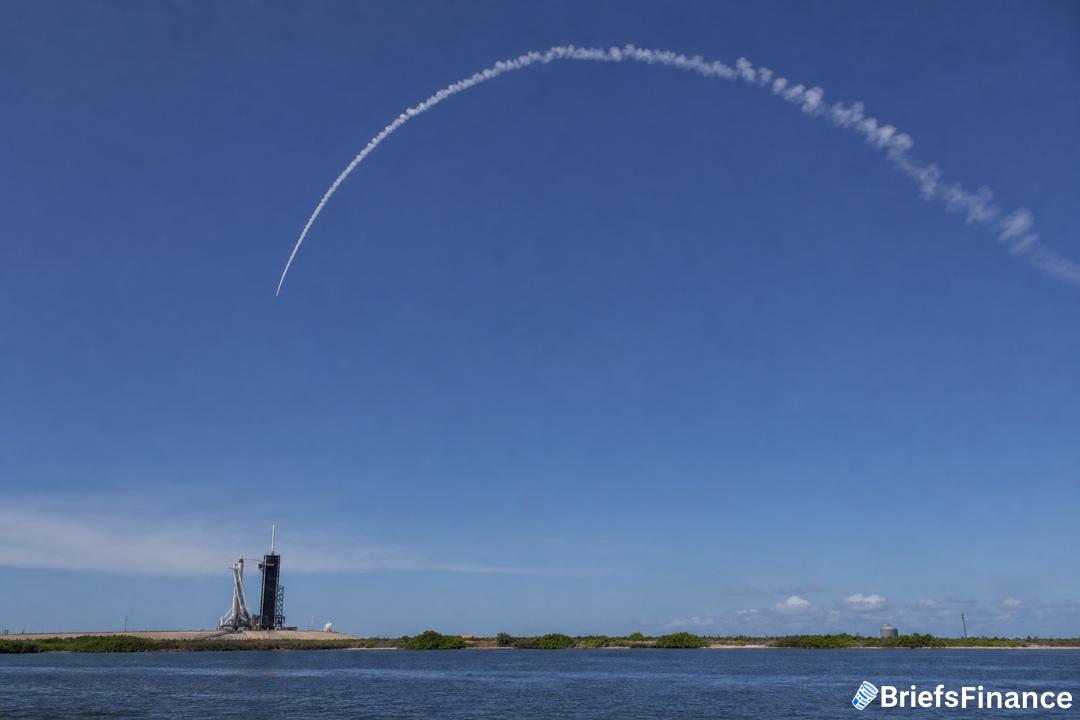
United Launch Alliance's Vulcan rocket launched from Cape Canaveral at 12:40 p.m. local time carrying Amazon satellites. Roughly 10 minutes into flight, a malfunction meant the vehicle "failed to deliver the Amazon mission to orbit."
ULA said it does not yet have the data needed to pinpoint the issue. "We will work closely with our customer and other appropriate organizations to find the cause, determine the appropriate corrective action and return to flight as quickly as possible," the company said. It was ULA's first-ever total mission loss.
Why this setback stings
Vulcan had been idle since February because a problem involving one of its solid rocket boosters put a stop to plans for more than a dozen flights this year. The program, launched in January 2024 following close to ten years of development, has had trouble ramping up, with only four missions finished before Sunday's try.
All of this lands as demand for rides to orbit climbs and supply remains tight. The latest failure adds pressure to a market already wrestling with a shortage of comparable rockets.
Technological surprises remind investors that adapting with smarter tools can improve outcomes. We're hosting our first ever investor livestream on 11/17 to show you how to use ChatGPT and Claude to invest like a pro, hosted by Briefs Finance CEO Jaspreet Singh. Save your seat.
The crowded launch lane is still jammed
SpaceX has signaled it intends to eventually retire Falcon 9, a mainstay for satellite operators, and Vulcan is one of the few alternatives in that class. Blue Origin's New Glenn has remained on the sidelines since May after a ground test ended in a massive fireball that damaged the company's only launch site. Vulcan and New Glenn both use Blue Origin's BE-4 main engine.
ULA, SpaceX, and Blue Origin belong to a small set of providers certified to perform the Pentagon's most sensitive missions. Even so, the Space Force paused Vulcan missions in February, threatening a key ULA revenue stream, and the Air Force fined ULA over delays.
What it means for your portfolio
Sunday's attempt was the first of 38 planned Amazon missions on Vulcan, following eight successful launches on ULA's Atlas V. In June, Amazon won a waiver from the Federal Communications Commission for a mid 2026 requirement to place more than 1,600 satellites in orbit, and the company pointed to the grounding of new rockets as one of the factors. The company still must complete the full network by July 2029 as it builds an internet-from-space service to compete with Starlink.
The bottom line: today's loss tightens an already constrained launch market, which can ripple into schedules, pricing, and how investors handicap timelines for Amazon's constellation and for contractors tied to building and launching those payloads.
Markets reward investors who use better information and disciplined judgment over time. On 11/17, our CEO Jaspreet Singh goes live for our first ever investor livestream on how to use ChatGPT and Claude to invest like a pro. Register to join him.