What happened
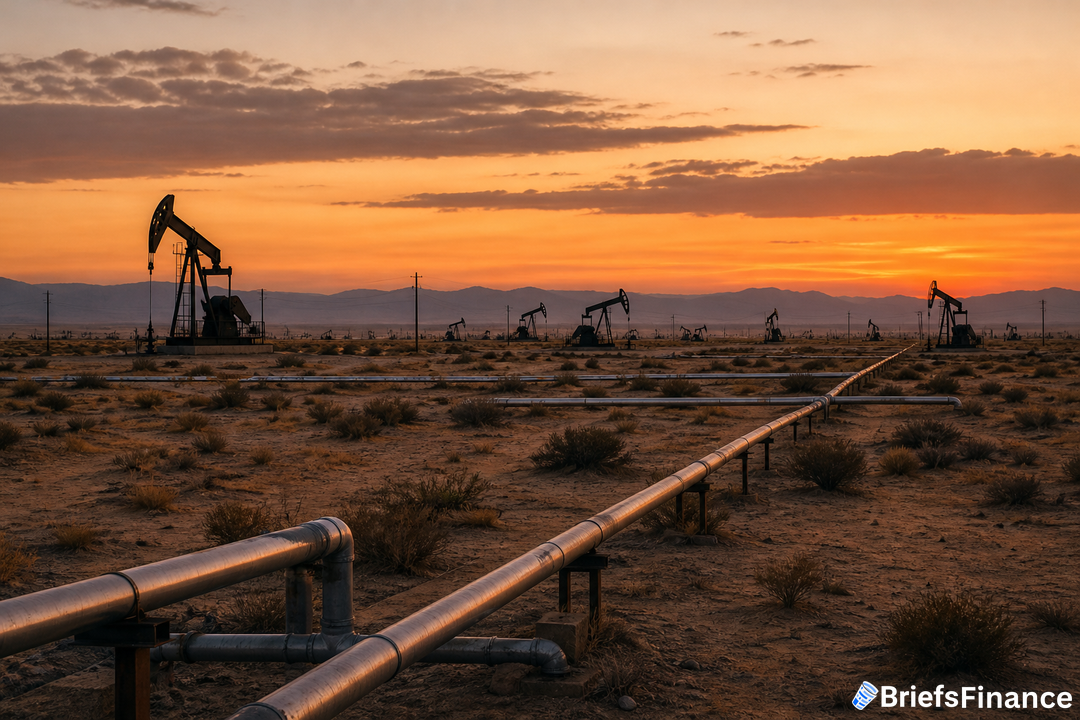
US crude popped above 115 dollars a barrel after American strikes on Iran, eventually touching 119.48. Producers in the Permian responded with small, steady output bumps instead of a drilling blitz.
Those tiny steps added up. As Enverus analyst Stephen Sagriff put it, "There's a ton of operators that are just adding a little bit - which then on aggregate makes a big change." By year end, Enverus says US supply is set to grow 378,000 barrels per day, a 2.8% lift that outpaces the 1.6% expected in 2025. About 85% of that increase is slated to come from the Permian, and the volume exceeds what Gabon or the Republic of Congo pump, both OPEC members.
How the Permian made it happen
Spanning West Texas and New Mexico, the Permian remains the workhorse of US oil and now produces close to half of American crude. Forecasts calling for a peak keep slipping as technology and techniques stretch what each rig can do.
Shale's ability to ramp within months matters while Persian Gulf flows are constrained and no clear end to the conflict is in sight. Even so, investors have pressed producers to prioritize discipline after past busts. As Bloomberg Intelligence's Vincent Piazza said, "We have knocked into these guys the need to create discipline as opposed to growth."
Private operators leaned in more than their public peers. JPMorgan says closely held firms now run 55% of the US rig fleet, up from 51% six months ago. Across the industry, spending jumped 17% in the third quarter from the second, per the Oct. 29 GDP report, the biggest three month rise since early 2025.
Efficiency did heavy lifting. Primary Vision reports Permian frack spreads fell 15% this year through Nov. 6, but the number of frack jobs still rose 5%. That pushed efficiency per crew up 23%.
Markets shift for many reasons, and investors benefit from smarter tools and insight. We're hosting our first ever investor livestream on 11/17 to show you how to use ChatGPT and Claude to invest like a pro, hosted by Briefs Finance CEO Jaspreet Singh. Save your seat.
Faster drilling also helped. Of the 10 quickest wells Permian Resources has ever drilled, five were spud and drilled in the third quarter, including a new record averaging 2,700 feet per day. At that clip, a four mile well can be drilled in a little over a week.
Company moves and the market response
Permian Resources entered 2026 planning to hold volumes roughly steady.
Diamondback Energy, the largest pure play Permian producer, also raised full year output guidance with its third quarter results earlier this month. In total, it now expects 2026 oil production to be about 5% above its 2025 level. Matador Resources is on course for roughly 7% more output than last year and most recently nudged guidance up by under 1%.
These shifts unfolded as Trump, alongside Energy Secretary Chris Wright and Interior Secretary Doug Burgum, urged US producers to pump more after the US and Israel carried out attacks on Iran.
What this means for your portfolio
Even with extra US barrels, pump prices kept climbing as the war in the Persian Gulf and Ukraine's strikes on Russian refineries sidelined significant fuel making capacity. In plain English: more crude did not immediately mean cheaper gasoline or diesel.
The bottom line: Enverus's projected 378,000 barrel per day increase shows where near term supply growth is coming from, and the Permian is doing most of the work. Add in private rig additions, a 17% quarter over quarter capex jump, and tangible efficiency gains, and shale looks positioned to scale in smaller steps that still move the needle when prices spike.
Using thoughtful analysis and new technology can help investors find clearer opportunities. On 11/17, our CEO Jaspreet Singh goes live for our first ever investor livestream on how to use ChatGPT and Claude to invest like a pro. Register to join him.