What the change is
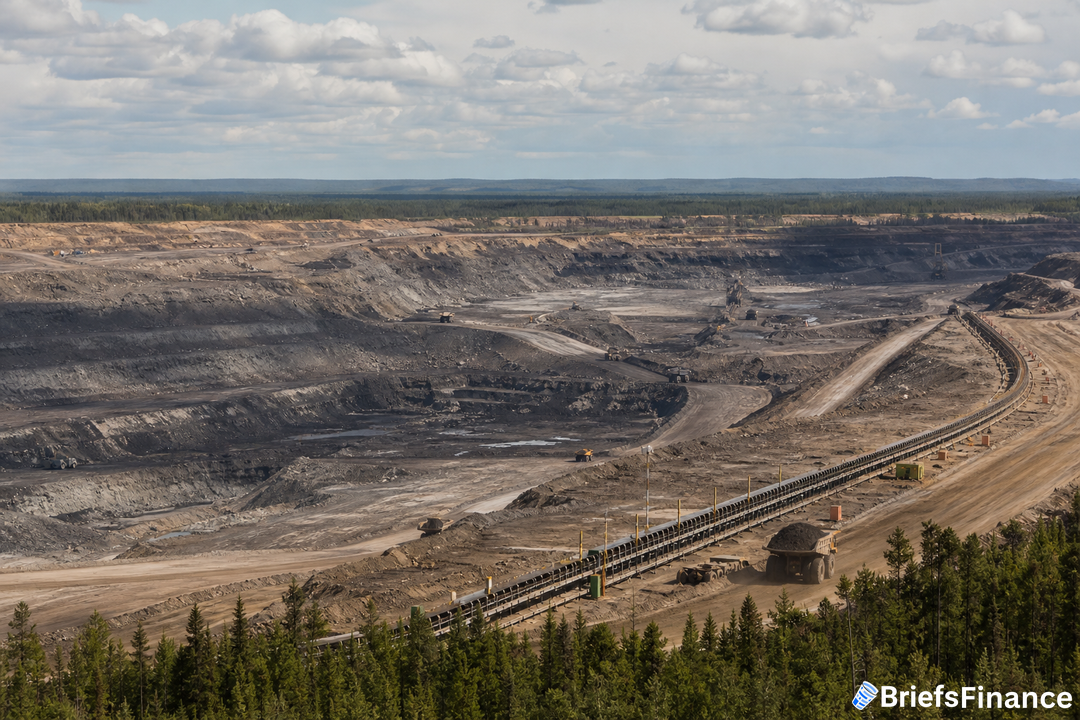
Alberta is introducing the Oil Sands Growth Program next spring to lower early royalties on fresh barrels from new projects and some add ons to existing sites. Qualifying assets pay 2% of revenue for five years, then the rate increases by one percentage point annually, reaching 6% in the ninth and 10th years.
The incentive covers additional output from approved projects for a decade before those volumes flip back to the regular royalty framework. Projects announced after Nov. 15 can be included, and the province plans to review the program's effectiveness at the end of 2029.
How this compares with the current system
Under the current setup, the take can reach as high as 40% based on oil prices and on whether a project has recovered its construction costs. Before payout, the royalty on gross revenue runs between 1% and 9% based on price; after payout, the rate can jump to 25% to 40%.
Across 109 oil sands projects, companies now pay just under 17% on average. Those royalties are a major budget line for Alberta, which expects more than C$18 billion (US$12.6 billion) in bitumen royalties this fiscal year. The government did not estimate how much new production the lower rates could unlock. "We don't want to totally commit to a number here," Finance Minister Jason Nixon said. "What we do know is that this is going to create investment that we would not have gotten if we do not create this type of an investment environment."
The wider federal provincial push
Ottawa and Alberta are moving together to attract energy capital. Prime Minister Mark Carney has promoted oil and gas to support the economy while he manages US President Donald Trump's trade war. His administration is backing a faster regulatory timeline for Pacific Link, a pipeline planned by state owned Trans Mountain Corp that is designed to move about a million barrels a day to the British Columbia coast, opening access to Asia and reducing reliance on the US, which buys 90% of Canada's oil exports. The federal government has also reversed certain environmental rules and is proceeding to roll out a capital investment tax write off.
Meanwhile, the Alberta and Canada governments are negotiating with Canadian Natural Resources Ltd., Suncor Energy Inc., Cenovus Energy Inc., Imperial Oil Ltd. and ConocoPhillips on a formal pact to increase production and construct a large-scale carbon capture system in exchange for advancing the pipeline project. The talks face a Sunday deadline.
Policy shifts reshape opportunity sets, and thoughtful tools can help investors find edges. We're hosting our first ever investor livestream on 11/17 to show you how to use ChatGPT and Claude to invest like a pro, hosted by Briefs Finance CEO Jaspreet Singh. Save your seat.
What this means for your portfolio
Producers say multi decade projects hinge on long run price decks, not today's cash haul. "I fully understand the optics of a program like this being announced at a time that has been very robust for the energy industry, but this is a cyclical commodity business and we're not making these investments based on today's oil prices," said Kendall Dilling, president of the Oil Sands Alliance. Suncor CEO Rich Kruger added that the new setup should make majors re examine growth after a long lull: "Capital will flow to its highest and best use. And for more than a decade, the market has shown that has not been Canada or Alberta."
Cash generation is strong right now. In the third quarter, Suncor, Cenovus, Canadian Natural Resources and Imperial together produced nearly C$16 billion in free cash flow, compared with nearly C$7 billion in the same quarter a year earlier, largely reflecting higher oil prices after the Iran war this year.
Investment, though, is still catching up. Oil sands capital spending plunged from C$34 billion in 2014 to C$7.2 billion by 2020 after the price crash, according to the Canadian Association of Petroleum Producers, and remains less than half of where it was 12 years ago. Over the past decade, only one new mining project has started up - Suncor's Fort Hills - along with a new well site run by International Petroleum Corp., while most additional growth has come from smaller, lower cost expansions.
The bottom line: lower upfront royalties plus a potential new export pipe shift hurdle rates on growth barrels. Premier Danielle Smith aims for Alberta's production to hit 8 million barrels a day over the next decade, and Kruger noted that the leading oil sands companies share a common stance on collaborating with both governments to boost volumes and to advance the Pacific Link pipeline and the Pathways carbon capture system. "It certainly wouldn't benefit any of us to have a shiny, empty pipeline."
When incentives change markets, smart investors look to better tools to learn. On 11/17, our CEO Jaspreet Singh goes live for our first ever investor livestream on how to use ChatGPT and Claude to invest like a pro. Register to join him.