What BEML is building and why
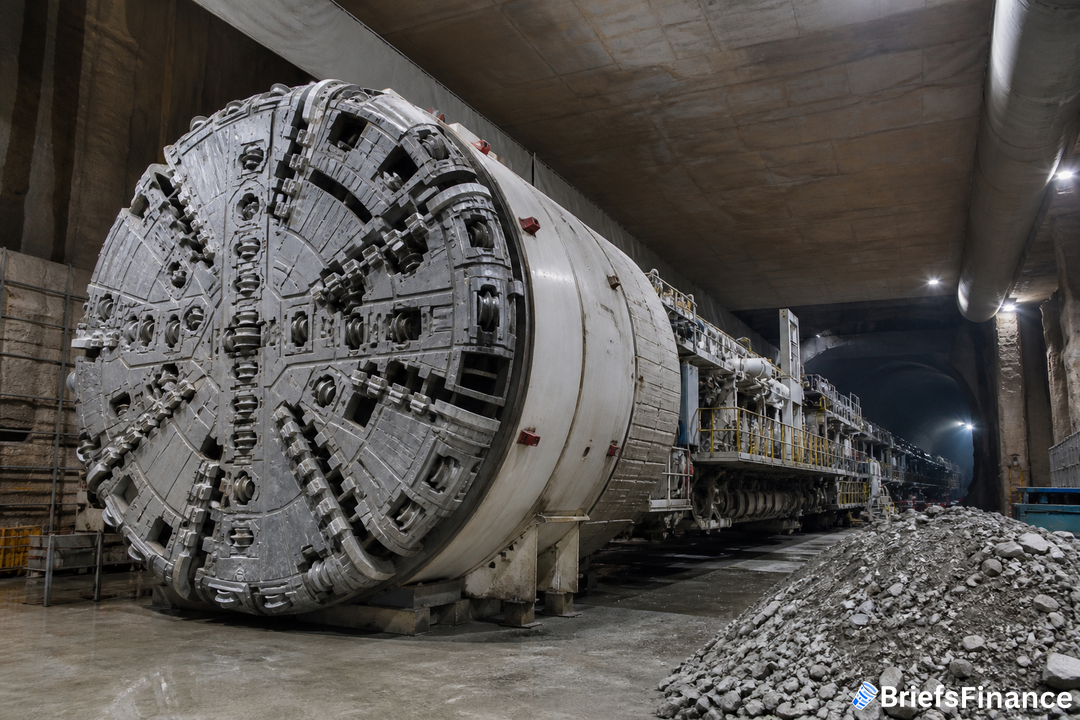
BEML Ltd., the state-owned defense and engineering player known for supplying armored and mining equipment and for manufacturing rail rolling stock, is moving into tunnel-boring machines. Chairman and Managing Director Shantanu Roy said the company will start with smaller TBMs used across metro systems and water-related projects, then expand into larger gear.
The goal is to replace imported kits with proprietary know-how. "It will be an indigenous technology," Roy said. "The IP will be Indian." He also said, "We have done our homework," and "we are ready with a plan."
To make that happen, BEML is bringing in a global consultant to support the push for self-reliance rather than assembling foreign components.
Where this fits in India's infrastructure sprint
The initiative slots into India's broader effort to curb import reliance, especially from China. Recent Chinese export curbs on certain construction equipment highlighted the exposure, though Roy said BEML's plan was already moving ahead.
India is a heavy user of tunneling machines as it scales up transport and underground infrastructure. According to Road Transport and Highways Minister Nitin Gadkari, the nation intends to invest up to 9.6 billion dollars in tunneling over the next five years, and officials have been pushing domestic production of construction equipment. Demand is also rising from strategic road and rail projects along the Himalayan frontier with China, where the terrain often necessitates long tunnels.
When industries reshape their supply chains, investors benefit from watching broader structural changes. We're hosting our first ever investor livestream on 11/17 to show you how to use ChatGPT and Claude to invest like a pro, hosted by Briefs Finance CEO Jaspreet Singh. Save your seat.
Past efforts show the hard part is building full manufacturing ecosystems. Following Beijing's curbs on exports of rare materials and related technologies, the Indian government signed off on a 72.8 billion rupee package, worth 820 million dollars, to establish 6,000 tons of annual permanent magnet capacity. Even by July, India continued to import every high-performance neodymium magnet, as the country did not have industrial-scale plants capable of turning rare-earth feedstock into metals, alloys, and finished magnets, the Ministry of Heavy Industries said.
Solar tells a similar story. India has assembled one of the largest solar module manufacturing hubs globally, yet most upstream inputs and tools are still sourced from abroad, per government policy research and industry studies.
Market size, benchmarks and timeline
BEML's first step is TBMs in the 3.5 to 6.5 meter range, a slice often used in urban transit and utility work and a smaller part of the overall market. For scale, TBMs working on the Mumbai section of India's first bullet train line use cutter heads of about 13.6 meters and were made by Germany's Herrenknecht AG at its China facility.
Roy projects India's TBM market may expand by roughly 12 percent annually during the coming seven to eight years, roughly double the global pace. The program is still early. The company says the first machine would be ready for delivery about 22 months after it secures a contract. "Gradually we will move on to the next level," Roy said.
What this means for your portfolio
India is committing more capital to underground infrastructure while encouraging locally made construction equipment. That points to sustained demand, but recent experience in magnets and solar is a reminder that building end-to-end supply chains takes longer than ramping up assembly. BEML's push for proprietary TBM technology is the swing factor to watch, and the delivery timeline offers a near term milestone.
Understanding how new technologies and domestic manufacturing evolve gives investors a steady advantage. On 11/17, our CEO Jaspreet Singh goes live for our first ever investor livestream on how to use ChatGPT and Claude to invest like a pro. Register to join him.